
Expertenanalyse zu Brice Mardens For Caroline
Stil: Minimalism · Genre: abstract
Expert Analysis: "For Caroline" by Brice Marden
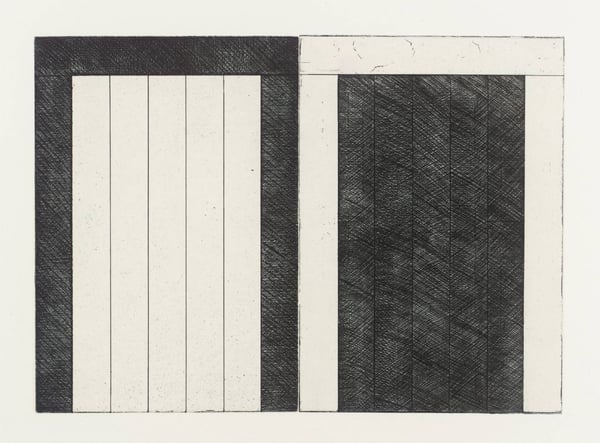
Brice Marden’s For Caroline stands as a pivotal work within the Minimalist movement, yet it subtly subverts the movement’s typical austerity by embedding personal resonance within its abstract vocabulary. Executed in the genre of abstract painting, the piece reflects Marden’s signature concern with surface, color, and the physicality of paint—hallmarks that distinguish his contribution to Minimalism.
Significance within Minimalism
Most Minimalist works of the 1960s and early ’70s—by artists like Donald Judd or Robert Morris—sought to eliminate all traces of the artist’s hand, emotion, or narrative, favoring industrial materials and geometric purity. Marden, however, introduced a painterly, almost meditative quality. For Caroline exemplifies this tension: while its composition may appear reductive (likely a single monochrome panel or a simple grid of tones, given Marden’s practice at the time), the title immediately personalizes the work. The dedication to “Caroline” (Marden’s wife, Caroline Marden) injects an intimate, emotional layer into the cool formalism of Minimalism. This was a deliberate departure—Marden believed that even the most austere abstract shapes could carry subjective weight.
Technical and Conceptual Innovation
Marden’s method in For Caroline would have involved his characteristic encaustic or oil-wax mixtures, applied in thin, layered washes that reveal the artist’s hand through subtle brushstrokes and uneven surfaces. This tactile, luminous finish is a direct challenge to the impersonal “industrial look” of much Minimalist sculpture. The work’s significance lies in how it marries Minimalism’s strict formal discipline (reduction to essential form, flatness, lack of illusionism) with a deeply human, even autobiographical gesture. It suggests that abstraction need not be cold—it can be a vehicle for affection, memory, or private reference.
Legacy and Influence
For Caroline foreshadows Marden’s later, more calligraphic “Greek” and “Cold Mountain” series, where line and gesture become more overt. In this sense, the painting is a crucial transition piece: it demonstrates that Minimalism’s rigor could be a foundation, not a limitation. By dedicating an otherwise reductive abstract work to a specific person, Marden expanded the emotional range of Minimalist painting, influencing generations of artists who sought to merge formal purity with expressive intent. The work remains a testament to the idea that less can be deeply, quietly personal.
Visuell ähnlich
20 Werke mit ähnlicher Komposition und Farbpalette
Untitled from (12 Views for Caroline Tatyana)
Brice Marden
Untitled
Pierre Soulages
Triptyque
Genevieve Asse
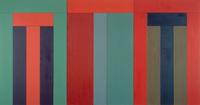
Thira
Brice Marden
Untitled
Rodolfo Arico
Two Abstract Compositions
Hryhorii Havrylenko
Toile découpée
Louis Cane
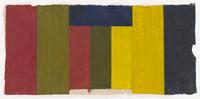
Study II
Brice Marden
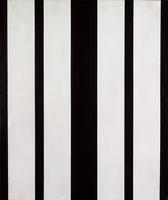
Untitled (October 1962)
Guido Molinari
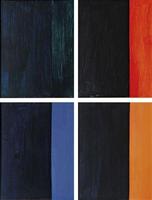
Vertigo
Gunther Forg
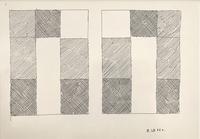
Two Abstract Compositions
Hryhorii Havrylenko
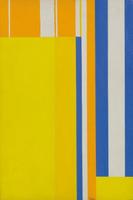
Three Yellows Vertical
Ilya Bolotowsky
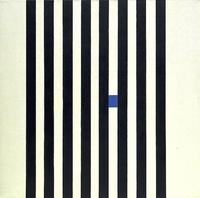
Second Theme #37
Burgoyne Diller
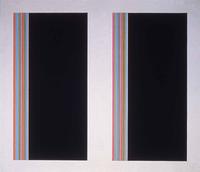
Looking Glass
Gene Davis
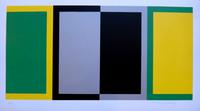
Untitled
Rubem Ludolf
Yukon Sonata
Gene Davis
Untitled (from the Amerim series)
Vasile Dobrian
Black/White
Guido Molinari
Ocean Park #30
Richard Diebenkorn
Untitled in 8 Parts
Gunther Forg