Analisi esperta di Intersuperficie curva bianca di Paolo Scheggi
Stile: Spatialism · Genere: abstract
Expert Analysis: "Intersuperficie curva bianca" by Paolo Scheggi
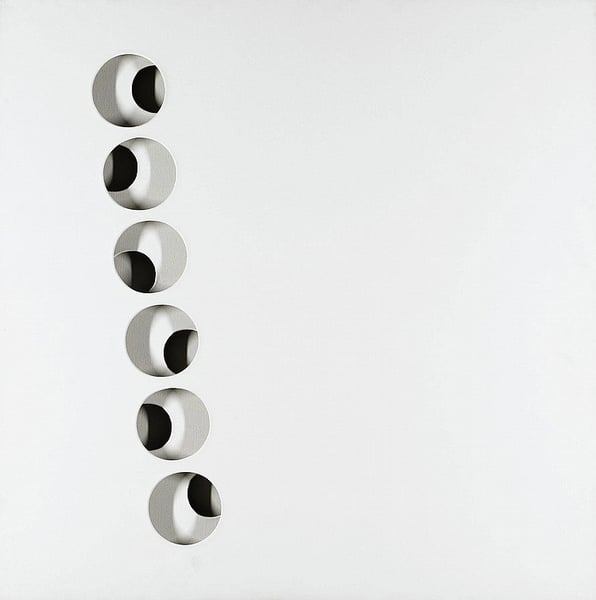
This work is a seminal example of Spatialism, an Italian avant-garde movement that sought to transcend traditional pictorial boundaries by integrating real space, time, and light. Scheggi, a key figure in the movement alongside Lucio Fontana, developed the Intersuperficie (Intersurface) series—of which this piece is a prime instance—to push painting into three dimensions.
What Makes This Artwork Significant:
-
Spatial Innovation: Unlike conventional abstract painting, which relies on illusory depth, "Intersuperficie curva bianca" physically carves space. Scheggi layered multiple canvas planes with curved, oval cutouts, creating a dynamic interplay of void and volume. The viewer’s eye—and even their shadow—becomes part of the work as light passes through and around the openings.
-
Monochrome as Pure Form: The stark white color is not decorative but structural. By eliminating color, Scheggi forces attention onto light, shadow, and the physical rhythm of the curved surfaces. The white monochrome aligns with Spatialism’s interest in dematerialization and the purity of spatial experience.
-
Breaking the Picture Plane: This artwork exemplifies Spatialism's core goal: to move beyond the flat canvas. Scheggi’s layered layers and cuts produce a "sculptural painting" that invites movement and changing perspectives. The curved contours soften the geometric abstraction, creating a sense of organic flow within a rigorous architectural structure.
-
Influence on Environment and Perception: The work is not an object to be passively viewed but a phenomenological trigger. As the viewer shifts, the relationships between the cut layers alter, making the composition feel mutable. This anticipates later developments in kinetic and environmental art.
In summary, "Intersuperficie curva bianca" stands as a crucial achievement in Spatialist art: a radical synthesis of painting, sculpture, and architecture that redefines abstract art as an active encounter with space and light.
Visivamente simili
20 opere con composizione e palette affini
Intersuperficie curva
Paolo Scheggi
Untitled
John Armleder
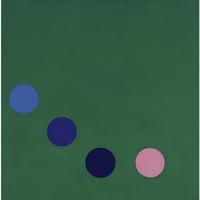
Green Square
Thomas Downing
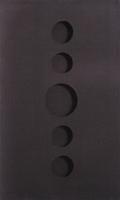
Volume
Dadamaino
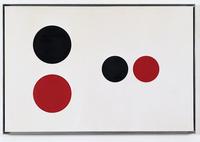
Revolving
Alexander Liberman
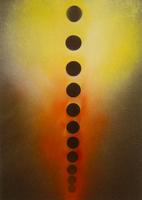
Universo em Expansão I
Eduardo Nery
Untitled
Antonio Asis
Time
Alexander Liberman
Blue and Orange from Suite of Twenty-Seven Color Lithographs
Ellsworth Kelly
Phased Red
Thomas Downing
Bliss Abyss
Amy Feldman
Red Comp
Erich Buchholz
Hoop-La
Jeremy Moon
Composition with Circles
Marcelle Cahn
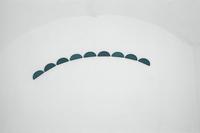
Pittura GR
Pino Pinelli
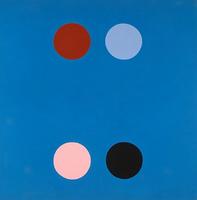
France Blue
Thomas Downing
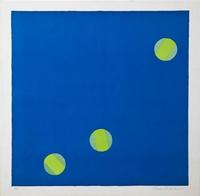
Untitled (blue with green circles)
Edward Avedisian
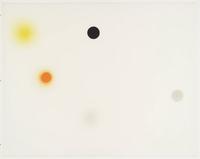
No. 3
Bernard Cohen
Blue and Orange
Ellsworth Kelly
Pyrographie
Henk Peeters