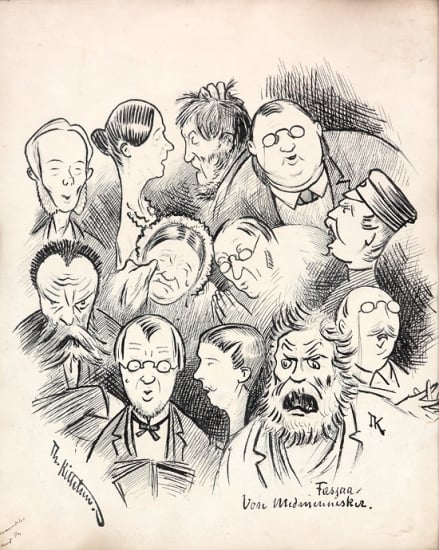
Fesjaa Vaare Medmennesker
Analisi esperta di Fesjaa Vaare Medmennesker di Theodor Severin Kittelsen
Stile: Realism · Genere: caricature
In Fesjaa Vaare Medmennesker, Theodor Severin Kittelsen merges the precision of Realism with the satirical edge of caricature, creating a work that is both visually grounded and socially pointed. The title, roughly translating to “Feast, Our Fellow Men,” suggests a communal or perhaps ironic celebration. Kittelsen, best known for his eerie Norse folklore illustrations, here turns his realist eye to contemporary human behavior, using exaggerated features and grotesque expressions—hallmarks of caricature—to critique gluttony, hypocrisy, or class dynamics. The significance lies in his ability to anchor a fantastical or moralistic comment within a meticulously observed, naturalistic setting: the realism of the scene (accurate anatomy, convincing light, detailed surroundings) makes the distorted figures feel uncomfortably real, heightening the satire. This duality—earnest draftsmanship used for comic or critical distortion—places the work within a tradition of social commentary that bridges Romantic nationalism and modern skepticism, underscoring Kittelsen’s versatility beyond his famous trolls.
Visivamente simili
20 opere con composizione e palette affini
Griffonnage
Orest Kiprensky
Barndomstegninger
Theodor Severin Kittelsen
Mahler
Enrico Caruso
Les Gaudissarts
Theophile Steinlen
Sheet of caricatures
Annibale Carracci
Generals
Boris Kustodiev
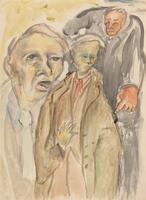
Sin título
Joy Hester
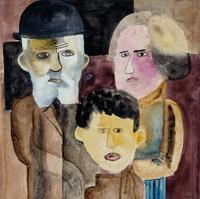
Família
Lasar Segall
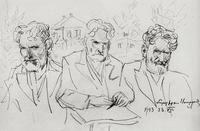
Study to 'Self-portrait. Three ages.'
Martiros Sarian
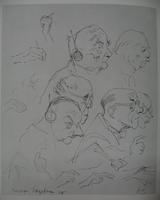
Nuremberg. Advocates.
Kukryniksy
Nuremberg. Advocates.
Kukryniksy
Generals
Boris Kustodiev
Gaveau
Felix Vallotton
Lherbette
Honore Daumier
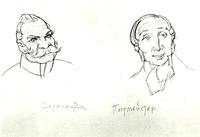
Gogol's comedy sketch for the 'Inspector'. Derzhimorda and the postmaster
Konstantin Yuon
Untitled
Kukryniksy
Les Bleuets
Theophile Steinlen
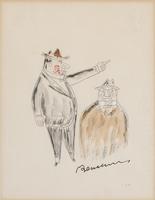
Two Gentlemen
Ludwig Bemelmans
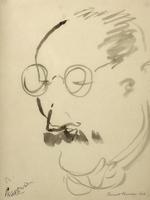
Rothko by Newman
Barnett Newman
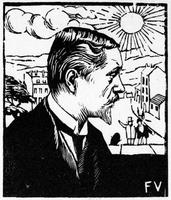
Self-portrait
Felix Vallotton