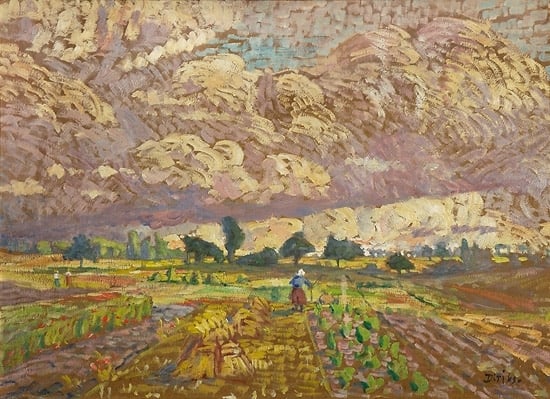
Høstdag
Analisi esperta di Høstdag di Karl Edvard Diriks
Stile: Impressionism · Genere: landscape
Expert Analysis: "Høstdag" (Autumn Day) by Karl Edvard Diriks
Karl Edvard Diriks’s Høstdag stands as a compelling example of how Impressionist principles were adapted to the distinctive light and landscape of Scandinavia. Painted in the late 19th or early 20th century, the work captures the transient beauty of autumn—a season defined by shifting colours, softening light, and a palpable sense of atmospheric change.
Significance within Impressionism:
Diriks was a key figure in bringing French Impressionist techniques to Norway, and Høstdag demonstrates his mastery of the movement’s core tenets: an emphasis on natural light, a vibrant, broken-color palette, and a focus on capturing a fleeting moment. Rather than painting a static view, Diriks renders the autumn landscape as an experience in flux—leaves shimmering in gold and russet tones, shadows cast by a low-angled sun, and the crisp air suggested through delicate tonal shifts.
Context of Norwegian Landscape Painting:
While many Norwegian artists of the period favoured a more romantic or national-romantic approach, Diriks’s Impressionist lens allowed him to treat the familiar autumn scene with a freshness that avoided sentimentality. Høstdag is significant precisely because it demonstrates that the Impressionist concern with “the envelope of light” could be applied to the Nordic climate—where autumn light is both softer and more dramatic than in the sun-drenched landscapes of France.
Technical Execution:
The painting likely employs loose, visible brushwork and a muted yet rich colour harmony—ochres, burnt siennas, and muted greens—punctuated by cool blues and greys in the sky and shadows. This palette not only evokes the season but also creates a subtle tension between the warmth of the decaying foliage and the imminent chill of winter.
In summary, Høstdag is significant as a testament to Diriks’s role in expanding Impressionism’s geographical and thematic reach, proving that the movement’s concerns with light, atmosphere, and immediacy were universal—and particularly potent when applied to the contemplative, transient beauty of a Norwegian autumn.
Genere
Stile
Visivamente simili
20 opere con composizione e palette affini
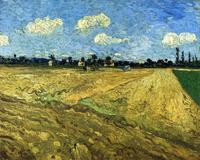
The Ploughed Field
Vincent van Gogh
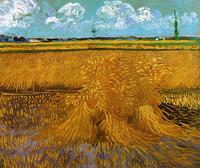
Wheatfield with Sheaves
Vincent van Gogh
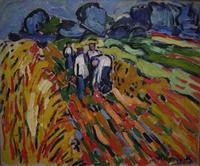
Potatoe Pickers
Maurice de Vlaminck
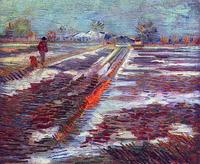
Landscape with Snow
Vincent van Gogh
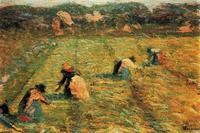
Farmers at work (Risaiole)
Umberto Boccioni
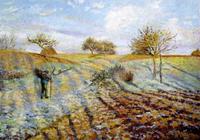
Hoarfrost
Camille Pissarro
Corn Field
Mihaly Munkacsy
Landscape
Henri Martin
The Old Ennery Road in Pontoise
Camille Pissarro
Fields
Camille Pissarro
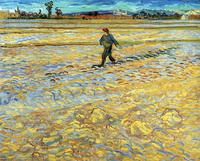
Sower
Vincent van Gogh
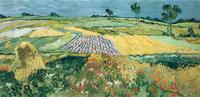
Wheatfields
Vincent van Gogh
Corn Sheafs In Gooi
Cornelis Vreedenburgh
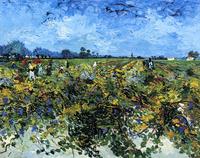
The Green Vinyard
Vincent van Gogh
The Harvest
Henri Martin
Peasant Woman Binding Sheaves after Millet
Vincent van Gogh
Wheat Fields with Stacks
Vincent van Gogh
Girl in the vegetable garden
Emmanuel Zairis
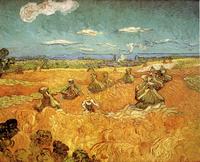
Wheat Stacks with Reaper
Vincent van Gogh
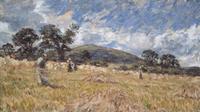
Threatening Weather
James Charles