Expert analysis of Sol LeWitt’s Wall Drawing #1136
Style: Minimalism, Op Art · Genre: abstract
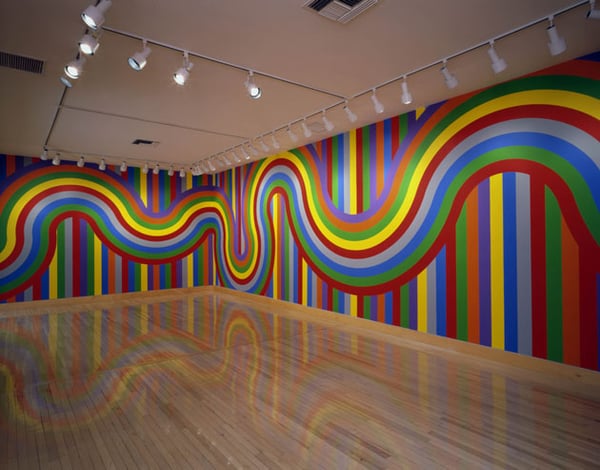
Sol LeWitt's Wall Drawing #1136 stands as a compelling intersection of Minimalism and Op Art within the abstract genre. Its significance lies in how it embodies LeWitt’s conceptual approach—where the idea, not the hand of the artist, is paramount. As a wall drawing, it exists as a set of instructions executed by others, challenging traditional notions of authorship and permanence. The Minimalist influence is clear in the use of simple, geometric elements and the direct engagement with the architectural surface, stripping art down to its essential visual components. Simultaneously, the Op Art aspect introduces perceptual dynamism: the precise arrangement of lines, shapes, or colors creates optical effects that seem to vibrate or shift as the viewer moves, turning the wall into an active, immersive field. By merging the static, rational order of Minimalism with the kinetic, sensory experience of Op Art, Wall Drawing #1136 exemplifies a pivotal moment in which conceptual rigor and perceptual play coexist, redefining the viewer's relationship to both space and the work itself.
Visually similar
20 works with related composition and palette
Untitled
Sven Lukin
Staccato
Cesar Paternosto
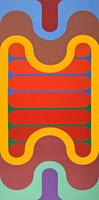
Hot Dog Painting
Ronald Davis
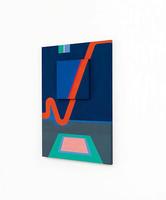
Green Thursday
Sven Lukin
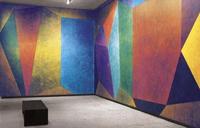
Wall Drawing #522
Sol LeWitt
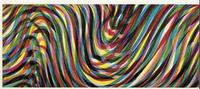
Horizontal Wavy Lines
Sol LeWitt
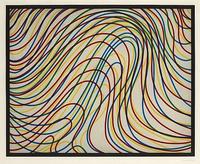
Wavy Lines with Black Border
Sol LeWitt
Untitled
Piero Dorazio
Intervention
Edward Krasinski
Blind No. 20, Seventeen-foot high Ceiling or Lower, Historical Van Dyke Brown, Historical Veridian Green, Indian Yellow Hue, Hansa Yellow Medium (to Mike Kelley)
Stephen Prina
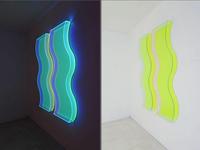
Swings
Regine Schumann
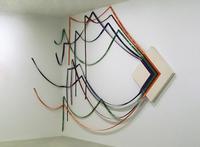
Extended Noland
Iain Baxter&

Skeedo
Leo Valledor
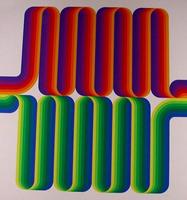
Composition Cinétique
Julio Le Parc
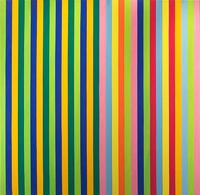
Solar Skin
Gene Davis
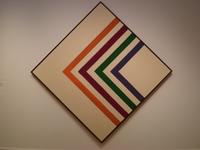
Drive
Kenneth Noland
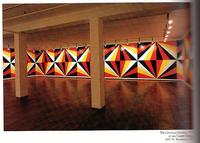
The Continuous Painting
Nassos Daphnis
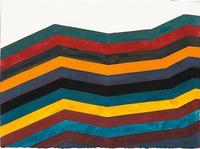
Irregular Horizontal Bands of Equal Width Starting at Bottom
Sol LeWitt
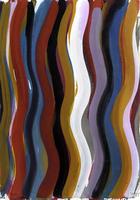
Untitled
Sol LeWitt
Second Requiem
Anne Truitt