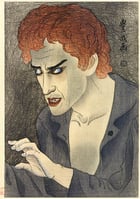
Expertenanalyse zu Yamamura Toyonaris Nakamura Ganjiro I as Oboshi Yuranosuke
Stil: Shin-hanga · Genre: yakusha-e
This analysis focuses exclusively on the supplied facts: the artwork is "Nakamura Ganjiro I as Oboshi Yuranosuke" by Yamamura Toyonari, executed in the Shin-hanga style within the yakusha-e (actor print) genre. Its significance lies in how it synthesizes the core ambitions of the Shin-hanga movement with the traditional subjects of kabuki theatre.
Shin-hanga (“new prints”) emerged in early 20th-century Japan as a revival of the ukiyo-e tradition, but with a key distinction: it emphasized the artist as the primary creative force (as opposed to the earlier publisher-driven division of labor). Toyonari, an accomplished painter and print designer, was a pivotal figure in this movement, and this work exemplifies Shin-hanga’s hallmark—combining the graphic elegance of classic ukiyo-e with Western techniques in perspective, shading, and atmospheric lighting.
As a yakusha-e, the print portrays the celebrated kabuki actor Nakamura Ganjiro I (1860–1940) in his iconic role as Oboshi Yuranosuke, the loyal retainer from the canonical revenge drama Chushingura (The Treasury of Loyal Retainers). Yuranosuke is the leader of the 47 ronin, a figure of stoic determination and concealed emotion. Toyonari’s depiction likely captures a climactic mie (a dramatic pose), freezing the actor’s intense expression and the opulent, detailed costume—a signature of both kabuki and yakusha-e.
What makes this artwork significant within its style and period is its role as a bridge. Toyonari was not merely documenting a star performance; he was reimagining yakusha-e for a modern, culturally conscious audience that appreciated both tradition and innovation. The Shin-hanga style allowed him to render the actor’s psychological depth and the theatrical atmosphere through subtle tonal gradations and a soft, naturalistic light (influenced by Western watercolor techniques), while retaining the bold outlines and flat color areas of ukiyo-e. This combination—a faithful modern interpretation of a classic kabuki subject—validates Shin-hanga’s mission: to revitalize Japanese woodblock prints by placing artistic expression and refined technique at the forefront, rather than merely reproducing historical templates.
Visuell ähnlich
20 Werke mit ähnlicher Komposition und Farbpalette
Matsumoto Koshiro VII as Sukeroku
Yamamura Toyonari
Ichikawa Komazō III as Ōdate Sabanosuke Terukado
Tōshūsai Sharaku
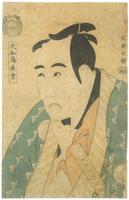
Bandō Mitsugorō II as the manservant Kugahei
Tōshūsai Sharaku
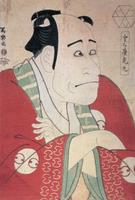
Kabuki Actor Arashi Ryūzō II as the Manservant Namihei (toraya Toramaru)
Tōshūsai Sharaku
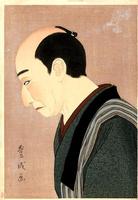
Kataoka Nizaemon XI as Kakiemon
Yamamura Toyonari
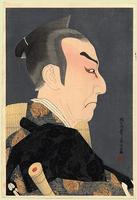
Kataoka Nizaemon as Honzo
Natori Shunsen
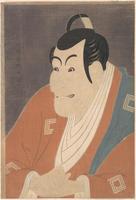
Kubuki Actor Ichikawa Ebizō as Takemura Sadanoshin
Tōshūsai Sharaku
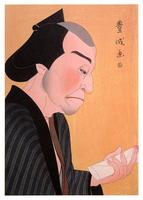
Matsusuke as Goroji
Yamamura Toyonari
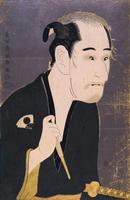
Matsusuke Onoe I as Matsushita Mikinoshinn
Tōshūsai Sharaku
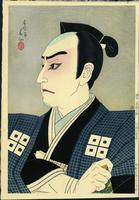
Kitaoka Nizaemon as Wakasanosuke in Chushingura
Natori Shunsen
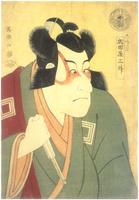
Ichikawa Danjūrō VI as Arakawa Tarō Takesada
Tōshūsai Sharaku
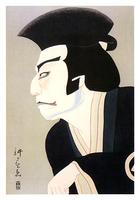
Ichikawa Danshiro II as Henmei Tesshinai
Yamamura Toyonari
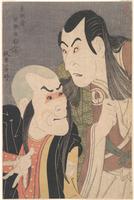
Sawamura Yodogorō II and Bandō Zenji as Kawatsura Hōgen and Onisadobō in the Play "Koinyōbō Somewake Tazuna"
Tōshūsai Sharaku
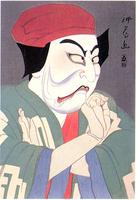
Matsumoto Koshiro VII as Sekibei
Yamamura Toyonari
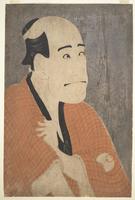
Arashi Ryūzō I as Ishibe Kinkichi in the Play "Hana Ayame Bunroku Soga"
Tōshūsai Sharaku
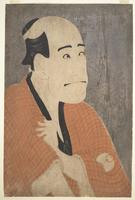
Arashi Ryūzō I as Ishibe Kinkichi in the Play Hana Ayame Bunroku Soga
Tōshūsai Sharaku
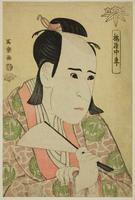
Kabuki Actor Ichikawa Yaozō III as Hachiman Tarō Minamoto No Yoshiie (tachibanaya Chusha)
Tōshūsai Sharaku
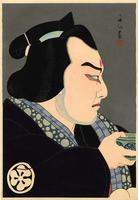
Bando Jusaburo in the role of Seigoro
Natori Shunsen
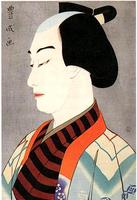
Nakamura Ganjiro I as Akane Hanshichi
Yamamura Toyonari
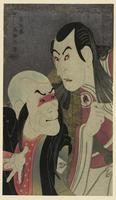
Kabuki Actors Sawamura Yodogorō II as Kawatsura Hōgen and Bandō Zenji as Oni Sadobō
Tōshūsai Sharaku