Analisi esperta di Kataoka Nizaemon XI as Kakiemon di Yamamura Toyonari
Stile: Shin-hanga · Genere: yakusha-e
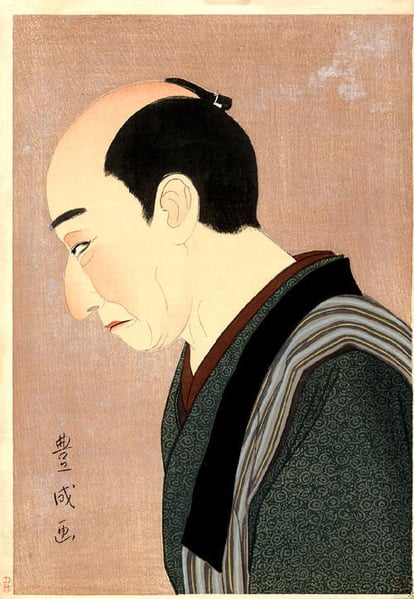
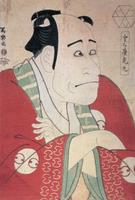
Expert Analysis: "Kataoka Nizaemon XI as Kakiemon" by Yamamura Toyonari
This print belongs to the Shin-hanga ("New Prints") movement, a early-20th-century revival of traditional ukiyo-e that fused Japanese woodblock craftsmanship with Western pictorial influences. Within that movement, Yamamura Toyonari is celebrated for his refined yakusha-e (actor prints), a genre he helped rejuvenate after its decline in the late 19th century.
What makes this work significant:
-
Shin-hanga’s revivalist philosophy: Unlike the mass-produced, often hastily printed ukiyo-e of the late Edo period, Shin-hanga artists insisted on the collaborative workshop model—carver, printer, and publisher—to achieve unprecedented technical sophistication. Toyonari’s print exemplifies this: subtle gradations (bokashi), delicate linework, and restrained, atmospheric color that prioritizes mood over flat decorative effect.
-
Psychological portraiture: Traditional yakusha-e typically exaggerated facial features for theatrical recognition. Toyonari instead captures Kataoka Nizaemon XI in a moment of quiet intensity, emphasizing the actor’s internal state rather than a dramatic pose. The soft modeling of the face and the nuanced expression reflect Western-influenced naturalism, but the elegant, elongated silhouette remains rooted in Japanese aesthetic tradition.
-
Subject as cultural touchstone: Kakiemon is a famed porcelain style (Arita ware), and the actor portrays a character associated with that tradition. By depicting a living kabuki legend—Kataoka Nizaemon XI was a major star of the early Shōwa period—Toyonari links the ephemeral art of kabuki to the enduring prestige of Japanese ceramics, blending theater, craft, and national identity.
-
Technical mastery: Toyonari was one of the few Shin-hanga artists to consistently produce yakusha-e, a genre overshadowed by landscape (fukeiga). His prints demonstrate a command of delicate line and pale, luminous color that sets them apart from the bolder, more graphic work of earlier ukiyo-e masters like Sharaku or Kuniyoshi.
In sum, this print stands as a pivotal example of Shin-hanga’s ability to modernize a classical genre without losing its soul—honoring the actor’s legacy while pushing woodblock printmaking into a new era of expressive subtlety.
Visivamente simili
20 opere con composizione e palette affini
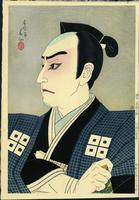
Kitaoka Nizaemon as Wakasanosuke in Chushingura
Natori Shunsen
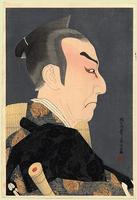
Kataoka Nizaemon as Honzo
Natori Shunsen
Matsusuke as Goroji
Yamamura Toyonari
Nakamura Ganjiro I as Oboshi Yuranosuke
Yamamura Toyonari
Ichikawa Komazō III as Ōdate Sabanosuke Terukado
Tōshūsai Sharaku
Bando Mitsugoro VII as the Mute in Sannin-Katawa
Yamamura Toyonari
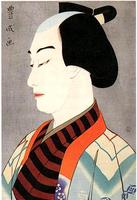
Nakamura Ganjiro I as Akane Hanshichi
Yamamura Toyonari
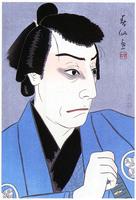
Ichikawa Ebiso as Hayano Kanpei in Chushingura
Natori Shunsen
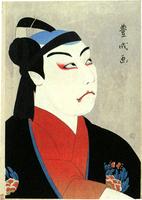
Matsumoto Koshiro VII as Sukeroku
Yamamura Toyonari
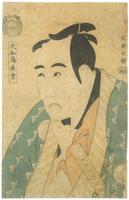
Bandō Mitsugorō II as the manservant Kugahei
Tōshūsai Sharaku
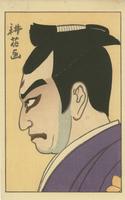
Kōshirō in the role of Mitsuhide
Yamamura Toyonari
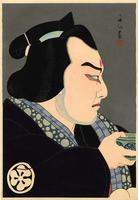
Bando Jusaburo in the role of Seigoro
Natori Shunsen
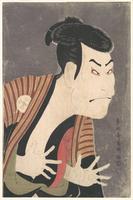
Kabuki Actor Ōtani Oniji III as Yakko Edobei
Tōshūsai Sharaku
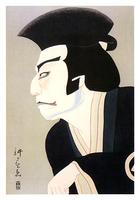
Ichikawa Danshiro II as Henmei Tesshinai
Yamamura Toyonari
Kubuki Actor Ichikawa Ebizō as Takemura Sadanoshin
Tōshūsai Sharaku
Matsusuke Onoe I as Matsushita Mikinoshinn
Tōshūsai Sharaku
Otani Tomoemon as Kanshojo
Natori Shunsen
Portrait of a man of noble birth with a book
Katsushika Hokusai
Kabuki Actor Arashi Ryūzō II as the Manservant Namihei (toraya Toramaru)
Tōshūsai Sharaku
The Actor Reading a Scroll
Utagawa Kunisada