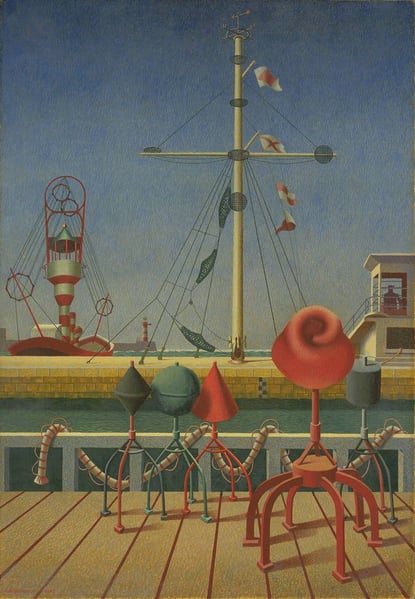
Expert analysis of Edward Wadsworth’s Signals
Style: Surrealism · Genre: cityscape
"Signals" by Edward Wadsworth is a significant work within the Surrealist movement, particularly as a cityscape that reimagines urban and industrial environments through a dreamlike or subconscious lens. While Surrealism often explores fantastical or psychological landscapes, this piece grounds its surrealism in the recognizable forms of a city—transforming everyday signals (such as traffic lights, railway semaphores, or maritime beacons) into symbols of hidden meaning, alienation, or unconscious communication. The genre of cityscape allows Wadsworth to blend the rational, geometric order of built space with the irrational, unexpected juxtapositions characteristic of Surrealism, challenging viewers to see the urban world as a site of mystery and hidden signals rather than mere functionality. This work’s significance lies in how it uses a seemingly mundane setting to evoke the disquieting poetry of modern life, aligning with Surrealist aims of disrupting ordinary perception.
Visually similar
20 works with related composition and palette
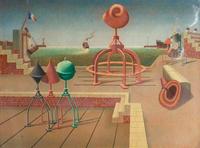
Satellitium
Edward Wadsworth
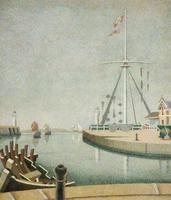
Honfleur, France, Entrance to the Harbour
Edward Wadsworth

Departure
Edward Wadsworth
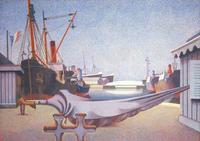
Le Havre, France
Edward Wadsworth
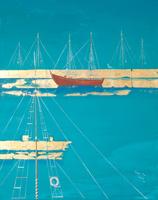
Harbour
Spyros Vassiliou
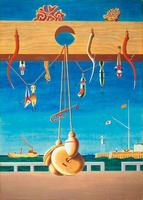
The First of the Ebb, the Sailor and the Sea
Edward Wadsworth
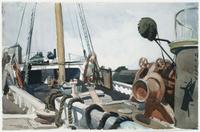
Deck of a Beam Trawler, Gloucester
Edward Hopper
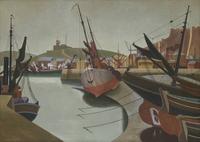
Seaport
Edward Wadsworth
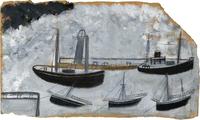
Ships in Harbour
Alfred Wallis
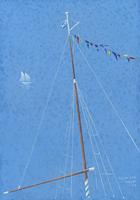
Xarti
Spyros Vassiliou
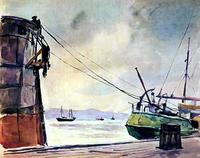
Murmansk. The polar night.
Pyotr Konchalovsky
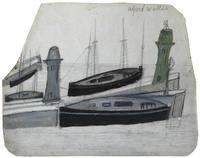
Boats
Alfred Wallis

Quay
Oleg Holosiy
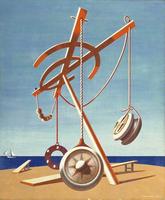
Souvenir of Fiumicino
Edward Wadsworth
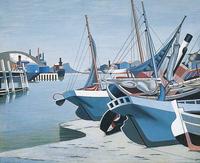
Slump
Edward Wadsworth
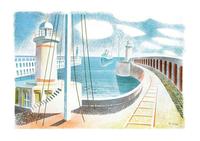
Newhaven Harbour
Eric Ravilious
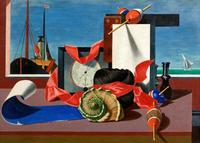
Bright Intervals
Edward Wadsworth
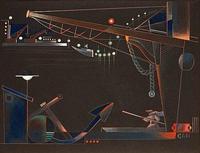
Dock
Gosta Adrian-Nilsson
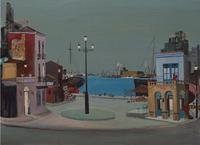
The Harbour
Spyros Vassiliou
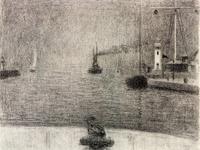
The Port of Honfleur
Georges Seurat