Gerard Sekoto の TWO FRIENDS の専門的な分析
スタイル:Expressionism · ジャンル:genre painting
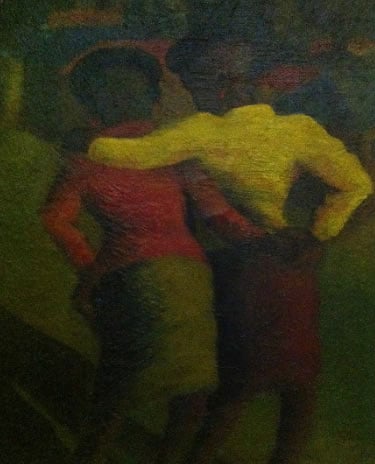
As an Expressionist genre painting, Gerard Sekoto's Two Friends derives its significance from the way it infuses a seemingly ordinary moment of human connection with the emotional intensity and subjective vision characteristic of early 20th-century Expressionism.
Within the context of Expressionism, the work moves beyond mere documentation of a genre scene—everyday life—to explore inner psychological states. The charged brushwork, heightened color, and simplified forms likely amplify the bond between the two figures, transforming a casual encounter into a profound statement on companionship and resilience. Genre painting traditionally elevates the commonplace; here, Sekoto’s Expressionist lens imbues that commonplace with a raw, empathetic power, making the universal theme of friendship feel both intimate and urgent.
This fusion is significant because it demonstrates how Expressionism could be harnessed to dignify and emotionalize daily existence, rather than focusing solely on anguished or dramatic subjects. By doing so, Two Friends stands as a pivotal example of the style’s capacity to find depth in the quiet moments of human life—a hallmark of Sekoto’s broader contribution to modern art.
視覚的に類似
構図やパレットが近い作品 20 件
Figure in Green Room
Henry Villierme
Untitled
Dilek Demirci
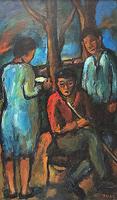
Blind Man
Kenneth Baker
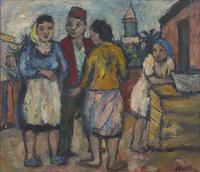
Malays, Chiappini Street, Cape Town, 1976
Kenneth Baker
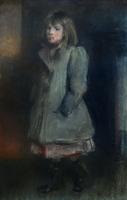
Portrait of a girl
Joan Brull
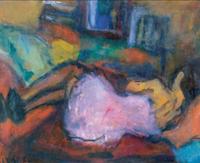
Czobel Béla Women.
Bela Czobel
Painting
Luis Dourdil
Untitled
Dilek Demirci
Figures in a wooded park
Arthur Segal
Modok Mária, Fekete Blúzos Nő
Modok Mária
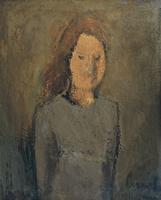
Meisje
Constant Permeke
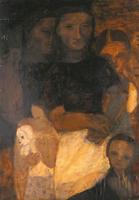
Modok Mária, Család 1937
Modok Mária
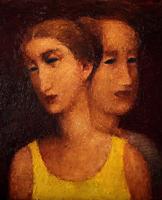
Two
Alexander Roitburd
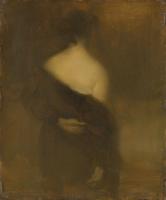
Femme de dos, se déshabillant
Eugene Carriere
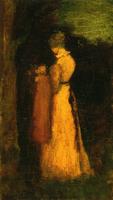
Mother and Child
Albert Pinkham Ryder
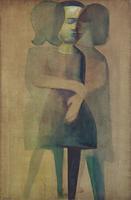
An Illusion of Children
Charles Blackman
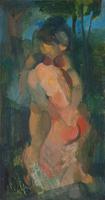
The Embrace
Stanley Pinker
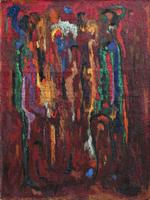
Fairies´ Dance
George Stefanescu
Spirit of Autumn
Albert Pinkham Ryder
Untitled (Standing Man and Woman)
Mark Rothko