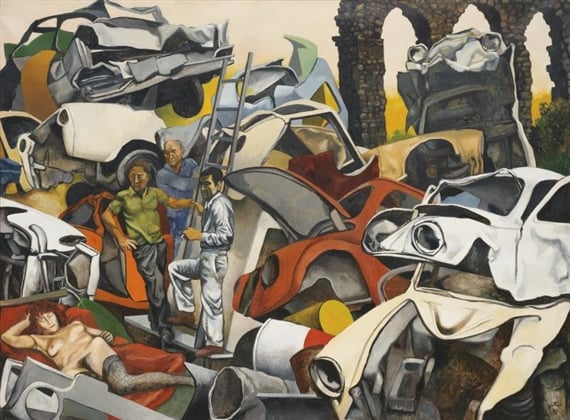
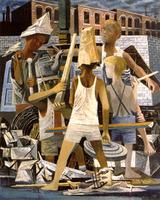
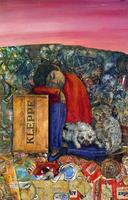
Based on the provided facts, Renato Guttuso's Tre operai e una prostituta gains its significance as a symbolic painting that strategically fuses two distinct stylistic languages—Expressionism and Pop Art—to create a charged social commentary. The work’s emotional intensity, typical of Expressionism, is applied to the raw subject of laborers and a sex worker, while its engagement with recognizable, almost iconic figures (the workers, the prostitute) aligns with the Pop Art focus on mass-culture archetypes. By treating these marginalized, everyday subjects with both the painterly agitation of Expressionism and the bold, flattened figuration of Pop, Guttuso elevates a gritty urban reality into a powerful symbol of class and gender dynamics. This hybridity—pairing the subjective, emotional force of Expressionism with the objective, emblematic stance of Pop—makes the painting a significant bridge between social realism and emerging pop sensibilities, transforming a simple encounter into a resonant emblem of labor, desire, and societal tension.