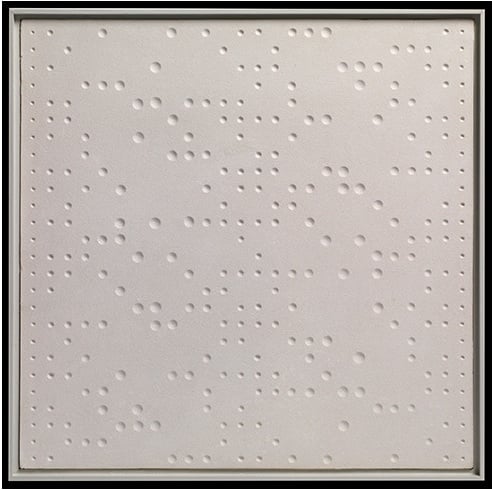
Analyse experte de Weisse Struktur (Spiegelung) de Gerhard von Graevenitz
Style : Op Art · Genre : abstract
Expert Analysis: "Weisse Struktur (Spiegelung)" by Gerhard von Graevenitz
Gerhard von Graevenitz’s “Weisse Struktur (Spiegelung)” exemplifies the core ambitions of Op Art through its rigorous, abstract geometric language. The title itself—German for “White Structure (Mirroring)”—hints at the work’s conceptual foundation: a play of light, surface, and perceptual ambiguity. Executed entirely in white, the piece denies color as a distraction, forcing the viewer to focus solely on the interaction of form, line, and spatial illusion.
Significance within Op Art:
As a leading figure of the European Op Art and Kinetic Art movements, Graevenitz pushed beyond mere pattern to create what he called “visual situations” that activate the eye. In this work, the mirrored symmetry of the composition generates a subtle moiré effect or retinal vibration, a hallmark of Op Art’s desire to destabilize static perception. The “Spiegelung” (mirroring) likely produces a sense of flickering depth or surface tension, making the abstract structure appear to oscillate between flatness and recession. This perceptual instability is the artwork’s central subject—not a representation of the external world, but a direct experience of the act of seeing.
Formal Achievement:
By limiting himself to pure white on white, Graevenitz removes any narrative or symbolic reading. Instead, he foregrounds the structural relationships: precise geometries (perhaps concentric rings, grids, or radiating lines) that reflect and repeat. The result is a meditative but active visual field—a “structure” that invites prolonged scrutiny, challenging the boundary between object and optical effect. This approach connects Graevenitz to contemporaries such as Bridget Riley and Victor Vasarely, yet his quiet, monochrome refinement distinguishes his work as a more contemplative branch of Op Art.
In summary, “Weisse Struktur (Spiegelung)” is significant for its reduction of perceptual art to its essence: light, line, and the viewer’s own retinal response. It stands as a masterful example of how abstract Op Art can transform a static canvas into a dynamic, almost kinetic perceptual event.
Visuellement similaire
20 œuvres à la composition et à la palette proches
Weisse Struktur, Zufallsverteillung II
Gerhard von Graevenitz
Superficie bianca
Enrico Castellani
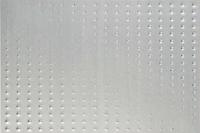
Untitled
Enrico Castellani
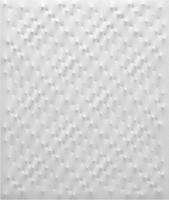
Superficie bianca
Enrico Castellani
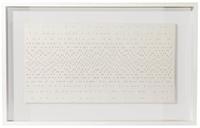
Weiße Struktur
Gerhard von Graevenitz
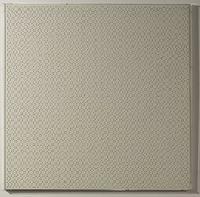
Homogene Struktur mit positiven Elementen
Gerhard von Graevenitz
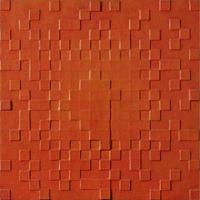
Onata
Gottfried Honegger
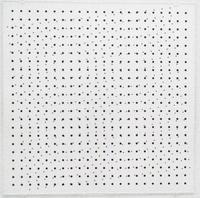
V74-63S
Herman de Vries
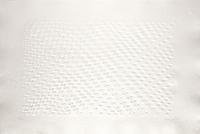
Untitled (Hommage á Santomaso)
Enrico Castellani
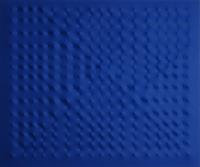
Untitled
Enrico Castellani
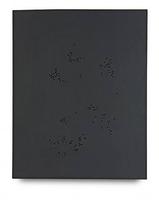
Ponctuation
Pol Bury
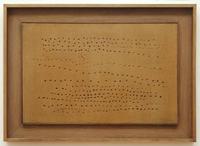
Concept Spatiale
Lucio Fontana
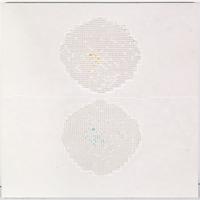
Autere
Rut Bryk
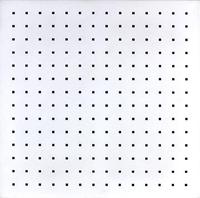
Rythme du millimètre
Aurelie Nemours
Relief painting #19x
Adolf Fleischmann
Forme ovali al negativo
Turi Simeti
Rules of Inference
Mel Bochner
Atmosphère chromoplastique N° 872
Luis Tomasello
Pure Energy, I
Otto Piene
Objet Plastique N° 860
Luis Tomasello