Laura Knight の The Beach の専門的な分析
スタイル:Impressionism · ジャンル:genre painting
Expert Analysis: The Beach by Laura Knight
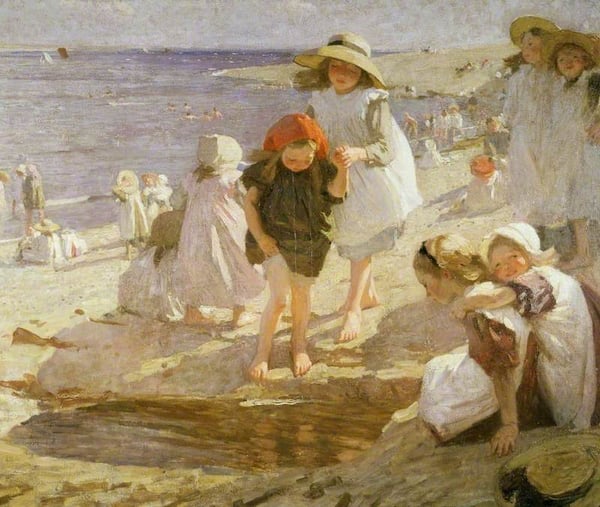
Laura Knight’s The Beach exemplifies the Impressionist commitment to capturing the fleeting effects of light and the textures of modern leisure, while also asserting a distinctly personal vision within the genre‑painting tradition. Painted during the early decades of the 20th century, the work reflects the artist’s fascination with the everyday rhythms of British seaside life—a subject she returned to often, most notably at St. Ives in Cornwall and later at the Lincolnshire coast.
Significance within Impressionism and Genre Painting
-
Light and Atmosphere: Knight adopts the Impressionist technique of broken color and rapid, visible brushstrokes to render the shifting sunlight on sand, sea, and figures. The beach becomes a stage for luminous highlights—the shimmer of wet sand, the sparkle of water, the dappled shadows of parasols—demonstrating her mastery of plein‑air observation. Unlike many French Impressionists who often dissolved human forms into atmosphere, Knight maintains a strong sense of structure and anecdotal detail, balancing the ephemeral with the tangible.
-
Modern Leisure as Subject: The genre‑painting tradition typically depicted scenes of ordinary life, and Knight updates this by focusing on the contemporary phenomenon of public seaside recreation—a democratic, class‑blending activity. Her beachgoers are not idealized; they are real people enjoying a day out: families, bathers, children digging, adults relaxing. This choice aligns with the Impressionist interest in the modern, but Knight infuses it with a warmth and narrative clarity that grounds the work in British social realism.
-
Female Perspective and Professional Recognition: Laura Knight was one of the few British women artists of her era to achieve international acclaim, and The Beach subtly reflects her concern with capturing women’s and children’s experiences. The painting is significant for its unpretentious yet assured viewpoint—it celebrates domestic leisure without sentimentality, while also demonstrating Knight’s technical confidence in handling large groups of figures and complex light conditions. This work helped cement her reputation as a leading figure in the Newlyn School and later as a war artist, showing that the intimate, everyday could be as compelling as the heroic.
Formal Qualities
- Composition: Knight employs a high horizon line that pushes the sandy foreground forward, creating a shallow stage where figures are arranged in a rhythmic, almost musical pattern. The diagonal lines of wet sand and incoming tide lead the eye into the scene, while clusters of bathers provide contrasting points of focus.
- Color Palette: The predominant blues and whites of sky and sea are offset by warm earth tones in the sand and the bright dabs of red, yellow, and pink in clothing and accessories. This deliberate use of complementary colors enhances the sense of sunlight and vibrancy.
- Brushwork: Loose, lively strokes describe the texture of sand and the sparkle of water, while figures are handled with more blocked‑in shapes—a sign of Knight’s ability to differentiate between the static and the moving.
Conclusion
The Beach stands as a significant contribution to early‑20th‑century British Impressionism because it merges the technical innovations of the style—light, color, speed of execution—with a heartfelt, unsentimental portrayal of ordinary pleasure. Laura Knight’s ability to elevate a genre scene into a work of enduring vitality, all while navigating the gendered expectations of her profession, makes this painting a landmark not only in her own career but in the broader history of modern British art.
ジャンル
スタイル
視覚的に類似
構図やパレットが近い作品 20 件
Fishing for Oysters at Cancale
John Singer Sargent
The Sisters
Frank W. Benson
Laundresses on Lake Garda
Ettore Tito

Summer Holidays
Julian Ashton
Fisherwomen
Joaquín Sorolla

Breezy Day
Ralph Hedley
A Wreath of Flowers
William Brymner
Beach Scene
Edward Henry Potthast
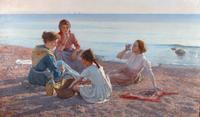
La Merenda
Elin Danielson-Gambogi
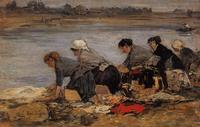
Laundresses on the Banks of the Touques
Eugene Boudin

The berry pickers
Winslow Homer
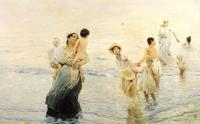
July (On the beach)
Ettore Tito
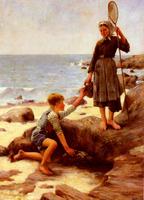
Child fishermen
Jules Bastien-Lepage
Souvenir de dour Amenez
Jules Breton
The Balloon Vendor
Edward Henry Potthast
A Mother and her Children Picking Flowers
Haddon Sundblom
Laundresses on the Banks of the Touques
Eugene Boudin
Laundresses on the Banks of the Touques
Eugene Boudin
Valencian Fishwives
Joaquín Sorolla
A Apanha do sargaço
António de Carvalho da Silva Porto