Expert analysis of Henry Fuseli’s The Nightmare
Style: Romanticism · Genre: symbolic painting
Analysis of The Nightmare by Henry Fuseli
Style & Period Context:
As a defining work of Romanticism, The Nightmare embodies the movement’s break from Enlightenment rationality, instead embracing intense emotion, the sublime, and the irrational. Romantic artists prioritized subjective experience, often delving into the darker recesses of the human psyche—a departure from the order and clarity of Neoclassicism.
Symbolic Painting & Significance:
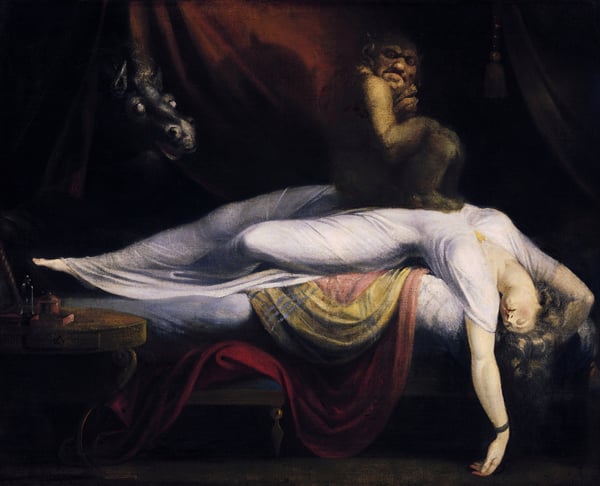
This symbolic painting is revolutionary for its direct visualization of a psychological state: the nightmare as a tangible, terrifying presence. Fuseli compresses multiple symbols into a single, dreamlike tableau:
- The recumbent woman (limp, exposed, bathed in moonlight) symbolizes vulnerability and the helplessness of the dreamer.
- The incubus (a demonic, ape-like figure perched on her torso) represents the oppressive, sexualized weight of anxiety and repressed desire.
- The horse’s head (the "mare" of "nightmare") thrusts through the curtain, embodying the sudden, uncontrollable rush of dread.
Significance within Romanticism:
Fuseli’s work pioneered the Romantic exploration of the subconscious, predating Freudian psychoanalysis by over a century. It challenged viewers to confront fear, sexuality, and the irrational—themes that would later define Gothic literature and Symbolist art. The painting’s theatrical lighting, distorted anatomy, and unsettling ambiguity (is the woman dreaming or dying?) amplify its emotional power, making it a touchstone for Romanticism’s obsession with the sublime and the macabre. Its influence can be seen in later works by Goya, Blake, and even the Surrealists.
Conclusion:
The Nightmare is significant not only as a masterful symbolic painting but as a seminal Romantic statement: it visualizes the inner landscape of terror, legitimizing psychological experience as a subject for high art. Fuseli’s fusion of classical allusion (the sleeping figure echoes Ariadne) with raw, modern anxiety marks a pivotal moment in art history.
Museum / Gallery
Visually similar
20 works with related composition and palette
Pesadilla (parafrasis de Fuseli)
Vlady
Sleeping Venus
Artemisia Gentileschi
La nieta de Trini
Julio Romero de Torres
The Dream of Queen Katherine
Henry Fuseli
Danae
Titian
Endymion
George Frederick Watts
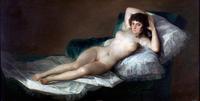
Nude Maja
Francisco Goya
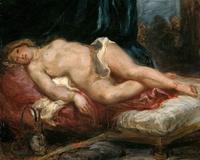
Odalisque
Eugene Delacroix
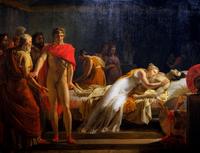
Briséis Rendue À Achille Découvre Dans Sa Tente Le Corps De Patrocle
Léon Cogniet
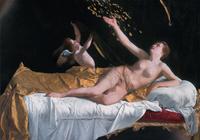
Danae
Orazio Gentileschi
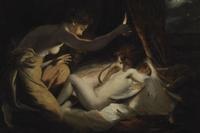
Cupid and Psyche
Joshua Reynolds
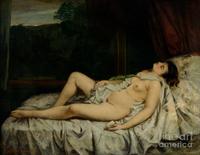
Sleeping Nude
Gustave Courbet
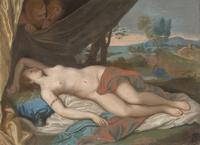
Sleeping nymph spied by satyrs (after a painting based on a print by Anthony van Dyck)
Jean-Étienne Liotard
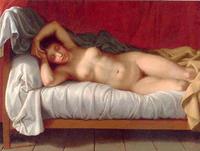
Lying Model in Bed
Christoffer Wilhelm Eckersberg
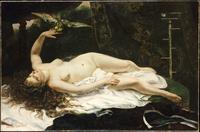
Woman with a Parrot
Gustave Courbet
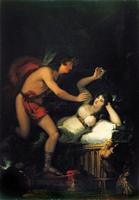
Allegory of Love. Cupid and Psyche
Francisco Goya
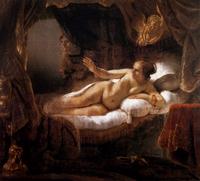
Danae
Rembrandt
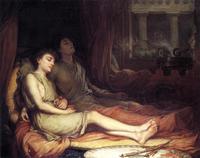
Sleep and His Half Brother Death
John William Waterhouse
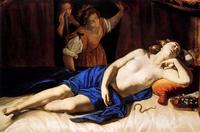
Cleopatra
Artemisia Gentileschi
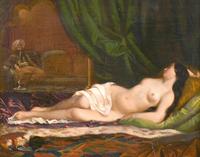
Study of a naked recumbent female draped in a diaphanous cloth
Leopold Muller