
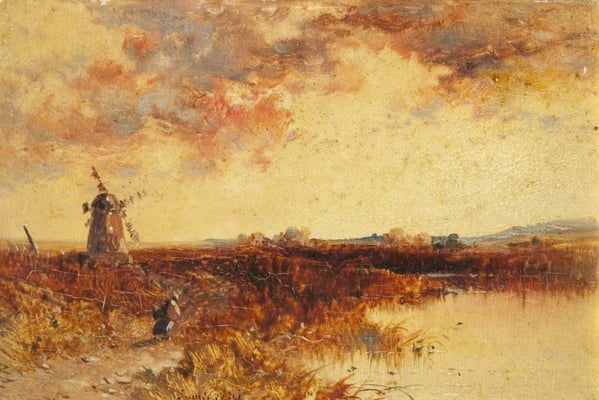
Scene with a Windmill
Expertenanalyse zu James Webbs Scene with a Windmill
Stil: Romanticism · Genre: landscape
Expert Analysis of "Scene with a Windmill" by James Webb
Art Historical Context
As a work of Romanticism within the landscape genre, James Webb’s Scene with a Windmill exemplifies the movement’s core concern with nature as a source of emotional power and spiritual reflection. Romantic landscapes often sought to evoke awe, nostalgia, or a sense of the sublime—a response to the rapid industrialization and urbanization of the 19th century. Webb, a British painter active during the height of the Romantic period, specialized in atmospheric scenes that balanced topographical accuracy with poetic sentiment.
Significance of the Work
-
Symbolism of the Windmill
The windmill itself is a charged motif in Romantic art. It represents both the pastoral past and humanity’s harmonious interaction with nature—a pre-industrial symbol of organic labor. Its presence in the scene suggests a quiet, enduring rhythm against the backdrop of an ever-changing sky, aligning with Romanticism’s nostalgia for a simpler, more authentic world. -
Treatment of Light and Atmosphere
While specific visual details are not provided, the title implies a focus on transient atmospheric effects—a hallmark of Romantic landscapes. Webb was known for his skilled rendering of light over water and land, often capturing dramatic cloud formations or the golden hour. In Scene with a Windmill, such treatment would likely amplify the emotional resonance: the structure may be silhouetted against a luminous sky, or bathed in a soft, diffused glow that unifies the composition. -
Genre and Emotional Intent
As a pure landscape, the work prioritizes the mood of the natural environment over narrative. This was a deliberate Romantic choice: the scene invites contemplation rather than storytelling. The windmill, partially obscured or foregrounded, serves as an anchor for the viewer’s gaze, guiding an emotional journey through space and weather. The absence of human figures (typical in Webb’s works) further universalizes the experience, making the viewer a solitary witness to nature’s grandeur.
Contribution to Romanticism
Scene with a Windmill is significant as a prime example of Romantic landscape painting that bridges the picturesque and the sublime. It captures the tension between human presence and natural forces—the windmill, a man-made structure, is subject to the same wind and light that shape the clouds and fields. This interplay reinforces Romantic ideals of nature as both a nurturing and overwhelming power. Webb’s work, though less known than that of Turner or Constable, offers a refined, intimate meditation on these themes, making this painting a valuable study in the period’s visual poetry.
Visuell ähnlich
20 Werke mit ähnlicher Komposition und Farbpalette
A Sunset
James Webb
View at Geestbrug
Johan Hendrik Weissenbruch
Canal at Rijswijk
Johan Hendrik Weissenbruch
Dutch polder landscape
Johan Hendrik Weissenbruch
A Bit of Sussex
James Webb
Mill at the lake
Johan Hendrik Weissenbruch
Hayes Common
James Webb
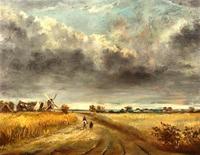
Landscape
Georges Michel
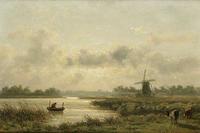
Lac et paysage, Hollande
Johannes Joseph Destrée
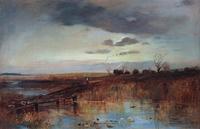
Autumn. Village near the stream
Aleksey Savrasov
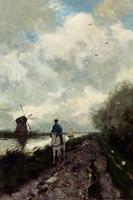
On The Tow Path Along The River Amstel
Johan Hendrik Weissenbruch
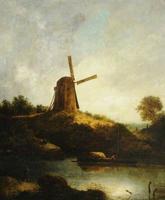
The Windmill
John Crome
A Dutch summer landscape with a hunter in the foreground, possibly near Overschie
Johannes Joseph Destrée
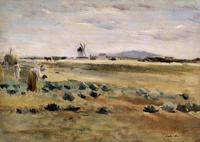
The Little Windmill at Gennevilliers
Berthe Morisot
River in Ukraine
Efim Volkov
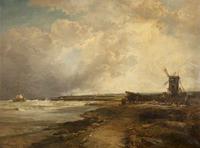
After a Thunderstorm on the Sussex Coast
James Webb
River Scene with Boys Fishing
David Cox
Summer landscape with windmills
Aleksey Savrasov
Approaching Storm
Thomas Moran
Untitled
Eugene Boudin