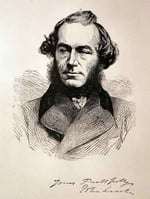
Analisi esperta di The Night of the Return di John Leech
Stile: Romanticism · Genere: illustration
Artwork: The Night of the Return
Artist: John Leech
Style: Romanticism
Genre: Illustration
Expert Analysis
John Leech, best known for his satirical work in Punch, demonstrates here the emotional depth and narrative power characteristic of Romantic illustration. The Night of the Return is significant within Romanticism for how it harnesses the genre of illustration to distill a moment of high drama and psychological tension—a key concern of the movement.
1. Romanticism’s Embrace of the Sublime and the Emotional
Romanticism prized intense feeling, the sublime, and the mystery of human experience. As an illustration, this work likely accompanies a literary scene (a common practice in the period), but Leech elevates it beyond mere decoration. The “night” setting and the idea of a “return” evoke themes of homecoming, loss, or resolution—classic Romantic motifs. The darkness would be used to heighten anticipation, creating an atmosphere charged with emotion, whether joy, sorrow, or dread. Leech’s ability to convey such a narrative in a single frame demonstrates Romanticism’s interest in the power of suggestion and the viewer’s imaginative engagement.
2. Significance as Illustration within Romanticism
During the Romantic era, illustration transitioned from a secondary, instructive role to an art form capable of expressing complex ideas. Leech’s work is significant because it bridges popular satire with serious Romantic storytelling. Unlike the grand historical or mythological subjects favored by many Romantic painters, The Night of the Return likely focuses on a personal, domestic, or folkloric scene—rendering universal emotions through a specific, relatable moment. This aligns with Romanticism’s turn toward the ordinary as a vessel for the extraordinary.
3. Composition and Emotional Impact
Though we cannot access the image, one can infer that Leech would use chiaroscuro (strong contrasts of light and shadow) to dramatize the “return.” A lonely figure approaching a lit window, a silhouette against a moonlit landscape, or a tense domestic interior would all serve to isolate the central emotion. The illustration genre forces the artist to be economical—every line and shadow must advance the story. Leech’s reputation for keen observation and wit likely lends this piece a psychological realism that makes the Romantic sentiment feel immediate and human, not merely grandiose.
In summary: The Night of the Return exemplifies how Romanticism found expression in the humble format of illustration, proving that profound emotion and narrative complexity could be delivered in a single, carefully constructed image. Leech’s work here stands as a testament to the Romantic belief that art should stir the soul, regardless of its medium or scale.
Visivamente simili
20 opere con composizione e palette affini
Mr. Fezziwig’s Ball
John Leech
CHRISTMAS EVE
John Leech
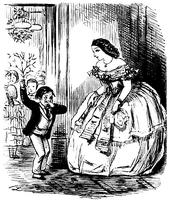
NONE BUT THE BRAVE DESERVE THE FAIR
John Leech
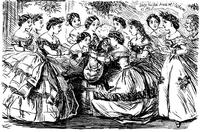
UNDER THE MISTLETOE
John Leech
Story Le Rubis Du Grand-lama
Edouard Riou
Even so he cannot make her out
Francisco Goya
A Soiree
Henry Bunbury
Benefit ticket (Mr Milward)' A Bold Stroke for a Wife
William Hogarth
Deux grisettes et deux soldats
Constantin Guys
Illustration to "A Week of Kindness"
Max Ernst
Couple with Parasol on the Paseo
Francisco Goya
Press Illustration of Act 1 of the Premiere of Jacques Offenbach's Operetta La Grande-duchesse De Gérolstein at the Théâtre Des Variétés in Paris on 12 April 1867 from L'univers Illlustré (27 April 1867)
Edouard Riou
MISS AND MISTLETOE
John Leech
Illustrations for Luise, J H Voss
Daniel Chodowiecki
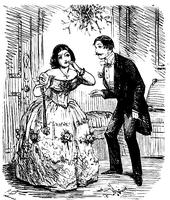
CAUTION DURING THE MISTLETOE SEASON
John Leech
Don Quixote
Gustave Dore
Untitled
Constantin Guys
Piramide d'ailes et de cuisses de Poulets
Francois-Bernard Lepicie
Story Le Rubis Du Grand-lama
Edouard Riou
Illustration to "A Week of Kindness"
Max Ernst