Marius discovered in the Marshes at Minturnæ
詳細
John Leech の Marius discovered in the Marshes at Minturnæ の専門的な分析
スタイル:Romanticism · ジャンル:illustration
Expert Analysis of "Marius discovered in the Marshes at Minturnæ" by John Leech
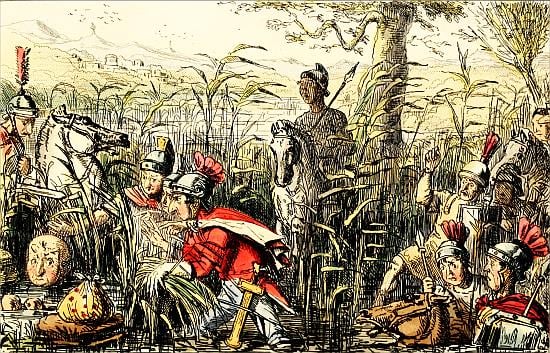
Style Context (Romanticism) This illustration exemplifies key tenets of Romanticism: the privileging of intense emotion, the sublime power of nature, and the heroic individual confronting fate. The marshes are not a mere backdrop but an active, engulfing environment—a classic Romantic trope where landscape mirrors psychological turmoil. The moment depicted—Marius, the exiled Roman general, discovered hiding in the reeds—dramatizes the Romantic fascination with historical figures caught between greatness and ruin.
Genre Significance (Illustration) As an illustration, the work demonstrates how Romantic ideals were disseminated beyond grand oil paintings into accessible printed media. John Leech is best known for his satirical cartoons in Punch, yet here he adopts a somber, narrative gravity. This shift highlights the range of illustration in the 19th century: it could serve both humor and high drama. The composition—with Marius’s hunched form nearly submerged, the soldiers looming—uses visual storytelling to compress a legendary episode into a single, legible frame.
What Makes It Significant
- Contrast within an artist’s oeuvre: Leech’s typical reputation rests on comedic or social caricature. This piece reveals his capacity for Romantic pathos, broadening our understanding of Victorian illustration's emotional and historical ambitions.
- Embodiment of Romantic heroism: Marius—defeated yet defiant, found in degrading circumstances—captures the Romantic belief in the dignity of the solitary outcast. The marshes become a symbol of both abjection and resilience.
- Technical economy for emotional impact: As an illustration, the work must communicate swiftly. Leech uses stark contrasts between the dark, clinging mud and the pale sky, the tension between the vertical spears of the soldiers and Marius’s horizontal, vulnerable posture. This economy of means is a hallmark of effective narrative art.
In sum, "Marius discovered in the Marshes at Minturnæ" is significant as a Romantic illustration that transcends its genre, proving that even a caricaturist could elevate a historical anecdote into a visual meditation on downfall and endurance.
ジャンル
スタイル
視覚的に類似
構図やパレットが近い作品 20 件
Pyrrhus Arrives in Italy with his Troupe
John Leech
Combat between the Horatii and Curiatii
John Leech
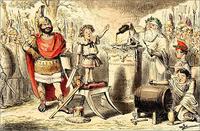
Hannibal, whilst even yet a Child, swears Eternal Hatred to the Romans
John Leech
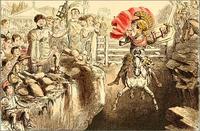
The Gallant Curtius Leaping into the Gulf
John Leech
Don Quixote
Gustave Dore
Lotz Itt is Antik Tárgyat Óhajtott, Félvén Attól, Hogy a Magyar Kultúra Történetéből Nem Lehet Elég Anyagot Meríteni
Károly Lotz
Flaminius Restoring Liberty to Greece at the Isthmian Games
John Leech
Don Quixote
Gustave Dore
Don Quixote
Gustave Dore
The Israelites Slaughter the Syrians
Gustave Dore
Christ Taken Captive
Albrecht Durer
Mucius Scævola before Porsenna
John Leech
Metius aggravating Titus Manlius
John Leech
Diogenes and Alexander
Salvator Rosa
Don Quixote
Gustave Dore
Appius Claudius Punished by the People
John Leech
Tarquinius Superbus makes himself King
John Leech
Curius Dentatus refusing the Magnificent Gift offered by the Samnite Ambassadors
John Leech
Jesus carried to Calvary
Giovanni Battista Piranesi
Jesus carried to Calvary
Giovanni Battista Piranesi