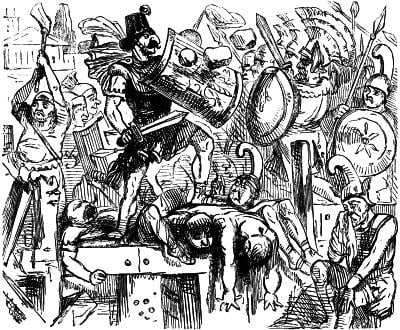
Horatius Cocles Defending the Bridge
Details
Expert analysis of John Leech’s Horatius Cocles Defending the Bridge
Style: Romanticism · Genre: illustration
Expert Analysis: "Horatius Cocles Defending the Bridge" by John Leech
This illustration by John Leech, executed in the Romantic style, captures a pivotal moment from early Roman legend: the lone defense of the Sublician Bridge against the Etruscan army by the heroic Horatius Cocles. As an illustration, the work is significant for bringing a classical, monumental subject into popular Victorian print culture, marrying Leech’s celebrated skill as a comic and narrative draftsman with the high drama of Romantic history painting.
Significance within Romanticism and Illustration
- Romantic Heroism: Leech presents Horatius as the quintessential Romantic hero—solitary, defiant, and emotionally charged. The composition centers on the figure’s dynamic stance, emphasizing individual courage against overwhelming odds. The turbulent background, with swirling water and dark, sketch-like clouds, heightens the sublime atmosphere typical of Romanticism, evoking both the violence of battle and the nobility of self-sacrifice.
- Genre Crossing: Though Leech is best known for his satirical cartoons in Punch magazine and his illustrations for Charles Dickens’s A Christmas Carol, this work demonstrates his versatility. Here he adapts his lively, accessible linework to a dignified historical scene, proving that illustration could convey the same gravitas as large-scale history painting. The piece bridges the gap between popular visual journalism and the fine arts, a key development in 19th-century visual culture.
- Narrative Clarity: As an illustration, the image must tell a story instantly. Leech achieves this through stark contrasts: the single upright figure of Horatius versus the massed spears of the enemy; the solid bridge behind him versus the broken terrain ahead. The viewer is drawn into the climax—the moment before the bridge falls—making the historical legend visceral and immediate for a broad audience.
Legacy
Leech’s “Horatius Cocles” stands as a testament to how Romantic ideals of heroism permeated even the most humble genres. By treating a classical legend with the same emotional intensity reserved for contemporary revolutions or epic poems, he elevated illustration from mere decoration to a vehicle for moral and historical edification, reflecting the Victorian era’s fascination with ancient virtue as a mirror for modern character.
Genre
Style
Visually similar
20 works with related composition and palette
Combat between the Horatii and Curiatii
John Leech
The death of Epaminondas
Bartolomeo Pinelli
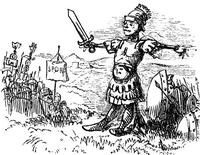
A Scare-crow
John Leech
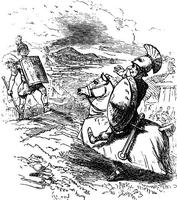
Metius aggravating Titus Manlius
John Leech
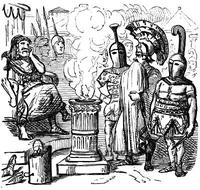
Mucius Scævola before Porsenna
John Leech
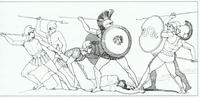
The Fight for the Body of Patroclus. Illustration to the Iliad
John Flaxman
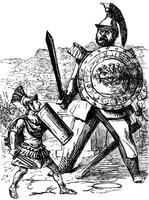
Terrific Combat between Titus Manlius and a Gaul of gigantic Stature
John Leech
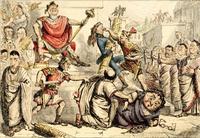
Tarquinius Superbus makes himself King
John Leech
The Death of Abimelech
Gustave Dore
Illustration to the Iliad
John Flaxman
He became a target for every arrow
Walter Crane
Illustration to the Iliad
John Flaxman
Design for the Fugger Chapel in Augsburg Samson fighting the Philistines
Albrecht Durer
Curius Dentatus refusing the Magnificent Gift offered by the Samnite Ambassadors
John Leech
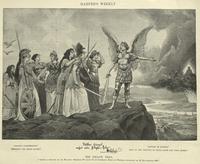
People of Europe, Guard Your Dearest Goods
Hermann Knackfuss
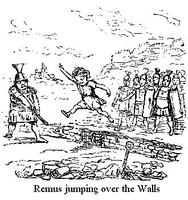
Remus jumping over the Walls
John Leech
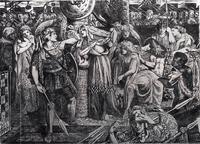
Cassandra
Dante Gabriel Rossetti
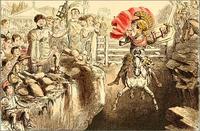
The Gallant Curtius Leaping into the Gulf
John Leech
Marius discovered in the Marshes at Minturnæ
John Leech
Illustration to Odyssey
John Flaxman