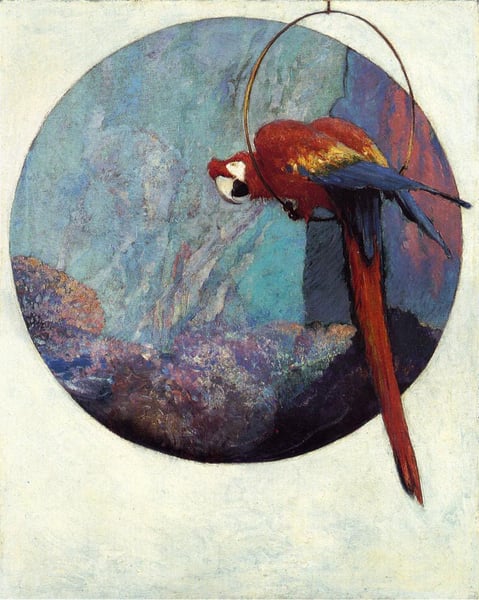
Analisi esperta di Study for 'Polly' di Robert Lewis Reid
Stile: Impressionism · Genere: sketch and study
Expert Analysis of "Study for 'Polly'" by Robert Lewis Reid
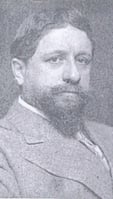
Robert Lewis Reid (1862–1929) was a prominent American Impressionist and a member of the influential group The Ten American Painters, which broke away from the more conservative National Academy of Design to champion a lighter palette, modern subjects, and the primacy of light and color. This work, Study for "Polly", is a sketch and study—a category often overlooked in art history but essential to understanding the Impressionist creative process.
Significance within Impressionism and its Period:
-
Revealing the Artist's Process: In Impressionism, the étude (study) was not merely a preliminary drawing but a vital step in capturing the fleeting effects of light and atmosphere. Reid’s study for "Polly" likely served as a direct notation of a specific moment, focusing on the sitter’s pose, the fall of light on her face and dress, and the overall tonal harmony—before committing to a finished canvas. This gives us insight into how Reid resolved compositional and color problems in real time.
-
Championing the "Sketch" as Finished Art: While Impressionism is famous for its plein air paintings, many artists—including Reid—elevated the sketch to an artwork in its own right. The looseness of the brushwork, the visible pentimenti (changes made during creation), and the incomplete edges are not flaws but deliberate choices that convey spontaneity. In this sense, the study is significant because it embodies the Impressionist ideal of capturing a "slice of life" with freshness and immediacy, even in a preparatory stage.
-
American Impressionism’s Distinctive Touch: Reid, like his American peers, blended French Impressionist techniques with a softer, more decorative sensibility. His studies often emphasize elegant line and balanced composition, reflecting his training at the Académie Julian and his later work in murals. Study for "Polly" likely demonstrates this synthesis: the dappled light and pastel hues of Impressionism are tempered by a controlled draftsmanship that nods to academic tradition, making it a key example of how American artists adapted Impressionist principles for a domestic, intimate portrait.
-
A Glimpse into Reid’s Portraiture: The finished painting "Polly" (if extant) would have been a formal portrait. This study, however, offers a rawer, more vulnerable depiction. It shows Reid working out the psychological presence of the sitter—her gaze, her posture—without the polish of a final commission. For modern viewers, such studies are invaluable for appreciating the artist’s decision-making and the underlying structure of his better-known works.
In summary, Study for "Polly" is significant not as a lesser sketch but as a quintessential Impressionist document: it captures the artist’s hand in action, preserves the fleeting beauty of a moment, and bridges the gap between academic discipline and modernist freedom. It stands as a testament to Reid’s mastery and the American Impressionist movement’s enduring fascination with light, atmosphere, and the intimacy of the creative process.
Genere
Stile
Visivamente simili
20 opere con composizione e palette affini
Red and Blue Macaw
Henry Stacy-Marks
Scarlet Macaws
Gregorio Undurraga
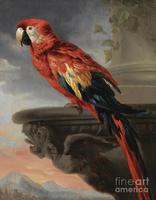
Parrot
Peter Paul Rubens
Macrocercus aracanga (Ara macao)
Edward Lear
Blue Lady with Parrots
Walasse Ting

Red dead parrot
Kinder Album
Three Parrots
Walasse Ting
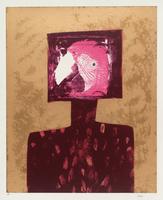
Kelly V
Sidney Nolan
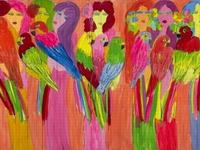
Ladies with Parrots
Walasse Ting
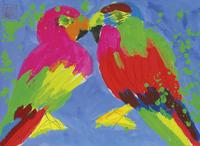
Two Parrots
Walasse Ting
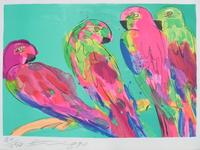
Parrots
Walasse Ting
Still life of Macaw, Chinese Vase and Fruit
Alexander Pope
Still life with parrot
Adrien Moreau
Three Ladies and Parrots
Walasse Ting
Many Parrots
Walasse Ting
Papagallos
José Garnelo
Cedric Morris
Frances Hodgkins
Parrot Haven
Wu Guanzhong
Red Parrot, Green Parrot
Walasse Ting
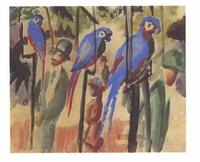
Blue Parrots
August Macke