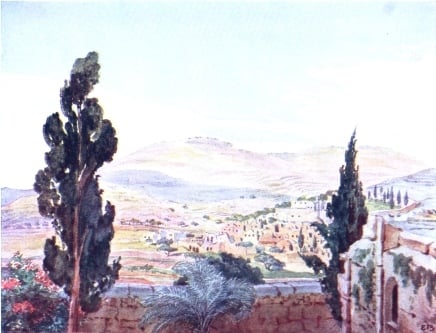
Ain Kareem, reputed birthplace of John the Baptist, from roof of Convent of the Visitation
Details
Expertenanalyse zu Elizabeth Thompsons Ain Kareem, reputed birthplace of John the Baptist, from roof of Convent of the Visitation
Stil: Romanticism · Genre: landscape
Expert Analysis: “Ain Kareem, reputed birthplace of John the Baptist, from roof of Convent of the Visitation” by Elizabeth Thompson
This landscape by Elizabeth Thompson — better known as Lady Butler, the celebrated painter of military scenes — represents a departure from her typical subject matter, yet it remains deeply rooted in the Romantic spirit. Painted in the style of Romanticism, the work transforms a topographically specific view into a meditation on history, faith, and the sublime.
Significance within Romanticism
- Sacred Geography: Romantic artists often sought to fuse landscape with narrative and emotion. Here, Thompson selects a site laden with biblical resonance: Ain Kareem, traditionally identified as the birthplace of John the Baptist. By framing the view from the roof of the Convent of the Visitation, she invites the viewer to see the Holy Land not as a tourist snapshot but as a stage for sacred history. The ordinary rooftops and hills become charged with spiritual and temporal depth.
- Romantic Topography: The composition likely emphasizes the interplay of light, atmosphere, and rugged terrain — hallmarks of Romantic landscape painting. The elevated vantage point creates a sense of contemplation, of looking out upon a land that has witnessed millennia. This aligns with Romanticism’s fascination with the genius loci (spirit of place) and the power of nature to evoke awe and introspection.
- Historical and Personal Context: Thompson’s choice to paint this scene is significant. As a female artist working in the late 19th century, she navigated a male-dominated canon. While her military paintings earned her fame, this work shows her engagement with the Romantic tradition of pilgrimage and the picturesque Orient — a genre often dominated by men. Her delicate handling of the landscape suggests a nuanced, personal connection to the site, combining documentary accuracy with poetic sensibility.
What Makes It Remarkable
- Fusion of Genres: Although classified as a landscape, the painting functions as a historical-religious allegory. The specific title announces the location’s biblical importance, turning a panoramic view into a devotional and reflective piece.
- Romantic Departure: Unlike the grand battle panoramas for which Thompson was known, this work is intimate, quiet, and contemplative. It proves her versatility and her ability to infuse even a calm landscape with the emotional intensity and narrative weight central to Romanticism.
- Cultural Significance: Ain Kareem remains a site of Christian pilgrimage. Thompson’s painting captures the Romantic era’s longing for authenticity and connection to the ancient world — a visual pilgrimage that resonates with the period’s interest in the Orient, the sacred, and the sublime.
In sum, this work stands as a testament to Elizabeth Thompson’s breadth as an artist and to Romanticism’s enduring power to find the eternal in the immediate, the holy in the hillside.
Visuell ähnlich
20 Werke mit ähnlicher Komposition und Farbpalette
Nazareth at Sunrise
Elizabeth Thompson
Jerusalem
Konstantin Gorbatov
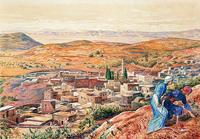
Distant View of Nazareth
William Holman Hunt
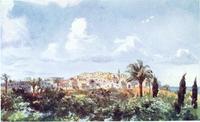
Jaffa
Elizabeth Thompson
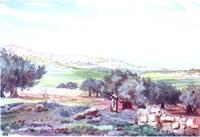
Bethlehem from the Sheepfold, Field of Boaz
Elizabeth Thompson
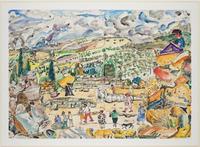
Ruins
Red Grooms
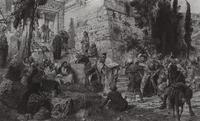
Christ and the Sinner
Vasily Polenov
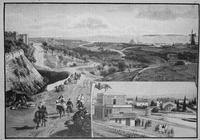
View from Jaffathor in Jerusalem
Gustav Bauernfeind
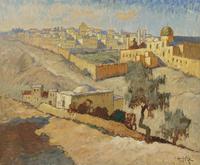
Jerusalem
Konstantin Gorbatov
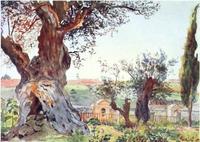
In the Garden of Gethsemane. Noonday. Looking towards Valley of Jehoshaphat
Elizabeth Thompson
View of the Dead Sea from the Temple Square in Jerusalem
Tivadar Kosztka Csontvary
Moonlight over Bethlehem
Josef Langl
The Healing of Ten Lepers (Guérison de dix lépreux)
James Tissot
Mediterranean Landscape
John Singer Sargent
Landscape on the railway line from Jaffa to Jerusalem
Gustav Bauernfeind
Jerusalem, Looking to Mount Scopus
David Bomberg
Jerusalem from the Road Leading to Bethany
David Roberts
Jerusalem from the Mount of Olives
Frederic Edwin Church
He Went Through the Villages on the Way to Jerusalem
James Tissot
Vejen Til Betania
Hans Andersen Brendekilde