
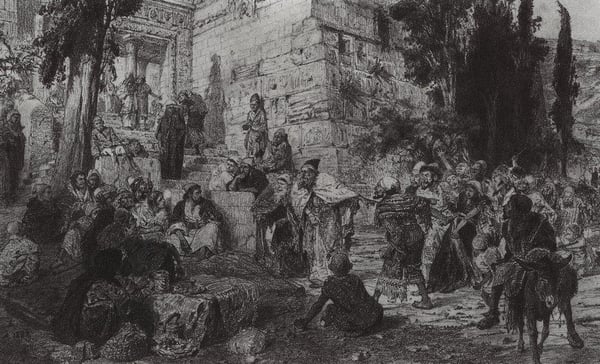
Expertenanalyse zu Vasily Polenovs Christ and the Sinner
Stil: Realism, Orientalism · Genre: religious painting
Expert Analysis: "Christ and the Sinner" (1888) by Vasily Polenov
Polenov’s Christ and the Sinner marks a pivotal moment in Russian religious painting, where the sacred narrative is reimagined through the twin lenses of Realism and Orientalism, defying traditional iconographic conventions.
Significance within Realism:
Unlike the hierarchical, otherworldly depictions common in Orthodox iconography, Polenov grounds the biblical scene in tangible, human terms. Christ is not a remote, haloed figure but a weary, compassionate man engaged in a tense dialogue with a crowd. The sinner herself is portrayed with psychological nuance—her posture and averted gaze convey shame and vulnerability. This naturalistic treatment reflects the Realist belief in depicting truth, even in sacred history, making the moral core of the story accessible through everyday human emotion.
Significance within Orientalism:
Polenov traveled extensively in the Middle East to research local architecture, textiles, and landscapes. His meticulous attention to detail—from the sun-baked stones of Jerusalem to the layered robes and headdresses—imbues the scene with ethnographic authenticity. This Orientalist approach was revolutionary for its time: it placed Christ firmly within a specific historical and geographical context (1st-century Palestine), challenging viewers to see the Gospel story as a real event occurring in a specific place, rather than a timeless allegory.
Aesthetic and Narrative Innovation:
Executed on a monumental scale (over 3 meters wide), the painting emphasizes the drama of the crowd’s accusation versus Christ’s stillness. The composition draws the eye to Christ’s calm gesture—his finger tracing the famous “He that is without sin” in the dust—while the surrounding Pharisees and onlookers are rendered as diverse, individualized types. Polenov’s skillful use of light and shadow heightens the contrast between the harsh judgment of the mob and the soft illumination falling on Christ’s face, underscoring the theme of mercy.
Impact and Legacy:
When exhibited, the painting sparked controversy for its departure from traditional church art, yet it was later acquired by Emperor Alexander III and became a cornerstone of the Russian Museum’s collection. It paved the way for later artists to approach biblical subjects with historical authenticity and emotional realism, bridging the gap between academic tradition and the emerging modernist sensibility. Polenov’s work remains a landmark in religious painting for its fusion of ethnographic precision, humanist compassion, and narrative power.
Visuell ähnlich
20 Werke mit ähnlicher Komposition und Farbpalette
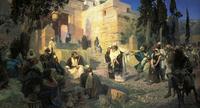
A depiction of Jesus and the woman taken in adultery
Vasily Polenov
Christ and the Sinner
Vasily Polenov
Christ and the Sinner
Vasily Polenov
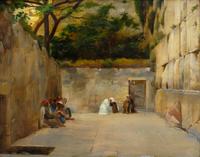
The Wailing Wall, Jerusalem
Théodore Ralli
Ain Kareem, reputed birthplace of John the Baptist, from roof of Convent of the Visitation
Elizabeth Thompson
Was filled with wisdom
Vasily Polenov
The Mosque of Omar. Haram el-Sharif.
Vasily Polenov
At the Entrance to the Temple Mount, Jerusalem
Gustav Bauernfeind
Baalbek, General View
David Roberts
The Holy Women return from Christ's tomb
Pierre Jean Van der Ouderaa
Study for The Jews' Wailing Place
Henry Ossawa Tanner
Petra. Ruins of a Triumphal Arch
David Roberts
Christ and Sinner
Henryk Siemiradzki
The Wailing Wall, Jerusalem
Carl Haag
The Wailing Wall, Jerusalem
Carl Haag
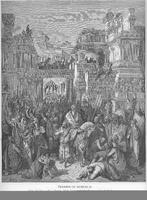
The Triumph of Mordecai
Gustave Dore
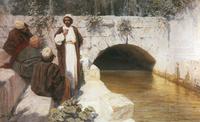
What People Think about Me
Vasily Polenov
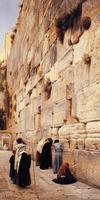
The Wailing Wall, Jerusalem
Gustav Bauernfeind
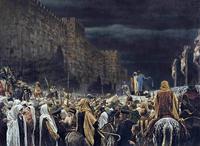
A Crucifixion in the Time of the Romans
Vasily Vereshchagin
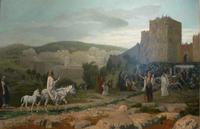
Entry of the Christ in Jerusalem
Jean-Leon Gerome