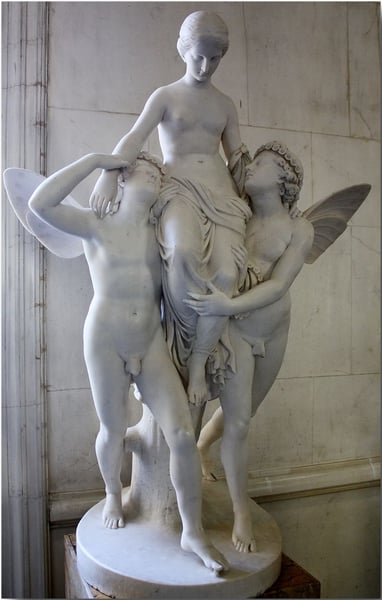
Psyche carried by the Zephyrs
Expert analysis of John Gibson’s Psyche carried by the Zephyrs
Style: Neoclassicism · Genre: sculpture
Expert Analysis: "Psyche carried by the Zephyrs" by John Gibson
As a masterwork of Neoclassical sculpture, John Gibson’s Psyche carried by the Zephyrs achieves its significance through a sublime synthesis of classical mythology, idealized form, and serene emotional restraint—hallmarks of the Neoclassical style. The work captures the moment from Apuleius’s The Golden Ass when the wind gods (Zephyrs) gently transport the mortal Psyche to Cupid’s palace. Gibson’s treatment exemplifies Neoclassicism’s core tenets: clarity of composition, balanced poses, and a cool, polished surface that eschews Baroque dynamism in favor of timeless grace.
The sculpture’s significance lies first in its pure Neoclassical vocabulary. Psyche’s figure is rendered with anatomically idealized proportions, her drapery clinging in rhythmic, wet-fabric folds that recall Greco-Roman reliefs. The Zephyrs are conceived as supporting, ethereal presences—their wings and flowing forms create a buoyant, spiraling silhouette that nevertheless remains contained within a stable, pyramidal composition. This delicate interplay of upward motion and grounded harmony is a Neoclassical solution: emotion is implied through gesture (Psyche’s relaxed, trusting posture) rather than overt expression, aligning with the period’s valorization of reason and decorum.
Furthermore, the work demonstrates Gibson’s signature material sensibility. Carved in marble, the sculpture exploits the stone’s translucency and smoothness to evoke flesh and air. The contrast between Psyche’s polished skin, the textured flutter of her hair, and the rougher wind-washed surfaces of the Zephyrs’ bodies creates a rich visual rhythm. This attention to surface and light reinforces Neoclassicism’s debt to antique sculpture’s “finish” while asserting Gibson’s technical mastery.
Finally, the subject itself—a mortal soul (Psyche) borne aloft by divine winds—serves as an allegory for Neoclassicism’s central aspiration: the elevation of human experience through classical ideals. In Psyche carried by the Zephyrs, Gibson achieves a poised, ethereal beauty that transcends narrative, embodying the Neoclassical pursuit of universal, harmonious perfection. It stands as a testament to how the style could render mythological flight with gravity and grace, securing its place as a significant example of 19th-century Neoclassical sculpture.
Visually similar
20 works with related composition and palette
Young Bacchus
Giovanni Duprè
Hylas Surprised by the Naiades
John Gibson
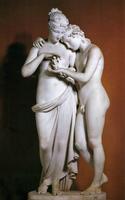
Cupid and Psyche
Antonio Canova
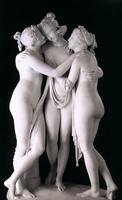
The Three Graces
Antonio Canova
Cain
Giovanni Duprè
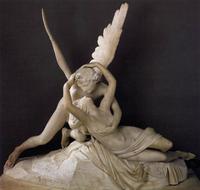
Cupid and Psyche
Antonio Canova
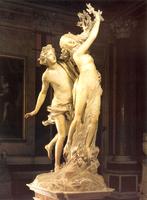
Apollo and Daphne
Gian Lorenzo Bernini
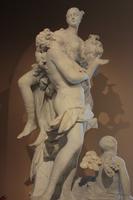
Zephyr and Flora
Antonio Corradini
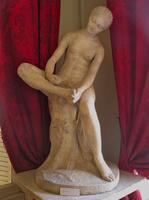
Statue of Woman Pulling Thorn from Her Foot
Jean-Baptiste Pigalle
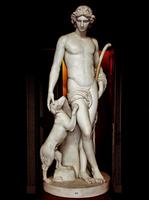
Pastoral Apollo
John Flaxman
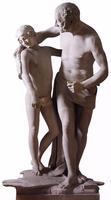
Daedalus and Icarus
Antonio Canova
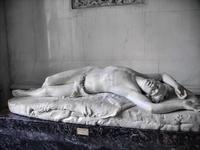
Abel
Giovanni Duprè
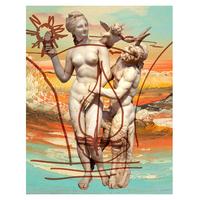
Antiquity 1
Jeff Koons
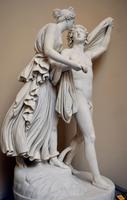
Cephalus and Aurora
John Flaxman
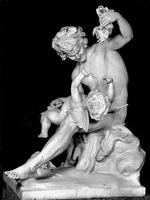
Satyr plays with Eros
Yannoulis Chalepas
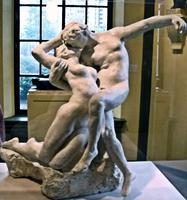
The Eternal Spring Kiss
Auguste Rodin
Sakountala, Dite Vertumne Et Pomone
Camille Claudel
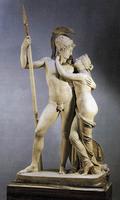
Venus and Mars
Antonio Canova
Narcissus
John Gibson
Aeneas and Anchises
Gian Lorenzo Bernini