
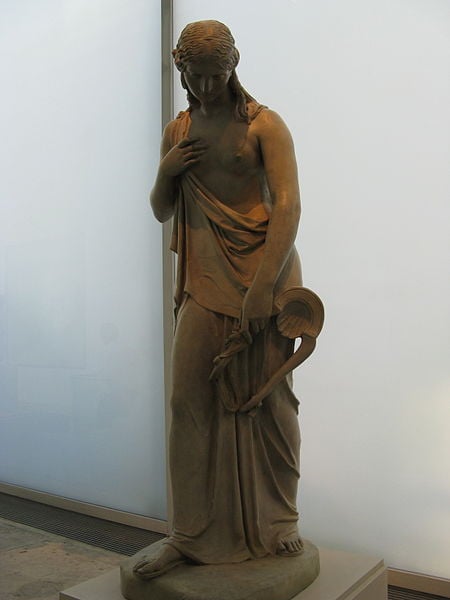
Sappho
Expert analysis of John Gibson’s Sappho
Style: Neoclassicism · Genre: sculpture
Artwork: Sappho
Artist: John Gibson
Style: Neoclassicism
Genre: Sculpture
Expert Analysis
John Gibson’s Sappho is a quintessential work of Neoclassical sculpture, yet it stands apart through its subtle marriage of classical idealization with a Romantic sensitivity toward its subject. The piece depicts the ancient Greek poet Sappho, a figure venerated in antiquity but rarely rendered with such intimate, contemplative poise. Gibson, a Welsh-born sculptor who trained in Rome under Antonio Canova, here demonstrates his mastery of the Neoclassical creed: clarity of form, restrained emotion, and a reverence for the classical past.
Significance within Neoclassicism:
- Idealized yet humanized form: Following Canova’s lead, Gibson tempers the stark severity of earlier Neoclassicism (as practiced by Thorvaldsen) with a softer, more lifelike rendering of flesh and drapery. Sappho’s face is not a generic antique mask; it carries a melancholic introspection that aligns with the 19th-century fascination with poetic genius and tragic love.
- Polychrome innovation: Gibson was a bold advocate for tinted marble (polychromy) in his later years, but Sappho likely remains in white marble—a decision that emphasizes the purity of line and the sculptural tradition of ancient Greece. The work therefore honors both the canonical white-marble ideal and the artist’s later experiments with color, bridging old and new.
- Subject as cultural symbol: By choosing Sappho—a female poet from Lesbos—Gibson elevates a figure who represented both intellectual achievement and romantic passion. In Neoclassical terms, she embodies virtù and pathos, aligning with the era’s desire to revive not just Greek forms but Greek ideals of creativity and emotion.
Artistic Legacy:
Sappho is significant as a transitional piece. It reflects Gibson’s position as a key link between the severe Neoclassicism of the late 18th century and the more emotive, naturalistic currents that would lead to Victorian sentimental sculpture. The work’s quiet dignity and lyrical grace exemplify why Gibson was celebrated as “the British Canova”—an artist who could breathe new life into ancient forms without breaking their classical integrity.
Visually similar
20 works with related composition and palette
Hagar
Edmonia Lewis
Pandora
John Gibson

Allegory of Wealth
Antonio Corradini
Venus Italica
Antonio Canova
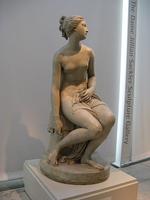
Nymph untying her sandal
John Gibson
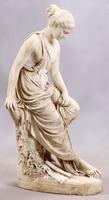
MUSE
Chauncey Bradley Ives
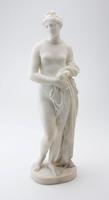
Venus
John Gibson

Allegory of Honor
Antonio Corradini
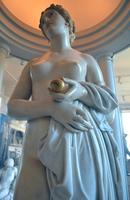
The Tinted Venus (detail)
John Gibson
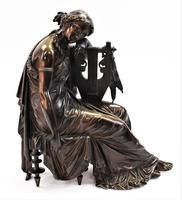
Large bronze sculpture of seated woman with harp
Eugène Laurent
Etruscan Holding Up A Mirror
Michelangelo Pistoletto
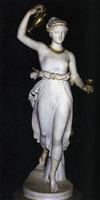
Hebe
Antonio Canova
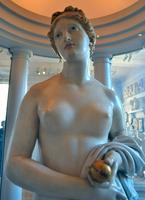
The Tinted Venus (detail)
John Gibson
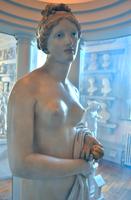
The Tinted Venus (detail)
John Gibson
Tanagra Figurine
Ancient Greek Painting and Sculpture
Buste de femme à l'antique
Lucas van Valckenborch
Flora Farnese
Giovanni Battista Piranesi
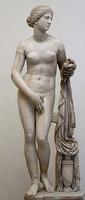
Aphrodite of Knidos (Praxiteles)
Ancient Greek Painting and Sculpture

VENUS DE ARLES
Yinka Shonibare

The Tinted Venus (detail)
John Gibson