Expertenanalyse zu Wassily Kandinskys Succession
Stil: Abstract Art · Genre: abstract
As an expert in art history, I can provide an insightful analysis of Wassily Kandinsky's Succession based on the established facts. While the supplied details are limited to its classification as Abstract Art and abstract genre, the artwork's significance is deeply rooted in these very categories and Kandinsky’s pioneering role within them.
Significance within Abstract Art:
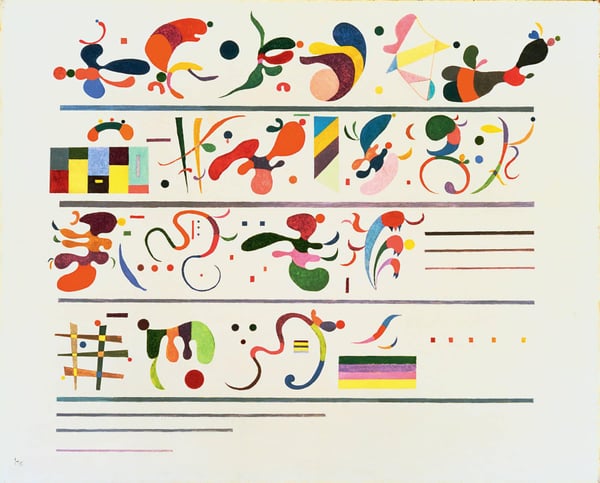
Succession is a quintessential example of Kandinsky’s mature abstract vocabulary. By the time he created this work, he had fully abandoned representational imagery, instead relying on pure form, line, and color to convey spiritual and emotional states. The title itself suggests a temporal or dynamic process—a "succession" of forms, perhaps of events or sensations. This aligns with Kandinsky’s goal of translating inner necessity and musical rhythms into visual language, where each shape and color follows the next in a controlled, yet expressive, sequence.
Composition and Visual Language:
In works like Succession, Kandinsky typically employed geometric elements (circles, arcs, lines) floating on a fluid, often muted background. The interplay of sharp angles against soft curves creates a sense of tension and resolution, mirroring the "succession" of philosophical or psychological states. His use of color—likely contrasting cool and warm tones—would be deliberate, evoking specific emotional responses: blue for depth, yellow for agitation, red for power. This is characteristic of his synesthetic theory, where the viewer experiences a "vibration" of the soul.
Historical and Theoretical Context:
Kandinsky’s abstract works are seminal because they redefined the purpose of art. Succession is not merely decorative; it is a visual meditation on movement, time, and spiritual unfolding. As a member of the Bauhaus and later a French exile, Kandinsky continued to refine this geometric abstraction, influencing later movements like Abstract Expressionism and Color Field painting. The work’s significance lies in its demonstration that abstraction could be rigorous, planned, yet emotionally resonant—a balance that Succession embodies.
In summary, Succession is significant as a pure manifestation of Kandinsky’s artistic philosophy: a non-objective composition where the succession of forms and colors creates a silent, dynamic music, inviting the viewer to experience art as a direct conduit to inner reality.
Museum / Gallery
Visuell ähnlich
20 Werke mit ähnlicher Komposition und Farbpalette
Untitled
Lee Krasner
Number 9: In Praise of Gertrude Stein
Bradley Walker Tomlin
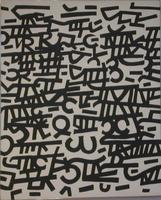
California
Ulfert Wilke
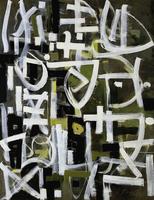
Number 2
Bradley Walker Tomlin
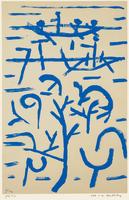
Boats in the Flood
Paul Klee
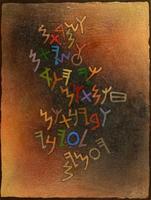
Letters
Mordecai Ardon
The Night
Pierre Alechinsky
Letter to a General
Leon Ferrari
Blue Horns. Design for a Scarf
Salvador Dali
Thirty
Wassily Kandinsky
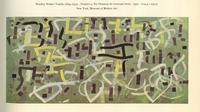
Number 9. In Praise of Gertrude Stein
Bradley Walker Tomlin
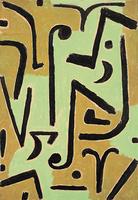
Halme
Paul Klee
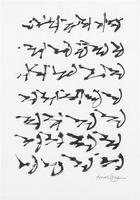
Marrakech
Brion Gysin
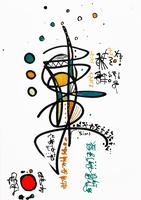
Symbolic (code) Paintings, late 2019 and early 2020
Dave Holt
Number 12
Bradley Walker Tomlin
009
Ulfert Wilke
Number 14
Bradley Walker Tomlin
Calligraphie
Jaroslav Serpan
Symbols that started coming to me in 2019
Dave Holt
Siebdruck 6
Fritz Winter