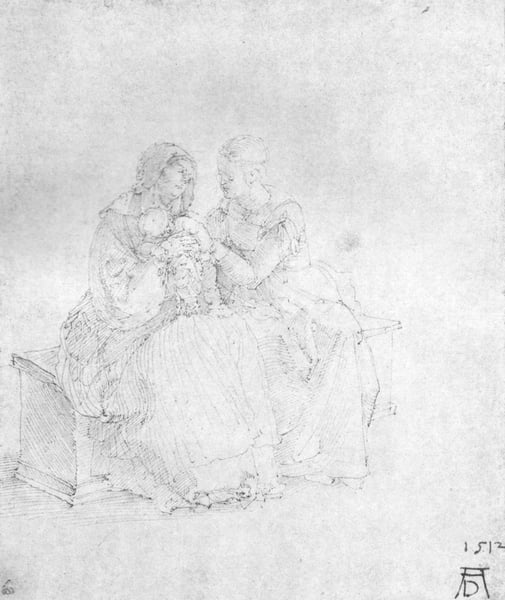
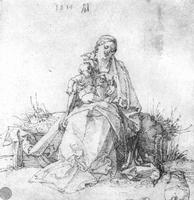
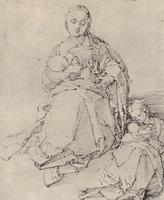
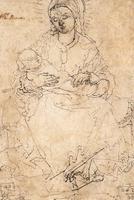
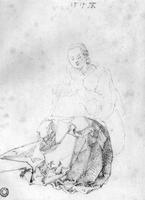
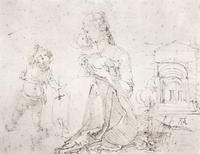
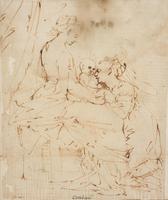
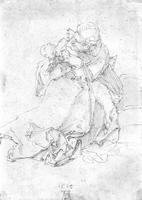
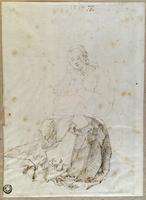
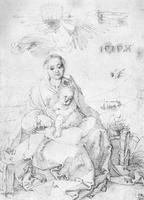
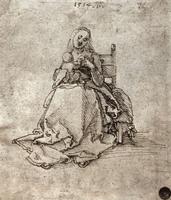
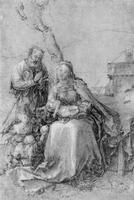
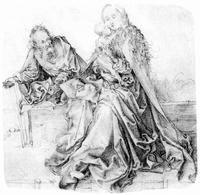
Based solely on the structured facts provided, Albrecht Dürer’s Anna selbdritt is significant as a Northern Renaissance sketch and study for its demonstration of the artist’s preparatory process. The work exemplifies the Northern Renaissance emphasis on meticulous draftsmanship, naturalistic detail, and careful composition. As a sketch, it offers insight into Dürer’s method of working out the intricate grouping of St. Anne, the Virgin, and the Christ Child—a traditional devotional subject—through controlled line and shading. Its status as a study highlights the importance of drawing as both a finished artistic statement and a foundation for larger works, marking it as a key example of how Northern Renaissance artists refined religious iconography through direct observation and technical precision.