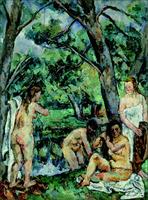
Expert Analysis: "The Bathers" by Paul Gauguin
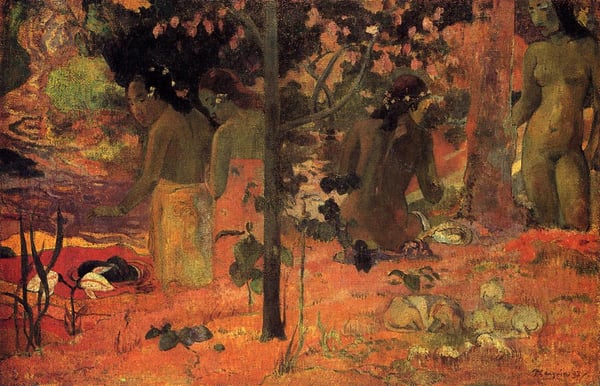
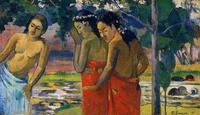
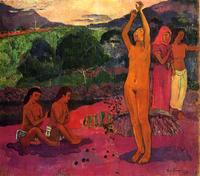
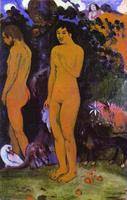
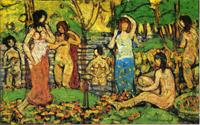
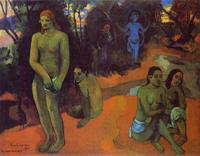
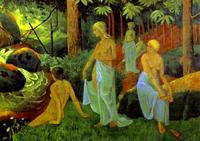
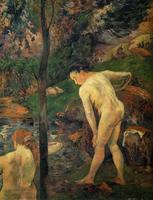
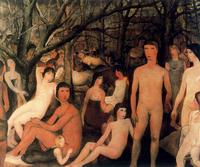
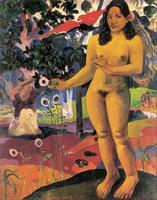
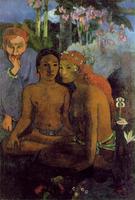
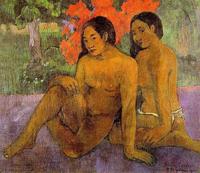
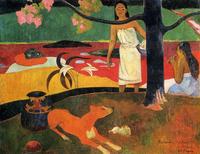
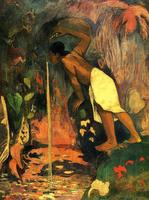
Painted during Gauguin's second Tahitian period, The Bathers is a quintessential example of Cloisonnism, a style characterized by bold, flattened outlines and vivid, unmodulated areas of color—reminiscent of medieval cloisonné enamelwork. As a genre painting, it depicts everyday Tahitian life, but Gauguin transforms the ordinary into a symbolic, otherworldly scene.
Significance: This work is pivotal because it synthesizes Gauguin's mature primitivist vision with the decorative, non-naturalistic principles of Cloisonnism. The figures are reduced to simple, expressive silhouettes, and the landscape is a mosaic of pure hues—greens, ochres, and blues—that defy Western perspective. By eliminating chiaroscuro and modeling, Gauguin creates a dreamlike, timeless atmosphere that rejects Impressionist immediacy in favor of symbolic permanence. The Bathers thus embodies his search for a spiritual, pre-industrial Eden, where art merges with the rhythms of Tahitian myth and the bold graphic language of Cloisonnism. It stands as a landmark of Post-Impressionism, influencing later Symbolist and Fauvist movements.