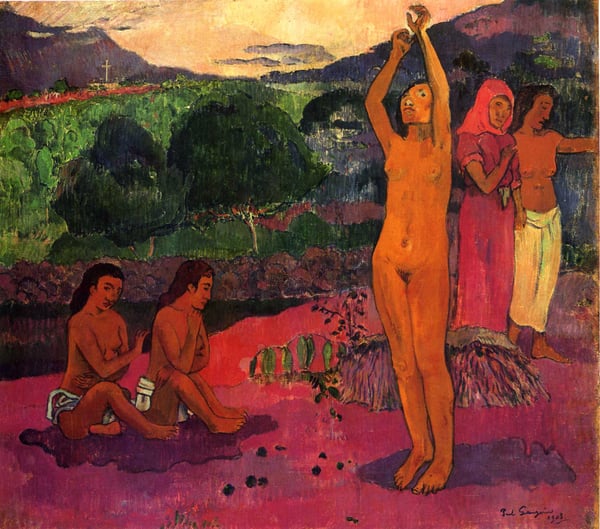
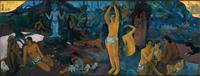
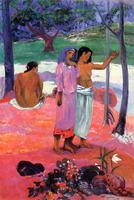
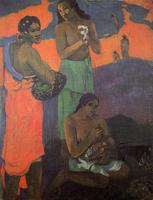
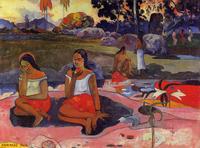
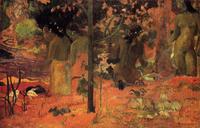
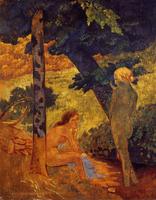
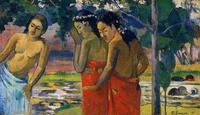
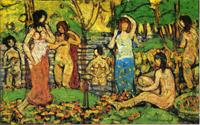
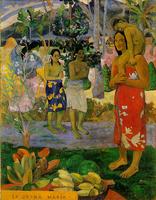
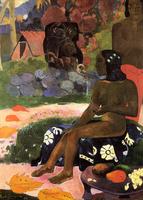
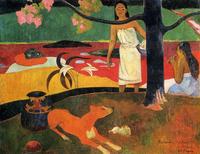
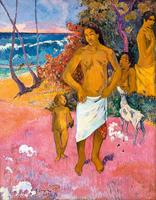
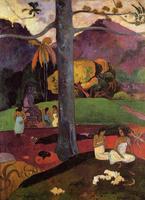
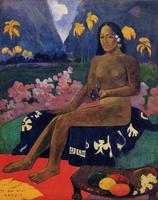
"The Invocation" by Paul Gauguin is a quintessential work from his second Tahitian period, a time when the artist deepened his exploration of the island’s spiritual and cultural life. As a genre painting—depicting everyday Tahitian ritual—it embodies the Post-Impressionist break from naturalistic representation in favor of symbolic color, flattened forms, and expressive composition.
The work’s significance lies in Gauguin’s deliberate fusion of Western pictorial conventions with Polynesian themes, creating a synthetic, almost dreamlike reality. The title “The Invocation” suggests a moment of prayer or summoning, central to Gauguin’s search for a primal, untainted spirituality. By rendering this scene with bold, non-local colors and simplified figures, he rejects the illusionistic depth of Impressionism, instead prioritizing emotional and symbolic resonance. This piece exemplifies how Gauguin used his Tahitian subjects—not as ethnographic records—but as vehicles for personal mythmaking and a critique of European materialism. Within Post-Impressionism, it stands as a landmark of the Symbolist impulse, where everyday life is elevated to a universal, spiritual plane.