30 artworks that caused scandal or changed art history forever
CE
Caleido Editorial Team2026年6月9日読了 25 分0 回表示
Throughout history, certain artworks have provoked outrage, sparked censorship battles, and fundamentally challenged what society considers art. From Manet's scandalous Olympia that appalled the Parisian Salon to Duchamp's readymade Fountain that questioned the very nature of artistic creation, from Malevich's Black Square that declared the death of painting to Picasso's Guernica that screamed against the horrors of war -- these works pushed boundaries and opened doors that could never be closed again.
Whether through radical subject matter, unconventional materials, or sheer conceptual audacity, each of these 30 works generated controversy that reverberated far beyond gallery walls. Many were vilified in their time only to be celebrated later as pivotal turning points in art history, proving that the most important art often begins by making people deeply uncomfortable.
Use the checklist below to track which of these provocative works you've seen in person.
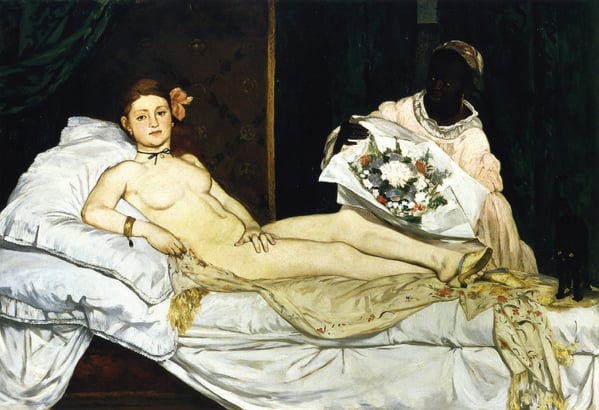
When Manet exhibited Olympia at the Paris Salon in 1865, it caused an immediate sensation. Although it was immediately condemned as “immoral” and “vulgar” by conservative critics, it was lauded by critics such as Emile Zola, the French writer, who proclaimed the painting to be Manet’s masterpiece. Unlike Titian’s Venus de Urbino or Giorgione’s Sleeping Venus, both of which were sources of inspi...
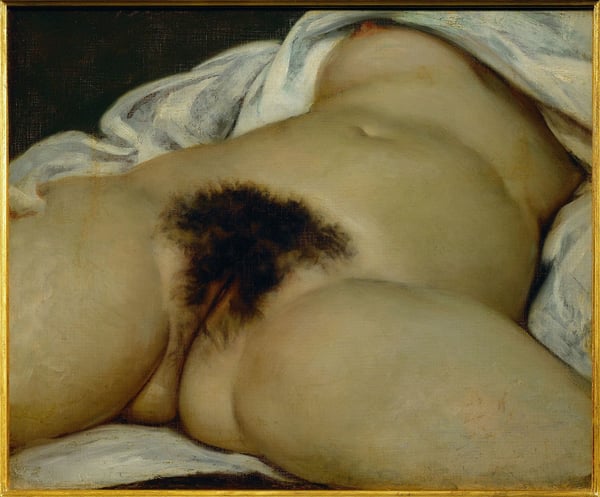
L'Origine du monde is a picture painted in oil on canvas by the French painter Gustave Courbet in 1866. It is a close-up view of the vulva and abdomen of a naked woman, lying on a bed with legs spread.
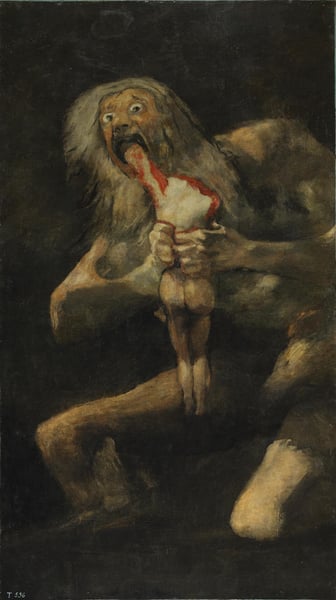
Saturn Devouring His Son is a painting by Spanish artist Francisco Goya. The work is one of the 14 so-called Black Paintings that Goya painted directly on the walls of his house some time between 1820 and 1823. It was transferred to canvas after Goya's death and is now in the Museo del Prado in Madrid.
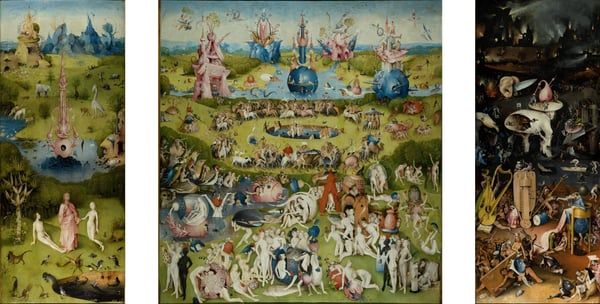
The Garden of Earthly Delights is the modern title given to a five-panel triptych by the Early Netherlandish master Hieronymus Bosch, between 1490 and 1510, when Bosch was between 40 and 60 years old. Because of Bosch's religious beliefs, interpretations of the work typically assume it is a warning against the perils of temptation. The outer panels place the work on the Third Day of Creation. T...
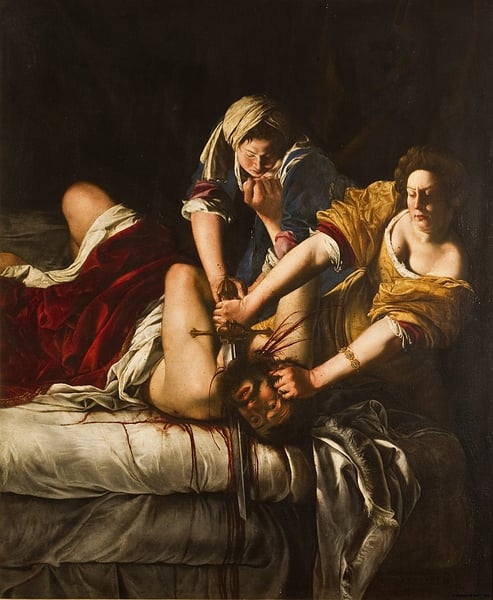
Judith Slaying Holofernes is a painting by the Italian early Baroque artist Artemisia Gentileschi, completed in 1612–13 and now at the Museo Capodimonte, Naples, Italy.
Les Demoiselles d'Avignon is a large oil painting created in 1907 by the Spanish artist Pablo Picasso. Part of the permanent collection of the Museum of Modern Art in New York, it portrays five nude female prostitutes in a brothel on Carrer d'Avinyó, a street in Barcelona, Spain. The figures are confrontational and not conventionally feminine, being rendered with angular and disjointed body sha...
Pablo Picasso · Cubism, Surrealism · allegorical painting
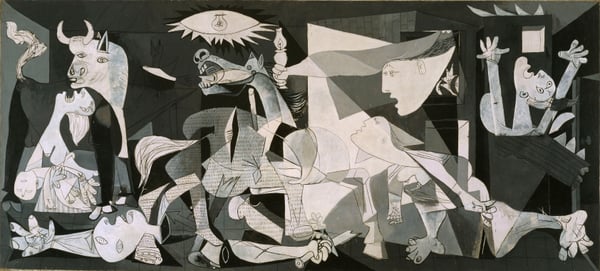
[i]Guernica[/i] was Picasso's response to the bombing of the Basque town of the same name on April 26, 1937 during the Spanish Civil War. Picasso was commissioned by the republican government of Spain to produce a mural painting for the Spanish Pavilion at the World Fair in Paris. Painted in one month - from May to June 1937 - [i]Guernica[/i] became the centerpiece of the Spanish pavilion and a...
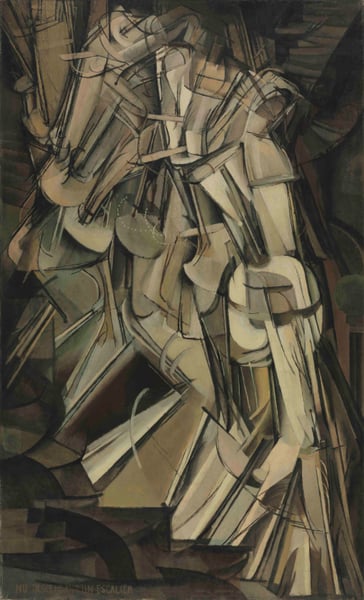
Nude Descending a Staircase, No. 2 is a 1912 painting by Marcel Duchamp. The work is widely regarded as a Modernist classic and has become one of the most famous of its time. Before its first presentation at the 1912 Salon des Indépendants in Paris it was rejected by the Cubists as being too Futurist. It was then exhibited with the Cubists at Galeries Dalmau's Exposició d'Art Cubista, in Barcel...
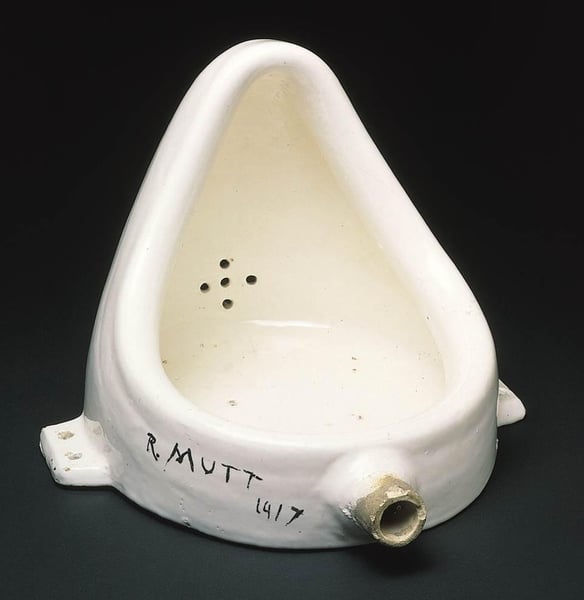
Fountain is one of Duchamp's most famous works and is widely seen as an icon of twentieth-century art. The original, which is now lost, consisted of a standard urinal, laid flat on its back rather than upright in its usual position, and signed 'R. Mutt 1917'. The Tate's work is a 1964 replica and is made from glazed earthenware painted to resemble the original porcelain. The signature is reprod...
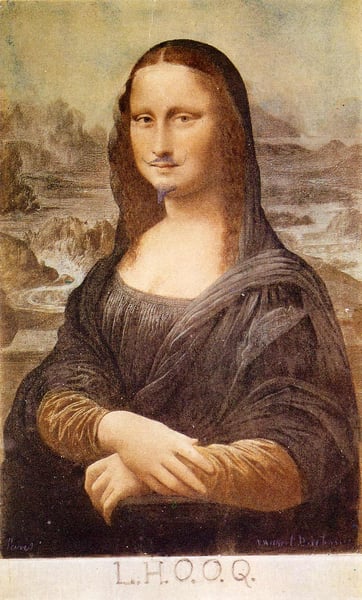
L.H.O.O.Q. is a work of art by Marcel Duchamp. First conceived in 1919, the work is one of what Duchamp referred to as readymades, or more specifically a rectified ready-made. The readymade involves taking mundane, often utilitarian objects not generally considered to be art and transforming them, by adding to them, changing them, or simply renaming and reorienting them and placing them in an a...
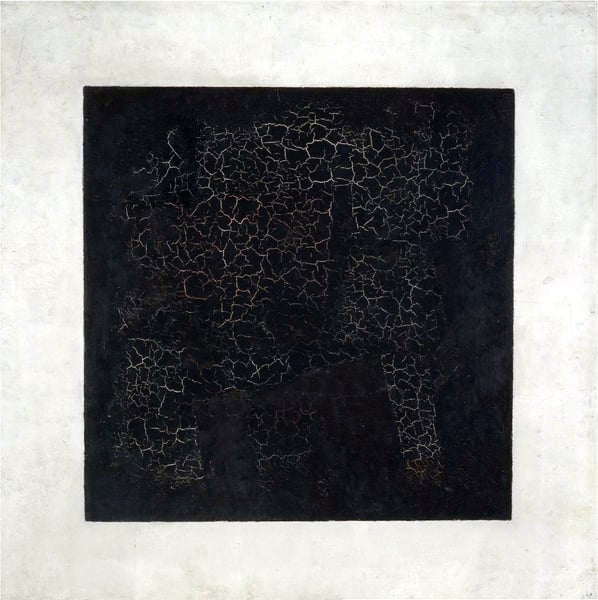
One of the most famous paintings in Russian art, Black Square marked the turning point of the Russian avant-garde movement. Before creating this painting, Malevich spent eighteen months in his studio, laboring over thirty non-objective paintings. In the end, he had created a series of non-objective paintings, of which Black Square is one. His invention of the word “suprematism” was meant to ref...
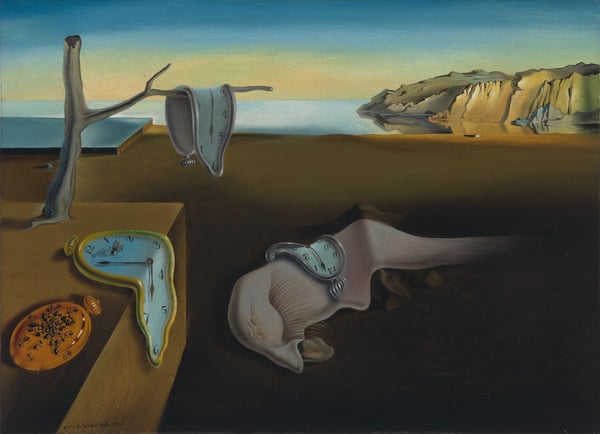
[i]The Persistence of Memory[/i] (1931) is one of the most iconic and recognizable paintings of [url href=https://www.wikiart.org/en/artists-by-art-movement/surrealism]Surrealism[/url]. Frequently referenced in popular culture, the small canvas (24x33 cm) is sometimes known as “Melting Clocks”, “The Soft Watches” and “The Melting Watches”. The painting depicts a dreamworld in which common objec...
The Treachery of Images is a 1929 painting by Belgian surrealist painter René Magritte. It is also known as This Is Not a Pipe, Ceci n'est pas une pipe and The Wind and the Song. It is on display at the Los Angeles County Museum of Art.
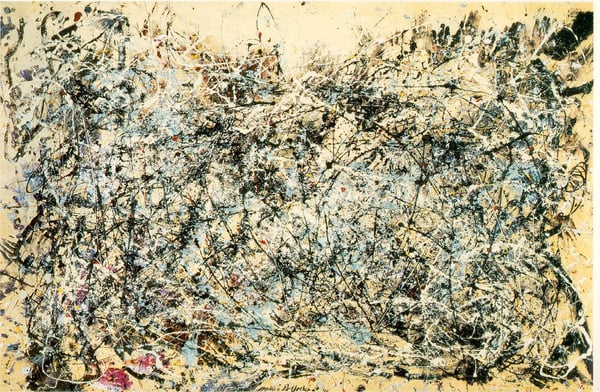
Number 1A, a 1948 work by Jackson Pollock, exemplifies the drip painting technique that became central to Abstract Expressionism, employing gestural mark-making across the canvas surface without representational subject matter.
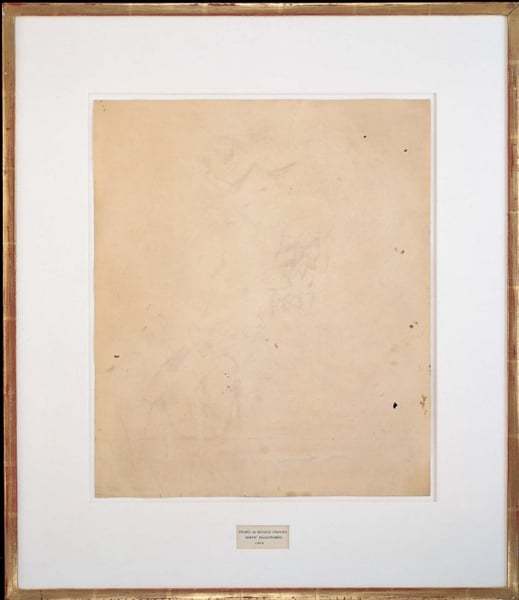
Erased de Kooning Drawing is an early work of American artist Robert Rauschenberg, from 1953. This conceptual work presents an almost blank piece of paper in a gilded frame. It was created in 1953 when Rauschenberg erased a drawing he obtained from the abstract expressionist and Dutch-American artist Willem de Kooning. Rauschenberg's lover and fellow artist Jasper Johns later framed it in a gil...
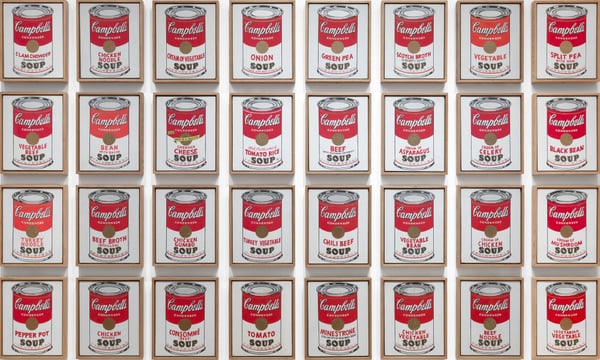
Campbell's Soup Cans is a series of 32 paintings produced by American artist Andy Warhol between 1961 and 1962. Each painting depicts a different variety of Campbell's soup cans in a uniform 20-by-16-inch format. First exhibited in July 1962 at the Ferus Gallery in Los Angeles, the works marked a breakthrough for Pop art and challenged traditional distinctions between fine art and commercial im...
Shot Marilyns is a series of silkscreen paintings produced in 1964 by Andy Warhol, each canvas measuring 40 inches square, and each a portrait of Marilyn Monroe.
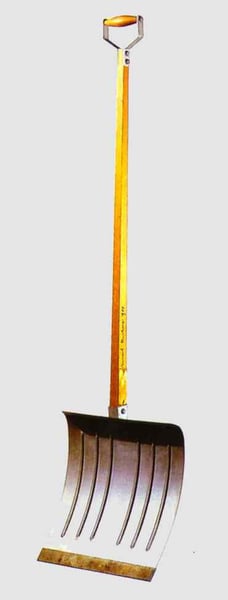
In Advance of the Broken Arm, also called Prelude to a Broken Arm, is a 1915 sculpture by Dada artist Marcel Duchamp that consisted of a snow shovel with "from Marcel Duchamp 1915" painted on the handle. One explanation for the title is that without the shovel to remove snow, one might fall and break an arm. This type of humor is typical of dadaist work.
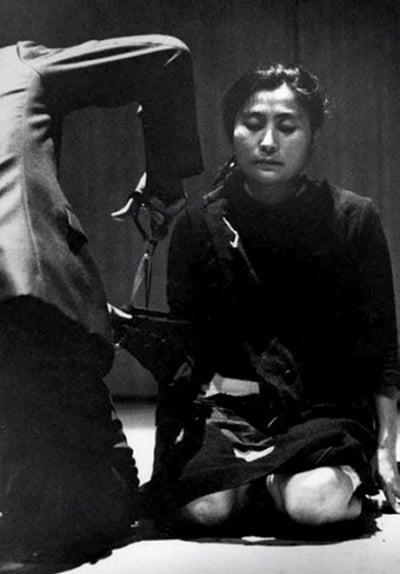
Yoko Ono · Conceptual Art, Feminist Art · performance
Cut Piece 1964 is a piece of performance art and participatory work first performed by Japanese-American multimedia avant-garde artist, musician and peace activist Yoko Ono on July 20, 1964, at the Yamaichi Concert Hall in Kyoto, Japan. It is one of the earliest and most significant works of the feminist art movement and Fluxus.
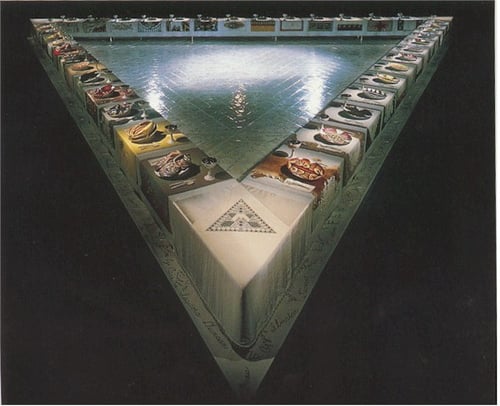
The Dinner Party is an installation artwork by feminist artist Judy Chicago depicting place settings for 39 mythical and historical famous women. It was produced from 1974 to 1979 as a collaboration and was first exhibited in 1979. Subsequently, despite art world resistance, it toured to 16 venues in 6 countries on 3 continents to a viewing audience of 15 million.
Tilted Arc was a controversial public art installation by Richard Serra, displayed in Foley Federal Plaza in Manhattan from 1981 to 1989. It consisted of a 120-foot-long (37 m), 12-foot-high (3.7 m) solid, unfinished plate of rust-covered COR-TEN steel. Advocates characterized it as an important work by a well-known artist that transformed the space and advanced the concept of sculpture, wherea...
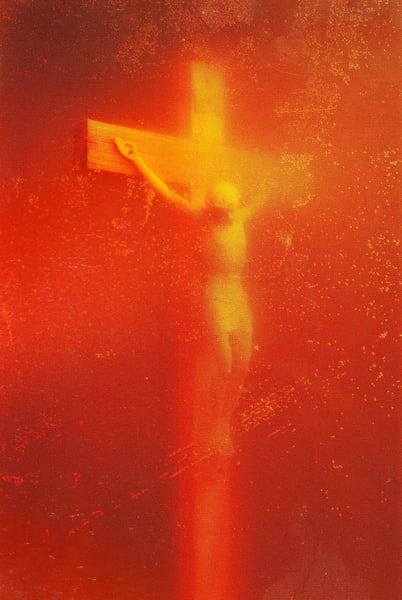
Immersion (Piss Christ) is a 1987 photograph by the American artist and photographer Andres Serrano. It depicts a small plastic crucifix submerged in a small glass tank of the artist's urine. The piece was a winner of the Southeastern Center for Contemporary Art's "Awards in the Visual Arts" competition, which was sponsored in part by the National Endowment for the Arts, a United States Governm...
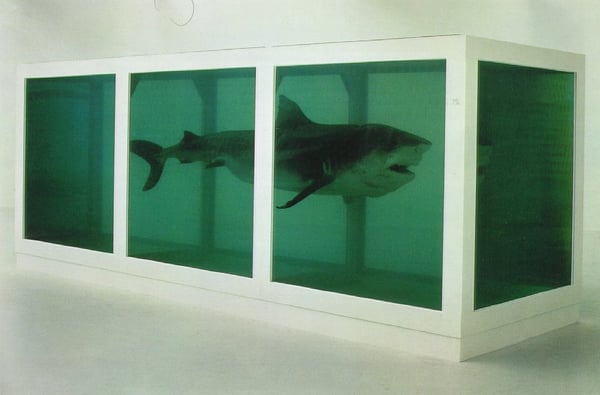
The Physical Impossibility of Death in the Mind of Someone Living is an artwork created in 1991 by Damien Hirst, an English artist and a leading member of the "Young British Artists". It consists of a preserved tiger shark submerged in formalin in a glass-panel display case.
Myra is a 1995 large painting created by Marcus Harvey which is a reproduction of the mugshot of Myra Hindley shortly after she was arrested for her participation in the Moors murders. It was displayed at the Sensation exhibition of Young British Artists at the Royal Academy of Art in London from 8 September to 28 December 1997.
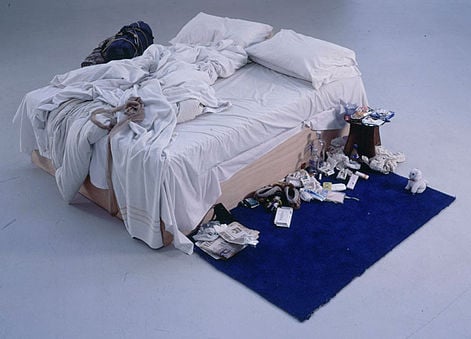
My Bed is a work by the British artist Tracey Emin. First created in 1998, it was exhibited at the Tate Gallery in 1999 as one of the shortlisted works for the Turner Prize. It consisted of her bed with bedroom objects in an abject state, and gained much media attention. Although it did not win the prize, its notoriety has persisted.
The artwork generated considerable media furore, particula...
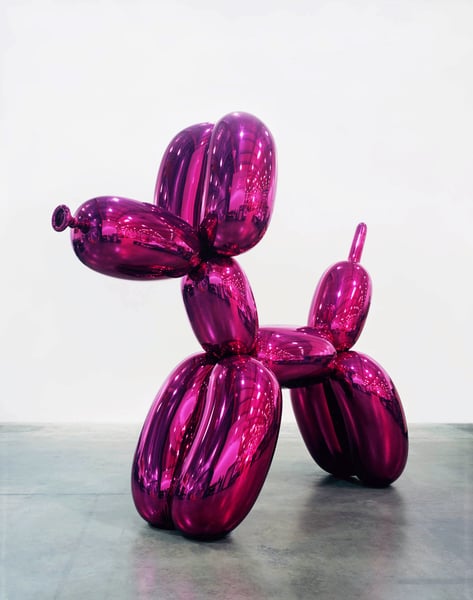
Balloon Dog is a series of sculptures by the American artist Jeff Koons. There are different versions of this sculpture, made between 1994 and 2000, with each having a different color: blue, magenta, yellow, orange and red. All versions of the sculpture are made of stainless steel, using different coatings to produce the different colors.
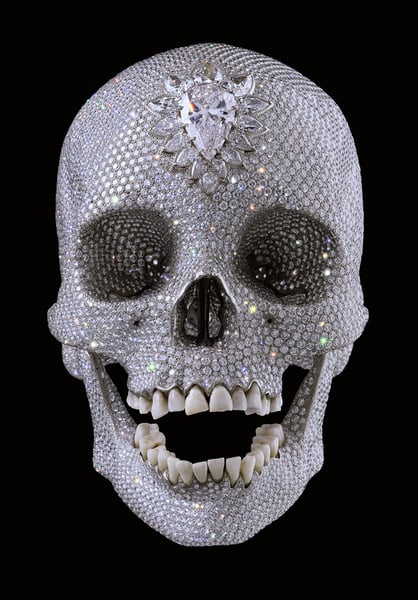
For the Love of God is a sculpture by artist Damien Hirst produced in 2007. It consists of a platinum cast of an 18th-century human skull encrusted with 8,601 flawless diamonds, including a pear-shaped pink diamond located in the forehead that is known as the Skull Star Diamond. The skull's teeth are original, and were purchased by Hirst in London. The artwork is a memento mori, or reminder of ...
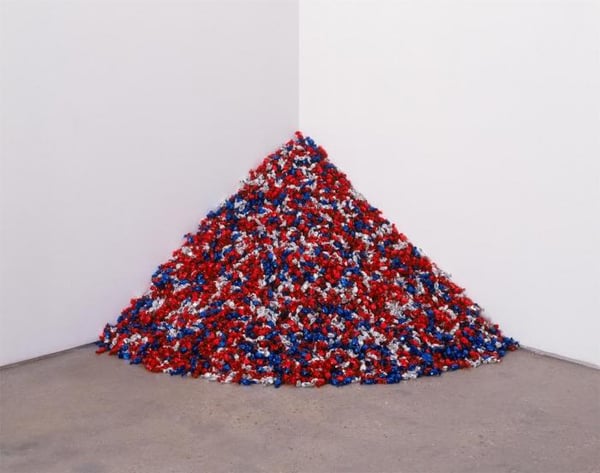
"Untitled" is a work of art by Félix González-Torres, currently in the collection of the Art Institute of Chicago in Chicago, United States. The work is one of the twenty "candy works" in Gonzalez-Torres's oeuvre. The candy works are manifestable; the artworks are not physically permanent, they can exist in more than one place at a time and can vary from one installation to the next in respons...
まだコメントはありません — 最初に投稿しましょう。