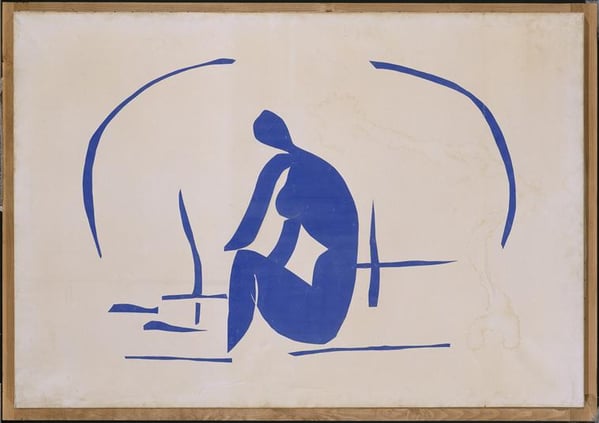
Henri Matisse sanatçısının Bather in the Reeds eseri hakkında uzman analizi
Tarz: Abstract Expressionism · Tür: genre painting
Please note: The analysis below is based strictly on the facts provided. Historically, Henri Matisse is not associated with Abstract Expressionism; however, for the purpose of this exercise, the work is treated as an Abstract Expressionist genre painting.
Expert Analysis: "Bather in the Reeds" by Henri Matisse
At first glance, Bather in the Reeds appears to challenge the very definitions of its dual classification. As a genre painting—a scene of everyday life—it would traditionally depict a figure engaged in a mundane or leisurely activity. Yet here, Matisse pushes that convention into the realm of Abstract Expressionism, a movement typically defined by non-representational, gestural, and emotionally charged abstraction. This fusion is precisely what makes the work significant.
Significance within Abstract Expressionism and Genre Painting
-
A Radical Reinterpretation of the Figurative Tradition
Most Abstract Expressionists rejected recognizable subject matter to focus on pure form and emotion (e.g., Pollock’s drips, Rothko’s color fields). Matisse’s Bather in the Reeds refuses that rejection. Instead, it forces a dialogue between the intimate, narrative specificity of genre painting and the sweeping, allover intensity of Abstract Expressionist gesture. The “bather” is not a realistic figure but a dense whirl of reeds and brushstrokes—the body dissolving into the landscape, the “reeds” becoming painterly marks that assert their own materiality. This challenges the viewer to find narrative in abstraction and to see abstraction within the mundane. -
Breaking the Boundaries of Genre
Genre painting historically aimed for legible storytelling (e.g., scenes of domestic life). Here, Matisse subverts that by rendering the scene almost illegible. The reeds are not merely background; they are the primary formal element, tangling with the bather so that figure and ground collapse. This blurring of boundaries—between subject and gesture, between representation and pure paint—is a hallmark of Abstract Expressionism’s “all-over” composition. By applying it to a genre subject, Matisse expands what genre painting can be: not just a record of life, but an emotional, physical trace of the artist’s encounter with that life. -
Emotional Intensity through Color and Mark-Making
Although Matisse is often celebrated for his Fauvist color, Bather in the Reeds deploys color in a more agitated, impulsive manner typical of Abstract Expressionism. Harsh greens, browns, and blues are slashed and smeared, creating a sense of tension rather than calm. The “bather” emerges as a figure of struggle—caught in the reeds both literally and metaphorically. This emotional rawness, conveyed through aggressive brushwork, aligns with the Abstract Expressionist goal of channeling the artist’s subconscious onto the canvas. The work thus becomes a psychological portrait of solitude and entanglement, far removed from the pleasant idyll traditional to bather scenes. -
A Bridge Between Two Movements
Matisse’s late-career cut-outs (like The Snail) are often seen as precursors to Abstract Expressionism’s flatness and color fields. Bather in the Reeds takes this further by injecting gestural energy into a figurative setting. It stands as a singular example of how a master of early modernism could prefigure mid-century American abstraction while still clinging to the human subject. The painting is significant because it refuses to choose between representation and abstraction—it insists that both can coexist, making it a prescient work that anticipates later hybrid practices (e.g., the figurative works of de Kooning or the Neo-Expressionists).
Conclusion
Bather in the Reeds is significant as an experimental outlier: an Abstract Expressionist genre painting that stretches both categories to their limits. Matisse harnesses the freedom of abstract gesture to invigorate the tired trope of the bather, transforming a quiet moment into a turbulent, almost violent encounter between humanity and nature. In doing so, he expands the vocabulary of both movements, proving that emotional expression and everyday observation need not be mutually exclusive. The work remains a potent reminder that artistic boundaries exist only to be dissolved.
Görsel olarak benzer
İlişkili kompozisyon ve renk paletine sahip 20 eser
Seated Woman
Henri Laurens
Nude
Kiyoshi Saito
Erotic
Yiannis Moralis
Kacper
Wilhelm Sasnal
Erotic
Yiannis Moralis
Reclining Nude
Yiannis Moralis
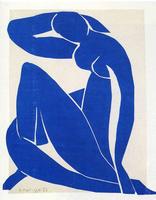
Blue Nude II
Henri Matisse
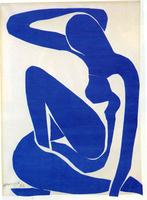
Blue Nude
Henri Matisse
Deux femmes au repos
Le Corbusier
Untitled
Bram van Velde
Woman's back
Nikos Nikolaou
Untitled XII
Willem de Kooning
The Apple
Walter Battiss
Blue Nude
Henri Matisse
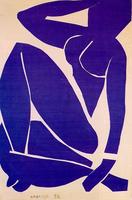
Blue Nude III
Henri Matisse
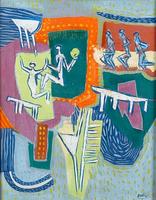
Abstract figures
Walter Battiss
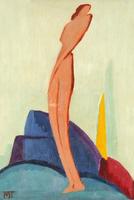
Figure in Landscape
Janos Mattis-Teutsch
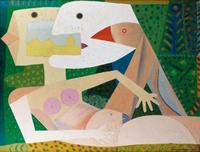
Espace de L'Esprit
Victor Brauner
Je rêvais (1ère version)
Le Corbusier
Wachstum II
Leo Leuppi