James Ensor sanatçısının Carnival in Flanders eseri hakkında uzman analizi
Tarz: Expressionism, Naïve Art (Primitivism) · Tür: genre painting
Artwork Analysis: Carnival in Flanders by James Ensor
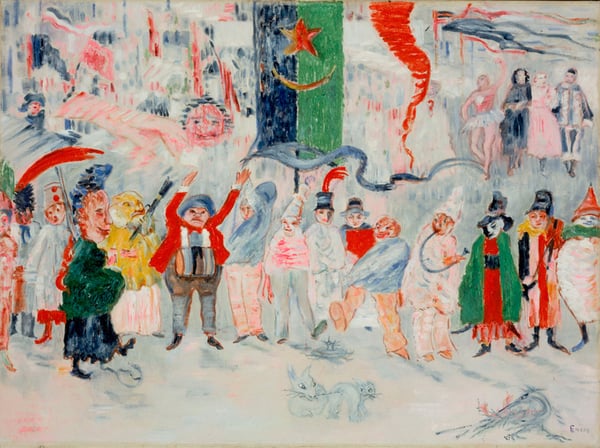
James Ensor’s Carnival in Flanders (often dated to the late 1880s–early 1890s) exemplifies a singular fusion of Expressionism and Naïve Art (Primitivism), while remaining firmly within the tradition of genre painting—scenes of everyday life. Its significance lies in how Ensor transforms a seemingly festive, communal subject into a vehicle for biting social satire, psychological unease, and a radical break from naturalistic representation.
Expressionist Distortion and Emotional Intensity
Ensor was a precursor to early 20th-century Expressionism, and this work demonstrates his signature use of exaggerated forms, jarring colors, and deliberately crude brushwork. The carnival masks and grotesque figures are not merely decorative; they are vehicles for emotional and psychological distortion. Faces are flattened into caricatures, mouths gape in manic grins, and bodies twist in awkward, puppet-like poses. This formal violence mirrors the underlying chaos of the crowd, suggesting that festivity masks deeper anxieties—about mortality, hypocrisy, and the absurdity of human behavior. The crowded composition, with figures pressing toward the viewer, creates a claustrophobic intensity that anticipates the anxious energy of later Expressionist works.
Naïve Art and Primitivism: The "Child’s Eye" as Critique
Ensor’s engagement with Naïve Art (Primitivism) is equally central. He deliberately adopts a flat, unmodulated space, simplified anatomy, and a lack of conventional perspective—qualities reminiscent of folk art, medieval woodcuts, and children’s drawings. This “primitive” style is not a sign of technical limitation but a strategic rejection of academic refinement. By stripping away illusionistic depth, Ensor forces attention onto the raw, unvarnished substance of the scene: the masks, the costumes, the gaudy colors. The result is a carnival that feels both timeless and grotesque—a vision of humanity stripped of pretense. This naïve vocabulary also aligns with Ensor’s lifelong fascination with masks and skeletons, symbols he used to expose the artificial roles people play in society.
Genre Painting Subverted
While Carnival in Flanders belongs to the genre painting tradition (depicting a typical Flemish carnival), Ensor subverts the genre’s usual warmth or moralizing tone. Instead of a cheerful, orderly celebration, he offers a carnivalesque inversion of reality: masks mimic living faces, costumes blur identities, and the boundary between performer and spectator collapses. The painting is less a documentary record than a hallucinatory allegory of the human condition. Ensor’s carnival becomes a theater of the absurd, where the entire world is a masked ball—a theme that resonates with the existential doubts of the fin de siècle.
Significance in Art History
Carnival in Flanders is significant as a bridge between Symbolism and Expressionism, and as a pioneering example of psychological portraiture via crowd scenes. Ensor’s use of masks and grotesquerie directly influenced later Expressionists (e.g., Emil Nolde, George Grosz) and Surrealists (e.g., James Ensor’s own later work was admired by the Surrealists for its dreamlike, uncanny quality). Moreover, his embrace of a “primitive” style—centuries before Primitivism became a modernist trope—established him as a radical individualist who refused to flatter the viewer. The work remains a powerful reminder that beneath the paint and the party lies a raw, unflinching examination of what it means to be human.
Görsel olarak benzer
İlişkili kompozisyon ve renk paletine sahip 20 eser
Masks
James Ensor
Mascaras singulares
James Ensor
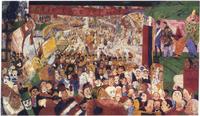
Christ's Entry Into Brussels in 1889
James Ensor
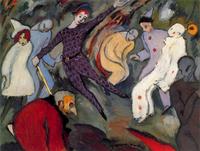
Harlequinade
Albert Bloch
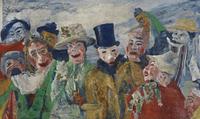
The Intrigue
James Ensor
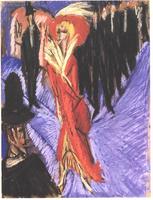
Red Cocotte
Ernst Ludwig Kirchner
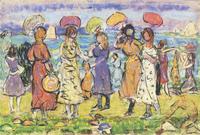
Sunny Day at the Beach
Maurice Prendergast
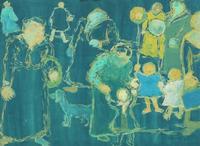
Untitled
Fikret Mualla Saygi
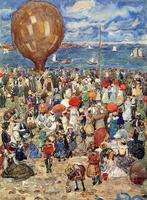
The Balloon
Maurice Prendergast
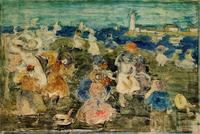
Beach Scene with Lighthouse (also known as Children at the Seashore)
Maurice Prendergast
Picnic Grove
Maurice Prendergast
Street Scene
Ernst Ludwig Kirchner
Queuing for Bread
Nicolae Tonitza
Yellow Dress
Fikret Mualla Saygi
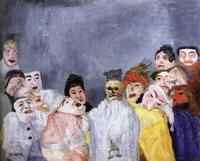
The great judge
James Ensor
Untitled
Fikret Mualla Saygi
Uprising
Lyonel Feininger
Untitled
Fikret Mualla Saygi
A Story
George Stefanescu
Street, Dresden
Ernst Ludwig Kirchner