Expert analysis of Ernst Ludwig Kirchner’s Street, Dresden
Style: Expressionism · Genre: genre painting
Expert Analysis of "Street, Dresden" by Ernst Ludwig Kirchner
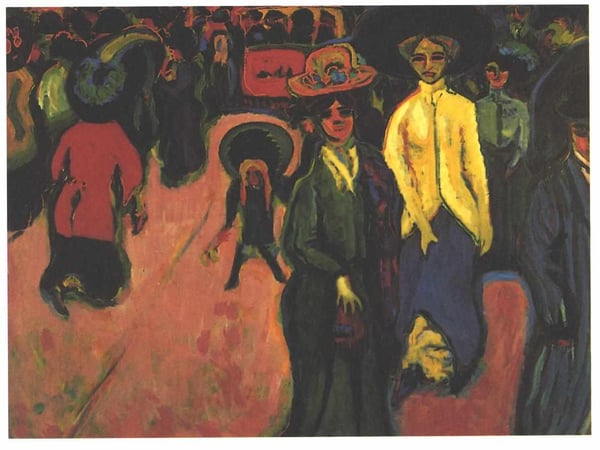
As a defining work of German Expressionism, Street, Dresden (1908) stands as a powerful exploration of modern urban alienation—a central concern for the artist and his fellow members of the pioneering group Die Brücke (The Bridge). Kirchner uses the genre painting tradition—typically scenes of everyday life—but radically transforms it into a vehicle for psychological intensity.
What makes it significant within its style and period:
-
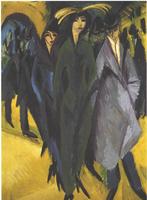
Urban Anomie: The painting captures the frantic, dehumanizing pulse of the modern city. Figures are crowded together yet isolated, their faces mask-like and their bodies angular, suggesting a loss of individuality. This reflects the Expressionist obsession with the inner psychological experience of modernity, rather than a mere documentary record.
-
Color and Form as Emotion: Kirchner employs bold, non-naturalistic colors (acidic greens, yellows, and deep blues) and jagged, distorted forms to express tension and anxiety. The slanted perspective and compressed space heighten the sense of claustrophobia. This technique—prioritizing emotional impact over visual accuracy—is a hallmark of Expressionism.
-
Innovation within Die Brücke: Painted in Dresden, the work embodies the group’s rejection of Impressionist pleasantries and academic traditions. Kirchner’s loose, painterly brushwork and deliberate awkwardness were radical for their time, influencing later Expressionist cityscapes and paving the way for modern art’s focus on subjective experience.
In short, Street, Dresden is not merely a scene of urban life; it is a manifest of Expressionist ideals—a visceral, critical portrait of a society hurtling into the twentieth century.
Museum / Gallery
Visually similar
20 works with related composition and palette
Two Elegant Ladies, Place de Clichy
Pierre Bonnard
Berlin Street Scene
Ernst Ludwig Kirchner
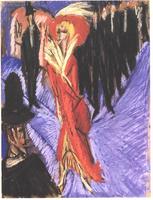
Red Cocotte
Ernst Ludwig Kirchner
Le Place Clichy
Pierre-Auguste Renoir
Place Clichy
Pierre-Auguste Renoir
Bal Bullier
William James Glackens
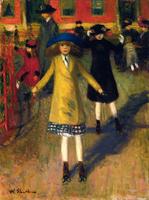
Girl Roller-Skating, Washington Square
William James Glackens
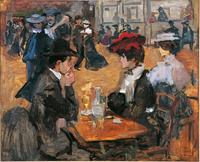
Moulin De La Galette
Isaac Israels
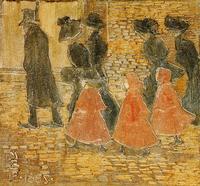
Three Little Girls in Red
Maurice Prendergast
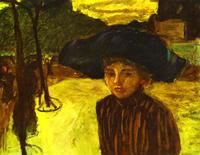
Woman in a Blue Hat
Pierre Bonnard
Sunday Morning, Paris
Maurice Prendergast
At the Moulin de la Galette
Henri de Toulouse-Lautrec
Women on the Street
Ernst Ludwig Kirchner
City Scene
William James Glackens
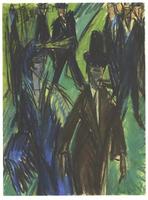
Street Scene
Ernst Ludwig Kirchner
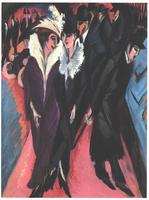
Street, Berlin
Ernst Ludwig Kirchner
Before a Café: Paris
John Duncan Fergusson
Beach Scene
Samuel Peploe
Parkway
August Macke
Valencia Street with awnings
Joaquín Sorolla