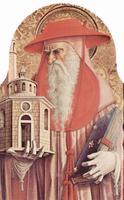
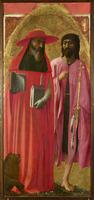
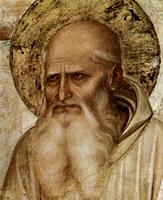
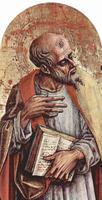
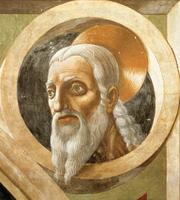
Based solely on the structured facts provided—that Saint Jerome is an Early Renaissance religious painting by Jacopo Bellini—the work’s significance lies in its embodiment of a pivotal moment in art history. As an Early Renaissance piece, it marks the transition from the flat, symbolic forms of Gothic art toward greater naturalism, perspective, and human emotion, all while serving a devotional function. Jacopo Bellini himself was a key figure in this shift, and a religious subject like Saint Jerome—a scholar-saint—allowed for the exploration of both spiritual contemplation and the newfound interest in realistic human anatomy, setting, and light that defined the period’s innovation.