Analisi esperta di Saint Jerome di Carlo Crivelli
Stile: Early Renaissance · Genere: religious painting
Expert Analysis: "Saint Jerome" by Carlo Crivelli
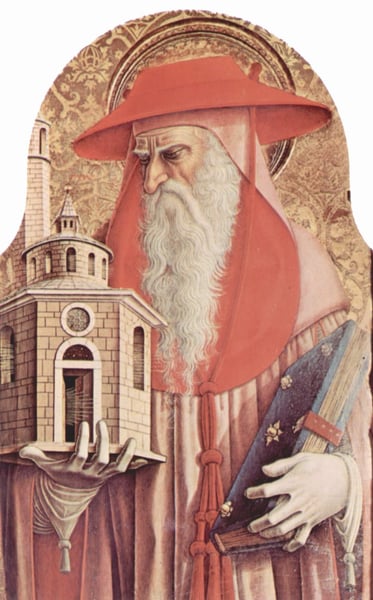
Carlo Crivelli's Saint Jerome is a striking example of how the Early Renaissance manifested outside the dominant Florentine and Venetian centers. Working primarily in the Marche region, Crivelli maintained a deeply ornamental, late-Gothic sensibility while absorbing select Renaissance innovations—creating a unique and highly significant visual language.
Key Characteristics and Significance within the Early Renaissance:
-
Fusion of Gothic Splendor and Renaissance Naturalism: Crivelli’s work is renowned for its lavish use of gold leaf, intricate tooling, and meticulous attention to surface detail—hallmarks of the International Gothic tradition. Yet, within this opulent framework, he incorporates Renaissance concerns: a convincing three-dimensionality in the saint’s form, a rocky landscape that recedes into space (however compressed), and a focus on muscular anatomy that reflects contemporary interest in the human body. This synthesis makes the painting a crucial document of stylistic transition.
-
Intense Spiritual and Emotional Presence: Unlike the serene, idealized saints of many Florentine masters, Crivelli’s figures possess a wiry, almost harsh intensity. Saint Jerome’s gaunt, ascetic face, piercing gaze, and the emphatic rendering of his penitential stone and crucifix create a tangible sense of religious fervor. This psychological immediacy, amplified by the crisp linearity of Crivelli’s brushwork, gives the work a gripping devotional power.
-
Decorative Precision as Theological Symbolism: Crivelli’s characteristic still-life details—such as the book, the lion’s paw, and the carefully rendered flora—are painted with almost gem-like precision. In the context of the Early Renaissance, this heightened realism served not merely as ornament but as a tool for theological meditation, inviting the viewer to contemplate the tangible reality of the holy figure’s world.
Conclusion: Saint Jerome by Carlo Crivelli is significant precisely because it resists easy categorization. While rooted in the Early Renaissance’s quest for naturalism and perspective, it retains a resplendent Gothic formalism. This distinctive blend marks Crivelli as a singular voice—one who used the new visual tools of the Renaissance to amplify, rather than replace, the spiritual intensity and decorative richness of medieval art.
Visivamente simili
20 opere con composizione e palette affini
Saint Jerome
Carlo Crivelli
Saint Jerome
Jacopo Bellini
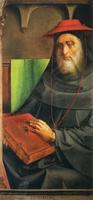
Cardinal Bessarione
Justus van Gent
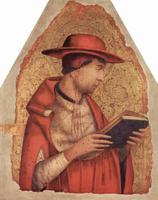
St. Jerome
Antonello da Messina

St. Augustine
Antonello da Messina
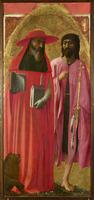
St Jerome and St John the Baptist
Masaccio
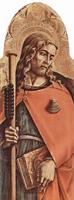
Saint
Carlo Crivelli
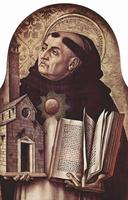
Saint Thomas Aquinas
Carlo Crivelli
The Ghent Altar (detail)
Jan van Eyck
Saint James of the Marches with two kneeling donor
Carlo Crivelli
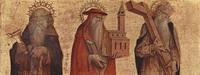
Saint Anthony, Saint Jerome, Saint Andrew
Carlo Crivelli
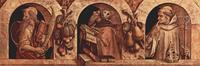
Saint Paul, Saint John Chrysostom and Saint Basil
Carlo Crivelli

The Pazzi Crucifixion (detail 3)
Pietro Perugino
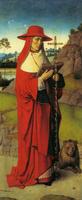
Martyrdom of St. Erasmus (left wing)
Dirk Bouts
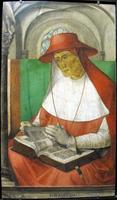
Saint Jerome
Justus van Gent
Saints John the Evangelist and Lawrence
Defendente Ferrari

St. Augustine and four States of a fraternity
Pietro Perugino
Polyptych of San Vincenzo Ferreri
Giovanni Bellini
St. John the Evangelist and St. Nicholas of Tolentino
Piero della Francesca
Apostles
Carlo Crivelli