Antonello da Messina の Ecce Homo の専門的な分析
スタイル:Early Renaissance · ジャンル:religious painting
Expert Analysis: "Ecce Homo" by Antonello da Messina
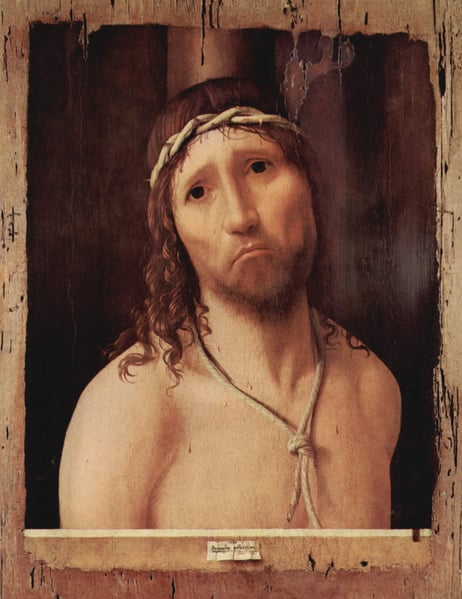
Antonello da Messina’s Ecce Homo (c. 1473) stands as a pivotal masterpiece of the Early Renaissance, merging the naturalistic vigor of Netherlandish oil painting with the compositional clarity of Italian art. The work depicts Christ after his scourging, presented to the crowd with a rope around his neck—a moment of profound vulnerability and stoic dignity.
Significance within the Early Renaissance:
-
Technical Innovation: Antonello was among the first Italian painters to master the Flemish oil technique, achieving luminous, translucent flesh tones and meticulous detail (e.g., the glistening tears, the individual strands of hair, and the subtle reflection in Christ’s eyes). This technique allowed for unprecedented realism and emotional immediacy.
-
Psychological Intensity: Unlike earlier, more hieratic depictions, Antonello’s Christ is palpably human. The tilted head, the direct, sorrowful gaze engaging the viewer, and the slightly parted lips convey a silent plea—transforming a biblical scene into an intimate, almost unbearable confrontation with suffering.
-
Compositional Focus: The half-length format, close cropping, and dark background (borrowed from Netherlandish portraiture) eliminate narrative distraction, forcing attention solely on Christ’s face and torso. The delicate interplay of light and shadow models the form with sculptural softness, while the precise rendering of the crown of thorns and the chord emphasizes tactile realism.
-
Cultural Synthesis: Antonello’s work bridges Southern Italian (Sicilian) and Northern European traditions, influencing later Venetian painters like Giovanni Bellini and Albrecht Dürer. Ecce Homo exemplifies how Early Renaissance artists redefined religious iconography through humanist empathy and technical virtuosity, making the divine accessible through tangible, lived experience.
In this painting, Antonello achieves a quiet revolution: the devotional image becomes a psychological portrait, and the sacred is rendered with an honesty that resonates across centuries.
Museum / Gallery
視覚的に類似
構図やパレットが近い作品 20 件
Ecce Homo
Antonello da Messina
Ecce Homo
Antonello da Messina
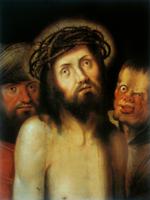
Ecce Homo
Hans Hoffmann
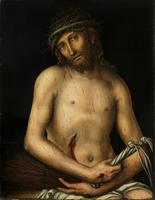
Chtist as the Man of Sorrows
Lucas Cranach the Elder
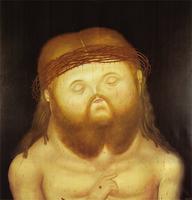
Head of Christ
Fernando Botero
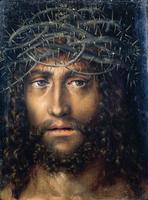
Head of Christ Crowned with Thorns
Lucas Cranach the Elder
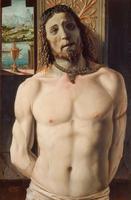
Christ at the Column
Donato Bramante
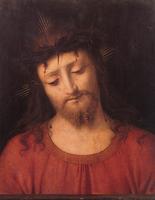
Ecce Homo
Andrea Solario
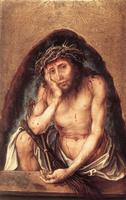
Christ as the Man of Sorrows
Albrecht Durer
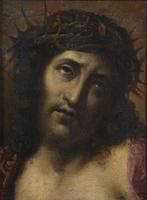
Ecce homo
Ludovico Carracci
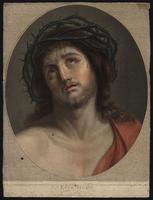
Ecce Homo
Vieira Portuense
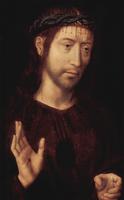
Christ crowned with thorns
Hans Memling
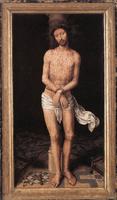
Christ at the Column
Hans Memling
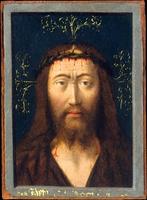
Head of Christ
Petrus Christus
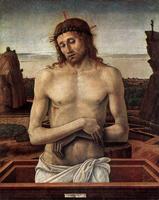
Dead Christ in the Sepulchre
Giovanni Bellini
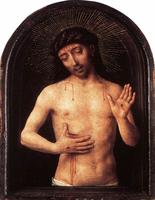
Man of Sorrows
Hans Memling
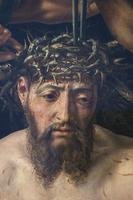
Jesus Christ crowned with thorns
Maerten van Heemskerck
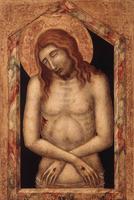
Man of Sorrow
Pietro Lorenzetti
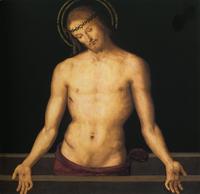
Christ on the sarcophagus
Pietro Perugino
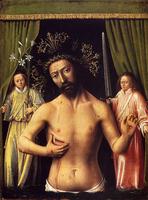
The Man of Sorrows
Petrus Christus