Nativity with St. Francis and St. Lawrence
Détails
Analyse experte de Nativity with St. Francis and St. Lawrence de Caravaggio
Style : Baroque · Genre : religious painting
Expert Analysis: "Nativity with St. Francis and St. Lawrence" (1609) by Caravaggio
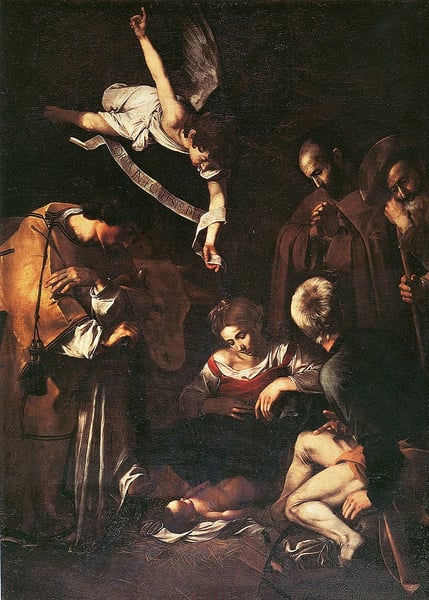
This work is a quintessential example of Caravaggio's revolutionary approach to Baroque religious painting. Painted late in his turbulent career, shortly before his death, the canvas (originally housed in the Oratory of San Lorenzo in Palermo and infamously stolen in 1969) demonstrates the artist’s mastery of chiaroscuro—the stark, dramatic contrast between light and shadow that becomes a metaphor for divine revelation.
Significance within Baroque Style and Religious Genre:
-
Radical Naturalism: Caravaggio abandons idealized Renaissance nativity scenes. The Virgin Mary is depicted as a weary, earthly mother, the Christ child lies on a bed of straw (a humble, almost rustic manger), and Saint Joseph is a shadowy, aged figure in the background. The saints—Francis and Lawrence—are shown not as remote holy figures but as intimate participants, with Francis holding the infant Jesus and Lawrence (identifiable by the gridiron of his martyrdom) kneeling in adoration. This immediacy was considered shockingly humanist at the time.
-
Tenebrism and Theatricality: The primary light source—suggested to emanate from the Christ child himself—illuminates faces and hands while plunging the background into near-total darkness. This technique, known as tenebrism, heightens the spiritual drama. The viewer’s eye is drawn to the tender moment of contact between Francis and Jesus, a tactile gesture that emphasizes the Incarnation’s physical reality.
-
Compositional Innovation: Unlike the symmetrical, harmonious compositions of the High Renaissance, Caravaggio arranges figures in a diagonal, nearly frieze-like pattern across the foreground. The poses are asymmetrical and dynamic: Mary’s bowed head, Francis’s outstretched arms, and Lawrence’s forward lean create a sense of movement frozen in time. The donkey and ox in the background are barely visible, serving as subtle reminders of the humble setting rather than decorative elements.
-
Thematic Integration: The presence of St. Francis (founder of the Franciscan order, which owned the oratory) and St. Lawrence (patron of the church) directly ties the Nativity to the site’s specific devotion. Caravaggio unites these saints with the Holy Family in a single, unbroken narrative—a fusion of heavenly and earthly time that was highly innovative for early 17th-century Counter-Reformation art.
Why It Endures:
Beyond its tragic loss to theft, this painting epitomizes Caravaggio’s legacy: the transformation of sacred history into a raw, accessible human experience. The contrasting lights and shadows, the unflinching realism, and the intimate, almost palpable presence of holiness mark it as a masterpiece of Baroque emotional intensity. It reminds us that for Caravaggio, the divine dwells not in idealized space but in the messy, tangible world of the poor, the humble, and the suffering.
Museums / Galleries
Visuellement similaire
20 œuvres à la composition et à la palette proches
Adoration of the Kings
Artemisia Gentileschi
The Seven Works of Mercy
Caravaggio
The Paschal Lamb
Palma il Giovane
A Mother Entrusting Her Sons to Christ
Mattia Preti
The Adoration of the Shepherds
Mattia Preti
Raising of Lazarus
Guercino
Joseph's Coat Brought to Jacob
Domenico Fiasella
The Martyrdom of Saint Matthew
Caravaggio
The Mocking of Christ
Gerard van Honthorst
Martyrdom of Saints Secunda and Rufina
Giulio Cesare Procaccini
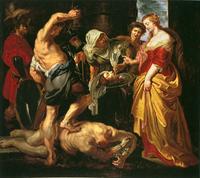
Beheading of St. John the Baptist
Peter Paul Rubens
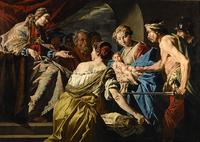
The judgement of Solomon
Matthias Stom
The Liberation of Saint Peter
Mattia Preti
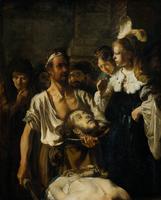
The Beheading of John the Baptist
Rembrandt
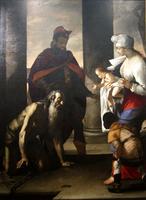
The Pardon of Saint John Chysostom
Mattia Preti
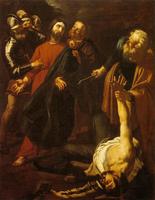
The Capture of Christ with the Malchus Episode
Dirck van Baburen
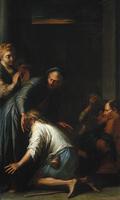
the Return of the Prodigal Son
Salvator Rosa
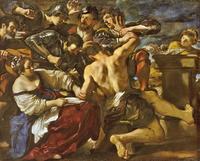
Samson Captured by the Philistines
Guercino
Healing of Tobit
Matthias Stom
Elisha’s Resurrection of the Shunammite Woman’s Son
Jacopo Vignali