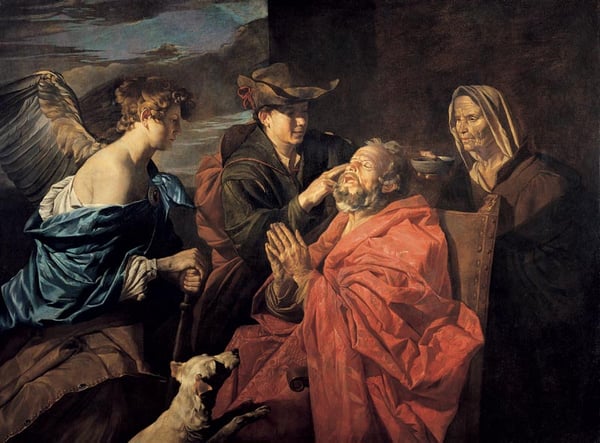
Healing of Tobit
Expert analysis of Matthias Stom’s Healing of Tobit
Style: Baroque · Genre: religious painting
Expert Analysis of "Healing of Tobit" by Matthias Stom
Matthias Stom’s Healing of Tobit is a striking example of the early Baroque aesthetic, particularly in its embrace of Caravaggesque naturalism and dramatic chiaroscuro. The painting depicts a moment from the apocryphal Book of Tobit: the elderly Tobit, blinded by bird droppings, is healed by his son Tobias using the gall of a fish, as instructed by the angel Raphael (often present in such scenes, though Stom’s composition may focus on the intimate domestic miracle).
Stylistic Significance:
Stom, a Dutch painter active in Italy, was a key figure in the "Utrecht Caravaggisti" movement. His work here demonstrates the Baroque fascination with tenebrism—the stark contrast between deep shadow and strong, directed light. The light source tends to fall on the key narrative elements: the aged, weathered face of Tobit, the careful hand of Tobias, and the simple tools of the miracle. This illumination is not merely theatrical; it serves a spiritual purpose, suggesting divine presence entering a humble, earthly space.
Narrative and Emotional Realism:
Unlike earlier, more idealized religious scenes, Stom grounds the miracle in tangible human experience. Tobit’s expression is not one of ecstatic revelation but of vulnerable, painful hope. His wrinkled skin, tired eyes, and hunched posture are rendered with almost forensic detail, emphasizing his long suffering. Tobias, often shown as a young man, here acts with quiet concentration, making the healing feel like a gentle, domestic act of care rather than a spectacular event. This focus on psychological realism—the quiet tenderness between father and son—aligns with the Counter-Reformation’s call for accessible, emotionally immediate religious art that inspires devotion through empathy.
Composition and Significance:
Stom compresses the figures into a shallow space, removing extraneous background detail. This forces the viewer to focus solely on the interaction and the emotion of the healing moment. The dark background functions like a void, isolating the figures from the worldly and placing them in a timeless, sacred present. The result is a work that balances the Baroque era’s tension between the grand and the intimate: it is both a biblical history and a universal story of compassion, rendered with the raw physicality that makes Stom’s work stand out among his contemporaries.
Why It Matters:
Healing of Tobit exemplifies how Baroque religious painting moved beyond static iconography to become a vehicle for human connection and spiritual empathy. Stom’s mastery of light and shadow, his rejection of classical idealization in favor of direct observation, and his focus on the emotional core of the story mark this as a significant work within the broader Caravaggesque tradition and the religious art of the 17th century.
Visually similar
20 works with related composition and palette
Joseph's Coat Brought to Jacob
Domenico Fiasella
Christ Disputing With The Doctors
Matthias Stom
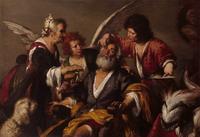
The Healing of Tobit
Bernardo Strozzi
A Mother Entrusting Her Sons to Christ
Mattia Preti
Nativity with St. Francis and St. Lawrence
Caravaggio
Elisha’s Resurrection of the Shunammite Woman’s Son
Jacopo Vignali
The Liberation of Saint Peter
Mattia Preti
Adoration of the Kings
Artemisia Gentileschi
Adoration of the Magi
Matthias Stom
The judgement of Solomon
Matthias Stom
The disciples at the tomb
Jacob Jordaens
The Four Evangelists
Jacob Jordaens
Alegoría de la Muerte
Pietro Paolini
Christ among the Doctors
Bartolomeo Manfredi
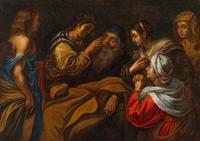
Tobias heals his blind father
Caravaggio
Christ and the Adulteress
Peter Paul Rubens
Supper at Emmaus
Joachim Wtewael
Mocking Christ
Karel Škréta
The Seven Works of Mercy
Caravaggio
The Satyr with the Peasants
Jacob Jordaens