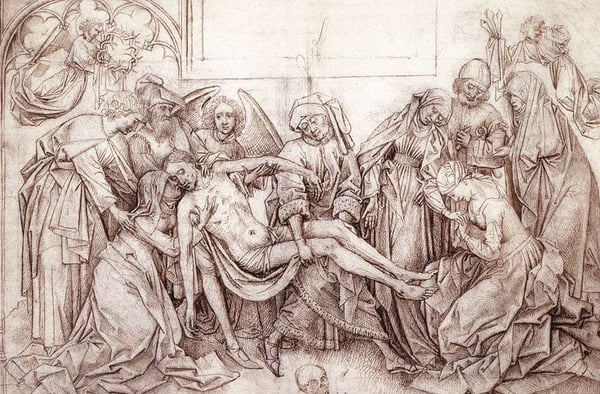
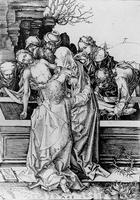
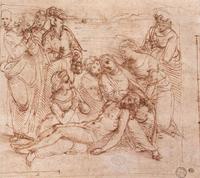
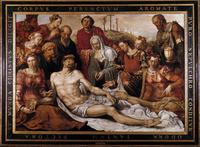
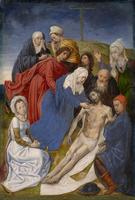
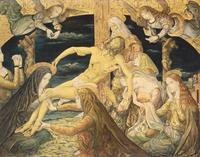
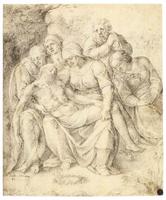
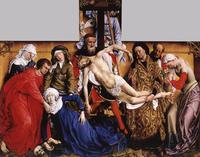
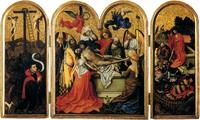
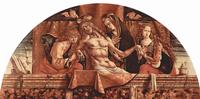
Rogier van der Weyden’s Christ carried to the Tomb is a significant example of a preparatory study within the Northern Renaissance—a genre that is far less frequently preserved than finished panel paintings. As a sketch and study, this work is crucial for understanding the artist’s creative process: it reveals how van der Weyden worked out the composition, emotional dynamics, and spatial arrangement of figures before committing to the final, highly polished oil painting typical of the period. In the context of the Northern Renaissance, such drawings were essential tools for capturing naturalistic detail and conveying dramatic narrative. The fact that this study survives offers rare insight into the deliberate, calculating nature of van der Weyden’s art, where every gesture and tilt of the head was carefully considered to heighten the pathos of the Entombment scene. This piece underscores the meticulous draftsmanship and intellectual rigor that defined the era’s shift toward lifelike representation and emotional expressiveness.