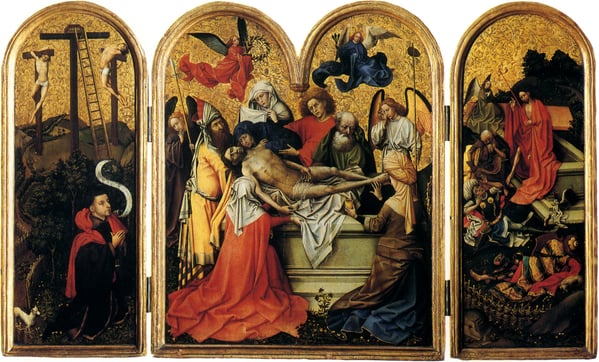
Triptych: The Two Thieves with the Empty Cross, The Entombment, The Resurrection
Dettagli
Analisi esperta di Triptych: The Two Thieves with the Empty Cross, The Entombment, The Resurrection di Robert Campin
Stile: Northern Renaissance · Genere: religious painting
This triptych by Robert Campin, a master of the Northern Renaissance, is a profound example of how early Netherlandish painting transformed religious narrative through meticulous realism and symbolic depth. The work’s significance lies in Campin’s pioneering use of domestic interiors and everyday objects to convey sacred events—a hallmark that distinguishes the Northern Renaissance from its Italian counterpart.
The Three Panels: A Continuous Narrative
The triptych presents a unified story of Christ’s sacrifice and triumph. On the left wing, “The Two Thieves with the Empty Cross” depicts the aftermath of the Crucifixion. The empty cross stands starkly between the two thieves still on their crosses, emphasizing the completion of Christ’s earthly ordeal. Campin’s attention to the thieves’ tormented bodies and the gritty landscape grounds the scene in palpable human suffering.
The central panel, “The Entombment,” is the emotional core. Joseph of Arimathea and Nicodemus lower Christ’s body into a stone sarcophagus, while the Virgin and Saint John grieve. Campin renders the figures with heavy, sculptural drapery and individualized expressions of sorrow. The tomb is set in a rocky, outdoor setting, but the foreground includes tiny plants and a skull—a memento mori—reminding viewers of mortality and redemption.
The right wing, “The Resurrection,” offers hope. Christ rises from the tomb, stepping forward with a triumphal gesture, while the sleeping Roman soldiers are oblivious. Here Campin uses a burst of golden light behind the figure, a luminous device typical of Northern painting, to signal the divine.
Significance in Context
What makes this triptych exceptional is Campin’s blending of the International Gothic tradition of elegant, posed figures with the emergent Northern Renaissance emphasis on empirical observation. Every detail—the texture of the stone, the folds of the linen, the worn faces of the mourners—is rendered with almost tactile precision. This horror vacui (fear of empty space) and love for material reality would influence later artists like Rogier van der Weyden and Jan van Eyck.
Furthermore, Campin’s choice to place the Entombment as the central scene rather than the Crucifixion itself reflects a devotional focus on Christ’s humanity and burial, inviting the viewer to meditate on the physical reality of death and the promise of resurrection. The triptych format itself, common in private altarpieces, allowed worshippers to close the wings and contemplate the scenes in sequence, making the narrative a personal, meditative journey.
In summary, Campin’s “Triptych: The Two Thieves with the Empty Cross, The Entombment, The Resurrection” is significant as a masterful synthesis of symbolic realism and emotional gravity that defines the Northern Renaissance at its most innovative.
Museum / Gallery
Visivamente simili
20 opere con composizione e palette affini
Deposition from the Cross
Fra Angelico
Lamentation
Rogier van der Weyden
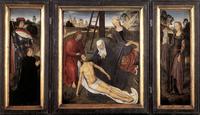
Triptych of Adriaan Reins
Hans Memling
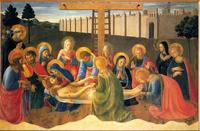
Lamentation over Christ
Fra Angelico
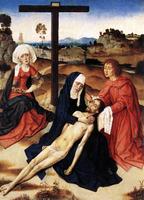
The Lamentation of Christ
Dirk Bouts
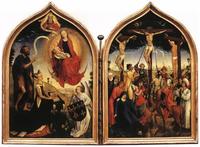
Diptych of Jeanne of France
Rogier van der Weyden
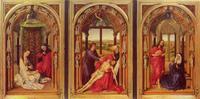
Mary Altarpiece
Rogier van der Weyden
Lamentation Over the Dead Christ
Carlo Crivelli
Diptych of The Fall of Man and The Redemption (Lamentation of Christ)
Hugo van der Goes
Crucifixion
Paolo Uccello
Calvary Triptych
Justus van Gent
Sforza Triptych
Rogier van der Weyden
The Entombment
Dirk Bouts
Martyrdom of Saint Erasmus
Dirk Bouts
Triptych of Jan Floreins
Hans Memling
The Lamentation
Gerard David
Triptych of the Entombment
Maerten van Heemskerck
Calvary Triptych
Hugo van der Goes
Pietà
Filippo Lippi
Lamentation of Christ
Albrecht Durer