Deskundige analyse van The Shipwreck of Don Juan van Eugene Delacroix
Stijl: Romanticism · Genre: literary painting
Analysis of "The Shipwreck of Don Juan" by Eugène Delacroix
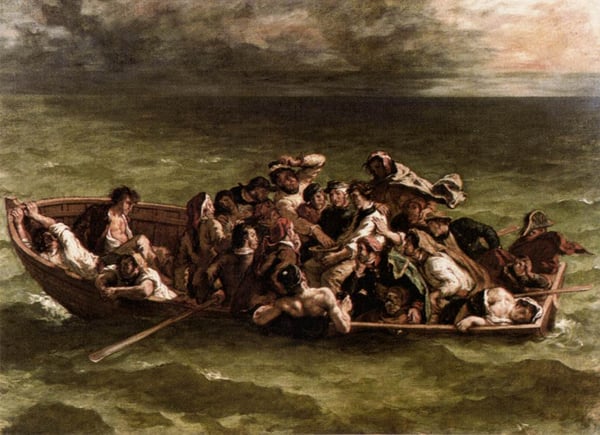
Eugène Delacroix’s The Shipwreck of Don Juan (1840) stands as a quintessential example of Romanticism’s break from Neoclassical restraint, channeling the movement’s core preoccupations with raw emotion, dramatic tension, and the sublime power of nature. Painted as a literary work inspired by Lord Byron’s epic poem Don Juan (specifically Canto II, which recounts a shipwreck and its grim aftermath), the canvas transforms a narrative episode into a visceral meditation on human suffering and the fragility of life.
Significance within Romanticism
The painting embodies Romanticism’s rejection of idealized forms in favor of intense, often disturbing psychological states. Unlike the calm, ordered compositions of earlier Neoclassical works, Delacroix presents a chaotic scene: a foundering raft crowded with desperate, dying figures, their bodies twisted in agony or slumped in exhaustion. The storm-tossed sea and brooding sky dwarf the survivors, emphasizing humanity’s insignificance against nature’s relentless force—a hallmark of the Romantic sublime.
Delacroix’s brushwork is energetic and expressive, with thick, visible strokes that convey turbulence and immediacy. His color palette—muted grays, browns, and sickly greens punctuated by flashes of red—heightens the mood of despair, while the diagonal composition pulls the eye from the looming wave at upper left to the collapsing bodies at lower right, creating a sense of impending doom.
Literary and Thematic Depth
As a literary painting, it draws directly from Byron’s subversive, darkly comic narrative, but Delacroix amplifies the tragedy. The scene depicts not just a shipwreck but the moral collapse of its survivors: figures fight over food, pray to a dead companion, or stare blankly into the void. This focus on human depravity under extreme duress reflects Romanticism’s interest in the darker aspects of the psyche and the limits of reason.
Why It Matters
The Shipwreck of Don Juan is significant for its unflinching portrayal of suffering and its pioneering use of pictorial drama to evoke an emotional response—qualities that would influence later Realist and Symbolist painters. It exemplifies Delacroix’s belief that art should stir the soul, not simply please the eye, and remains a powerful statement of Romanticism’s enduring fascination with the sublime and the tragic.
Museum / Gallery
Visueel vergelijkbaar
20 werken met verwante compositie en kleurenpalet
Christ on the Lake of Gennezaret
Eugene Delacroix
The Miracle of Saint Walburga
Peter Paul Rubens
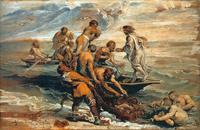
Miraculous Fishing
Peter Paul Rubens
The Miracle of St. Walburga
Peter Paul Rubens
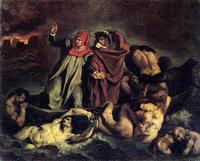
The barque of Dante (Copy after Delacroix)
Edouard Manet
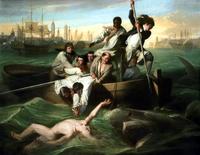
Watson and the Shark
John Singleton Copley
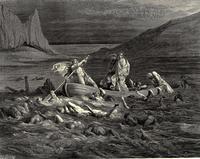
The Inferno, Canto 8
Gustave Dore
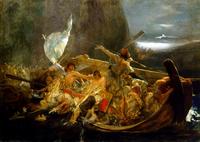
After the destruction of Psara
Nikolaos Gyzis
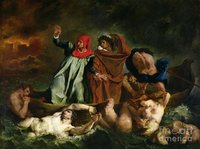
The Barque of Dante (Dante and Virgil in the Underworld)
Eugene Delacroix
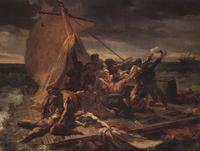
Study for The Raft of the Medusa
Théodore Géricault
Pythagoras and the Fisherman
Salvator Rosa

The Barque of Dante (after Delacroix)
Paul Cezanne
The Raft of the Medusa
Théodore Géricault
African Pirates Abducting a Young Woman
Eugene Delacroix
The Styx--Phlegyas
Gustave Dore
The Disembarkation of Christopher Columbus with Companions on Three Launches
Ivan Aivazovsky
Idylls of the King
Gustave Dore
Sinking of the Titanic
Max Beckmann
Abishai Saves David's Life
Gustave Dore
Ferry Boat to Antwerp
Jacob Jordaens