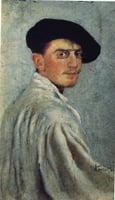
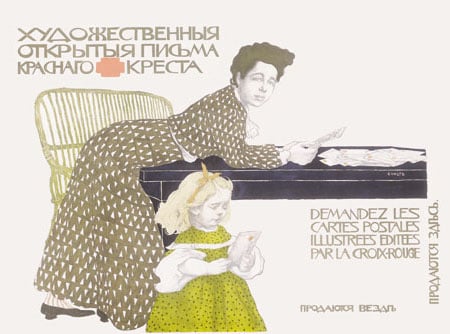
Analyse experte de Art open letter of Red Cross de Leon Bakst
Style : Art Nouveau (Modern) · Genre : poster
Expert Analysis of "Art Open Letter of Red Cross" by Leon Bakst
Leon Bakst, a leading figure in the Russian avant-garde and a master of stage design, created this poster during the height of the Art Nouveau movement. Despite its utilitarian purpose as a promotional or informational piece for the Red Cross, the work transcends mere advertisement to become a quintessential example of modernist decorative art.
Stylistic Significance:
Bakst’s poster embodies the core Art Nouveau principles of organic, flowing lines and harmonious integration of text and image. The composition is likely dominated by sinuous, asymmetrical curves—a hallmark of the style—that guide the viewer’s eye across the surface. Figures, if present, would be rendered with elongated, graceful proportions, echoing the ethereal quality of Alphonse Mucha’s posters or Bakst’s own theatrical costume designs. The palette probably favors muted, natural tones accented by vivid reds or golds, subtly reinforcing the Red Cross’s mission while maintaining aesthetic refinement.
Genre and Function:
As a poster, “Art Open Letter” bridges fine art and mass communication. Art Nouveau posters were revolutionary for treating commercial art as high art, and Bakst elevates this format by infusing it with the decorative luxury of his Ballets Russes work. The “open letter” format suggests a direct address to the public, blending typography—likely hand-drawn and curvilinear—with painterly elements. This integration of word and image was a key innovation of the period.
Cultural and Historical Context:
Bakst’s involvement with the Red Cross poster demonstrates how Art Nouveau artists engaged with social causes, using beauty to draw attention to humanitarian efforts. His Russian heritage and international fame (via the Ballets Russes) allowed him to merge Western Art Nouveau elegance with Eastern European folk motifs, creating a unique visual language. The poster thus stands as a cross-cultural artifact, reflecting both the global reach of Art Nouveau and the era’s belief in art’s power to ennoble everyday life and civic responsibility.
Legacy:
This work is significant not only for its aesthetic mastery but for its role in legitimizing poster art as a serious artistic medium. Bakst’s ability to condense complex decorative ideas into a single, striking image anticipates 20th-century graphic design, while its humanitarian theme reminds us of art’s capacity to serve the public good without sacrificing beauty.
Visuellement similaire
20 œuvres à la composition et à la palette proches
The Lady behind the Desk (Anonymous Letter)
Konstantin Somov
The two sisters
Edouard Vuillard
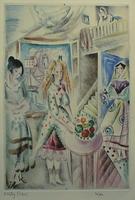
Intérieur d'Atelier
Mily Possoz
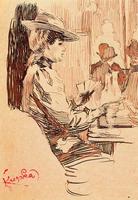
Women in the tavern
Frantisek Kupka
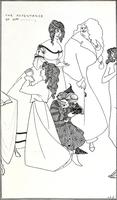
The Repentance of Mrs...
Aubrey Beardsley
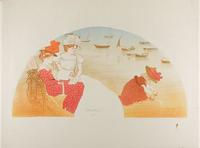
Sur La Plage
Theophile Steinlen
Three Ladies: Teatime
Gerda Wegener
A mousmé, sitting
Vincent van Gogh
A mousmé, sitting
Vincent van Gogh
Girl with Straw Hat, Sitting in the Wheat
Vincent van Gogh
The Visit
Mary Cassatt
The Letter
Mary Cassatt
Melle. Rita Sablan-Diaz. Chamorro De Guam
Paul Jacoulet
The Maids
Paula Rego
Behind the Scenes
Raphael Kirchner
Illustration from In Childhoods Country (Moulton)
Ethel Reed
Crawford Card Party
Dorrit Black
Brasserie Original drawing
Theophile Steinlen
The Barefoot Child
Mary Cassatt
Companionship
Alekos Kontopoulos