Expert analysis of Raphael’s Portrait of the Young Pietro Bembo
Style: High Renaissance · Genre: portrait
Expert Analysis: "Portrait of the Young Pietro Bembo" by Raphael
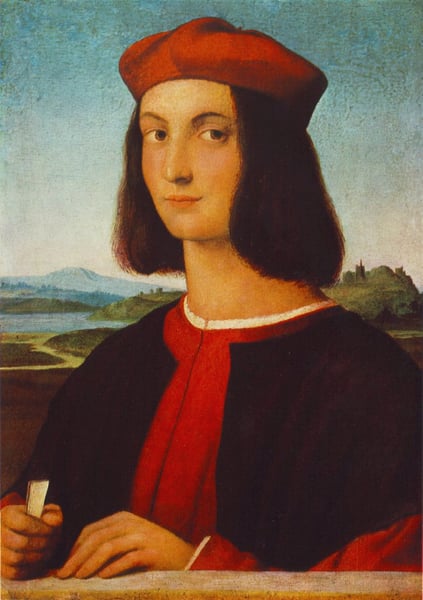
As a consummate work of the High Renaissance, Raphael’s Portrait of the Young Pietro Bembo exemplifies the era’s quest for idealized naturalism, psychological depth, and harmonious composition—all within the strictures of the portrait genre. The sitter, the young humanist scholar Pietro Bembo, embodies the Renaissance ideal of the uomo universale, and Raphael’s treatment reflects the period’s fusion of intellectual gravitas with serene formal beauty.
Significance within the High Renaissance:
Raphael masterfully balances classical poise with acute individuality. The figure is presented in a three-quarter view against a neutral background—a device borrowed from Leonardo—focusing all attention on Bembo’s refined features and contemplative gaze. The subtle modeling of light and shadow (sfumato) softens the contours, while the rich, controlled palette (deep blacks, warm flesh tones, a hint of crimson) reinforces the sitter’s aristocratic bearing. This is not merely a likeness but a meditation on character: Bembo’s slight tilt of the head and direct yet introspective eyes suggest the intellectual and moral virtues prized by High Renaissance humanism.
Genre and Innovation:
Within the portrait genre, Raphael elevates the private depiction of a scholar to the same level of monumentality as his papal and princely portraits. The composition is tight, with the bust filling the frame, creating an intimacy that invites the viewer into Bembo’s world of letters and diplomacy. Every detail—from the soft fall of the hair to the crisp edge of the collar—is rendered with a clarity that avoids mere verisimilitude, achieving instead a timeless ideal.
Conclusion:
This painting stands as a testament to Raphael’s ability to synthesize natural observation, classical balance, and psychological insight—hallmarks of High Renaissance art. In portraying the young Bembo, Raphael not only captures a moment in the life of a future cardinal and poet but also crystallizes the Renaissance faith in the dignity and depth of the individual. The work remains significant for its perfect alignment of subject, style, and era, demonstrating why Raphael’s portraits are considered benchmarks of the genre.
Museum / Gallery
Visually similar
20 works with related composition and palette
Portrait of a Man holding an Apple
Raphael
A Young Man
Piero di Cosimo
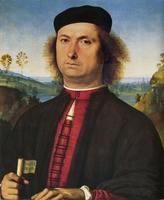
Portrait of Francesco delle Opere
Pietro Perugino
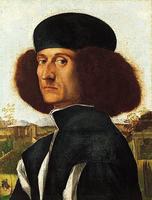
Portrait of a Venetian Nobleman
Vittore Carpaccio
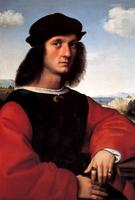
Portrait of Agnolo Doni
Raphael
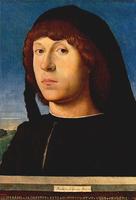
Portrait of a Young Man
Antonello da Messina
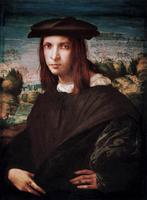
A Young Man
Rosso Fiorentino
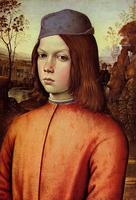
Portrait of a Boy
Pinturicchio
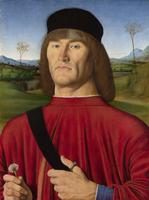
Man with a Pink Carnation
Andrea Solario
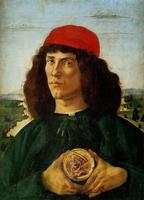
Portrait of a Man with the Medal of Cosimo
Sandro Botticelli
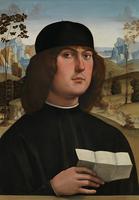
Bartolomeo Bianchini
Francesco Francia
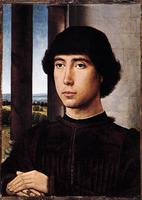
Portrait of a Man at a Loggia
Hans Memling
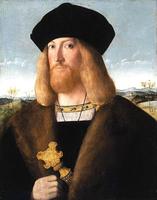
Portrait of a Bearded Gentleman
Bartolomeo Veneto
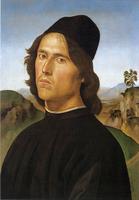
Portrait of Lorenzo di Credi
Pietro Perugino
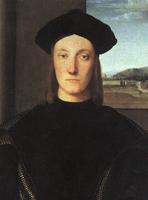
Portrait of Guidobaldo da Montefeltro, Duke of Urbino
Raphael
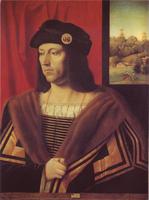
Portrait of a Gentleman
Bartolomeo Veneto
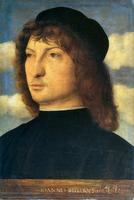
Portrait of a venetian gentleman
Giovanni Bellini
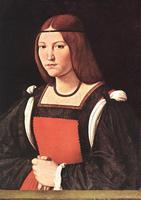
Portrait of a Young Woman
Giovanni Antonio Boltraffio
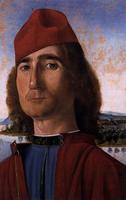
Portrait of an Unknown Man with Red Beret
Vittore Carpaccio
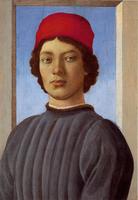
Portrait of a young man with red cap
Sandro Botticelli