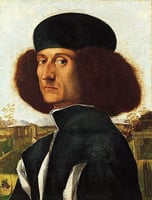
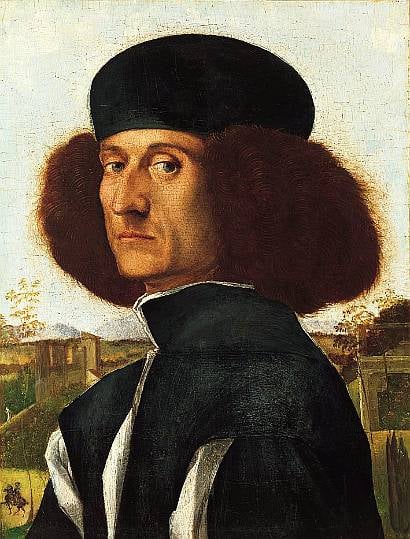
Analisi esperta di Portrait of a Venetian Nobleman di Vittore Carpaccio
Stile: High Renaissance · Genere: portrait
As an art historian, I will analyze "Portrait of a Venetian Nobleman" by Vittore Carpaccio based solely on the provided facts—its style (High Renaissance), genre (portrait), and artist. While specific details of the work’s composition are not supplied, the significance of this piece can be deduced from Carpaccio’s place within the Venetian High Renaissance and the nature of portraiture at the time.
First, Carpaccio is best known for his elaborate narrative cycles, such as the Legend of Saint Ursula, but his portraits stand out for their fusion of meticulous descriptive detail with a Venetian sensitivity to light and color. Within the High Renaissance, Venetian artists like Giovanni Bellini and Titian elevated portraiture by prioritizing atmospheric effects and psychological depth over linear precision. Carpaccio’s approach, however, retains a Northern Renaissance love of texture and pattern—often seen in the luxurious fabrics and jewelry worn by his sitters. A Portrait of a Venetian Nobleman would likely showcase this blend: the sitter’s status communicated through his rich attire and the crisp rendering of materials, while the soft, diffused lighting typical of Venetian painting lends a sense of air and presence.
What makes this work significant is its role in documenting the aristocracy of Venice during a period of immense commercial and political power. Carpaccio’s portraits are less idealized than those of some contemporaries; they emphasize the sitter’s tangible wealth and civic identity through emblematic objects (a letter, a coin, a coat of arms) set against a plain or architectural backdrop. This directness prefigures the later, more psychological portraiture of Titian and Tintoretto. Furthermore, as a High Renaissance work, it demonstrates the transition from religious or narrative painting to the secular celebration of the individual—a key achievement of the era. In short, the significance lies in its masterful synthesis of naturalistic detail and Venetian colorism, capturing both the physical likeness and the social standing of a member of one of Europe’s most influential patrician classes.
Museum / Gallery
Visivamente simili
20 opere con composizione e palette affini
Portrait of Agnolo Doni
Raphael
Portrait of Francesco delle Opere
Pietro Perugino
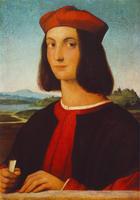
Portrait of the Young Pietro Bembo
Raphael
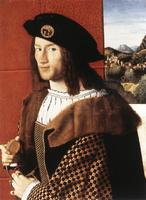
Portrait of a Noble Man
Bartolomeo Veneto
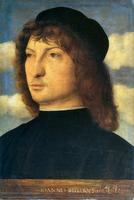
Portrait of a venetian gentleman
Giovanni Bellini
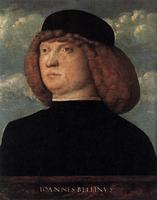
Portrait of a Young Man
Giovanni Bellini
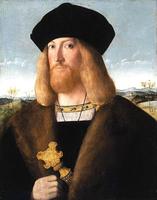
Portrait of a Bearded Gentleman
Bartolomeo Veneto
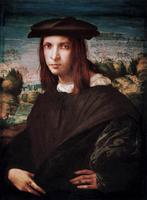
A Young Man
Rosso Fiorentino
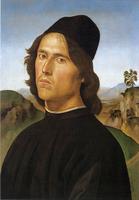
Portrait of Lorenzo di Credi
Pietro Perugino
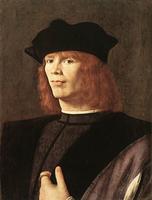
Portrait of a Man
Andrea Solario
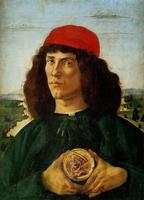
Portrait of a Man with the Medal of Cosimo
Sandro Botticelli
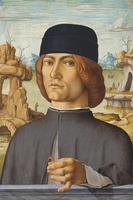
Portrait of a Man
Francesco del Cossa
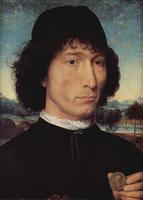
Portrait of a Man holding a coin of the Emperor Nero
Hans Memling
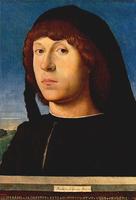
Portrait of a Young Man
Antonello da Messina
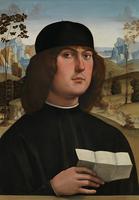
Bartolomeo Bianchini
Francesco Francia
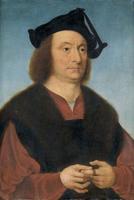
Porträt eines Mannes mit Ehering
Joos van Cleve
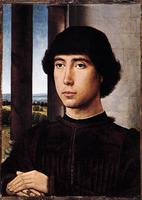
Portrait of a Man at a Loggia
Hans Memling
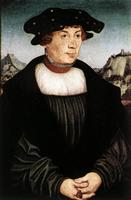
Portrait of Hans Melber
Lucas Cranach the Elder
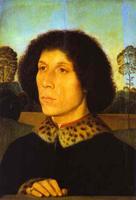
Portrait of a Man in a Landscape
Hans Memling
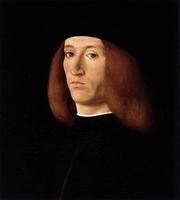
Portrait of a Young Man
Andrea Solario