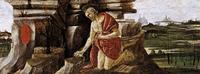
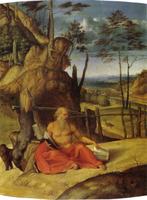
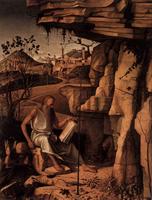
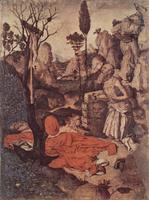
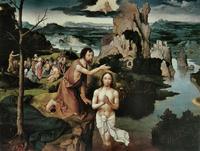
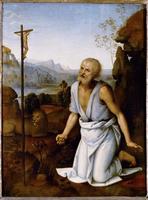
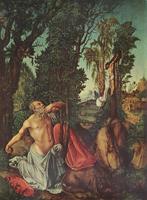
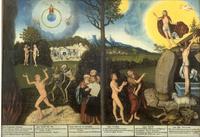
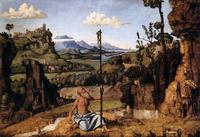
As an Early Renaissance religious painting by Sandro Botticelli, St. Jerome is significant for embodying the core ideals of its style and period. Botticelli, a master of linear grace and emotional subtlety, brings to this devotional subject the Renaissance emphasis on naturalism, spatial clarity, and human-centered spirituality. The work represents a shift from medieval iconography toward a more intimate, contemplative portrayal of saints—a hallmark of the Early Renaissance. Its religious genre underscores the period’s fusion of Christian themes with the emerging humanist interest in individual character and scholarly piety, making it a notable example of how Botticelli elevated traditional subjects through refined composition and serene dignity.