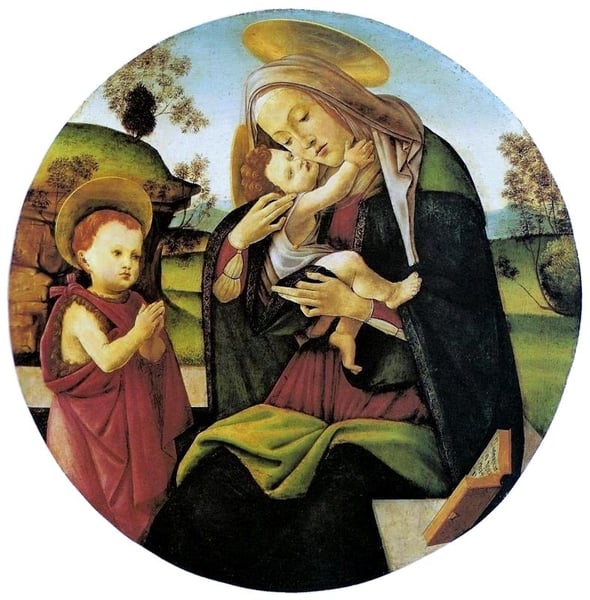
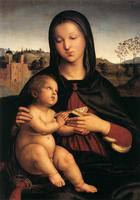
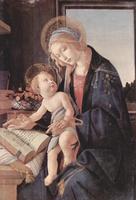
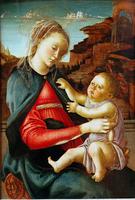
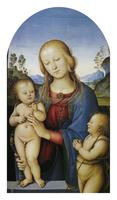
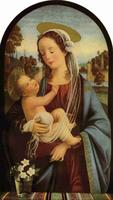
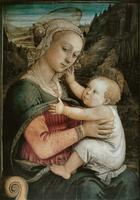
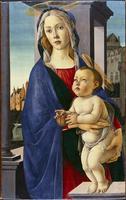
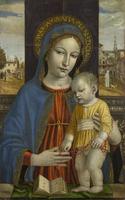
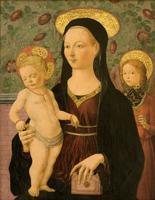
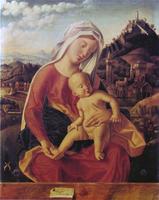
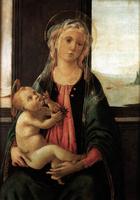
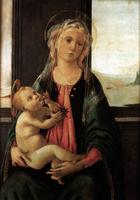
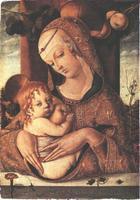
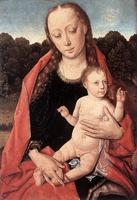
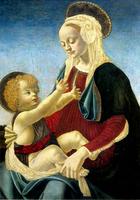
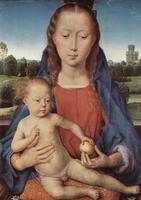
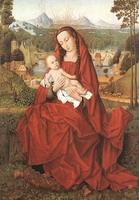
Based solely on the structured facts provided—that this is an Early Renaissance religious painting by Sandro Botticelli titled Virgin and Child with the Infant St. John the Baptist—the artwork's significance lies in its embodiment of Botticelli’s distinctive contribution to the Early Renaissance.
Even without specific compositional details, the pairing of the Virgin and Child with the infant St. John the Baptist is a hallmark of Florentine devotional imagery. Botticelli’s treatment of this subject is significant for its lyrical grace and refined linearity, which elevate the scene beyond mere narrative into a contemplative vision of divine beauty. The work exemplifies the Early Renaissance shift from medieval iconography toward a more human, tender interaction between sacred figures, while still maintaining a formal, ethereal elegance—a quality that distinguishes Botticelli from his more naturalistic contemporaries.
In this period, Botticelli’s religious paintings are noted for their rhythmic contours and delicate emotional restraint, which lend the composition a serene, almost musical harmony. This piece thus stands as a representative example of how Early Renaissance artists transformed traditional religious subjects into expressions of idealized humanity and spiritual grace—a key step toward the High Renaissance.