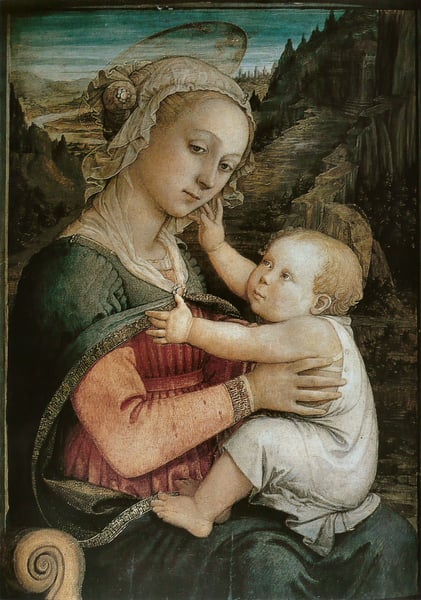
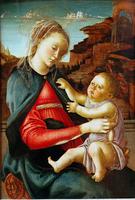
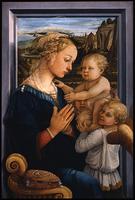
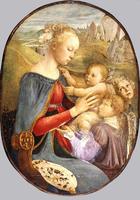
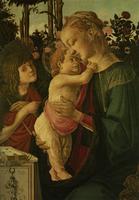
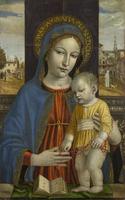
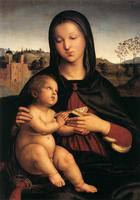
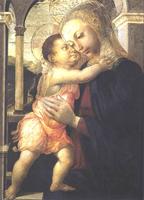
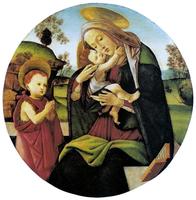
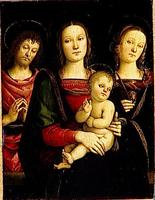
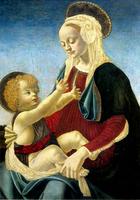
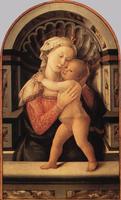
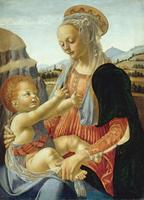
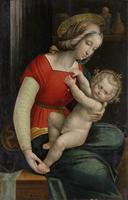
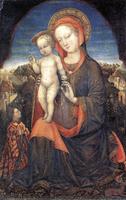
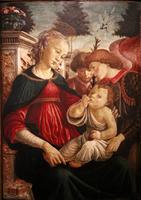
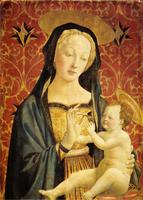
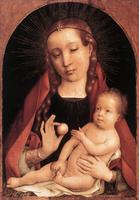
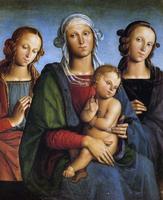
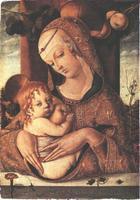
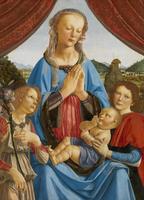
As an expert art historian, I will base my analysis strictly on the provided facts: the work is Filippo Lippi's "Madonna and Child," an Early Renaissance religious painting.
The significance of this artwork lies in its embodiment of the core Early Renaissance shift toward humanism and naturalism within a sacred context. Filippo Lippi was a master of this transition, and in this painting, he moves away from the rigid, symbolic formality of medieval iconography. Instead, he presents the Madonna and Child as a tender, relatable human mother and baby, while still maintaining their divine status. The very choice of a "Madonna and Child" genre—a standard subject—becomes a vehicle for innovation. Lippi's treatment infuses the scene with intimate warmth and psychological depth, making the holy family accessible to the viewer. This humanization was a revolutionary move in the Early Renaissance, as it allowed worshippers to emotionally connect with divinity through realistic, earthly affection. The work’s significance is thus its role in redefining religious painting: it demonstrates how style (Early Renaissance principles of balance, clarity, and natural observation) could be applied to a traditional genre to create a new, profoundly moving visual experience that influenced generations of later artists.