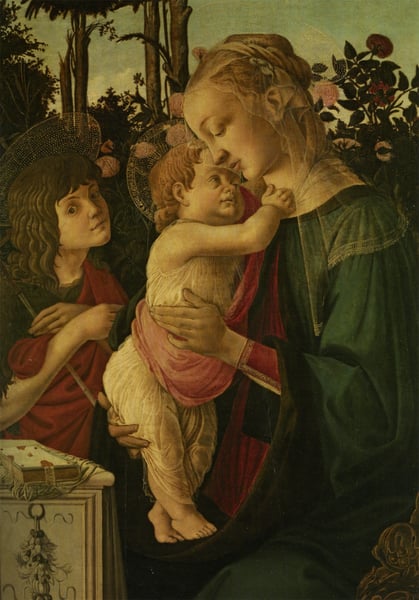
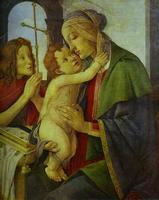
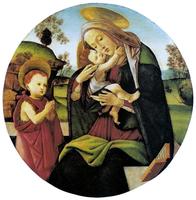
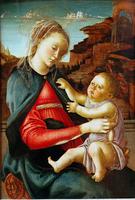
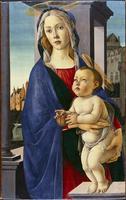
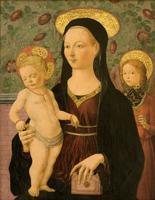
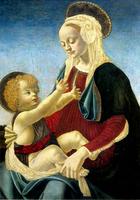
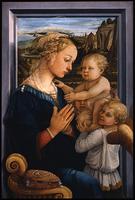
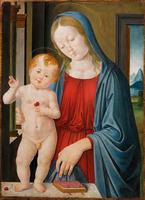
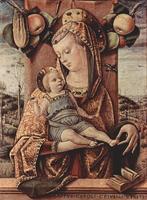
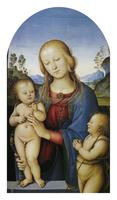
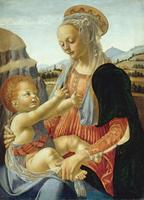
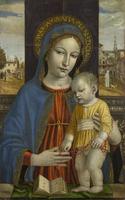
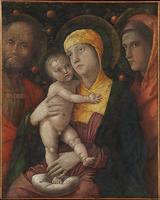
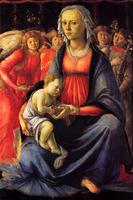
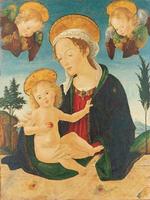
This artwork exemplifies the refined spiritual lyricism of the Early Renaissance through Botticelli’s distinctive treatment of the religious painting genre. The composition draws the viewer into a tender, intimate grouping: the Virgin Mary, the Christ Child, and the young Saint John the Baptist. Significance lies in Botticelli’s departure from the rigid hieratic forms of earlier Gothic art toward a more human, emotionally resonant interaction. The figures are linked by gentle gestures and exchanged glances, creating a quiet narrative of devotion and recognition. The artist’s characteristic use of sinuous, flowing lines—seen in the drapery and the children’s curled postures—infuses the scene with both grace and a subtle, melancholic elegance. This work is important for how it balances the sacred subject with a new, naturalistic observation of childhood and maternal affection, a hallmark of Early Renaissance innovation. Botticelli’s delicate color palette and ornamental details enhance the ethereal quality, while the precise modeling of faces and hands demonstrates his mastery of form. Ultimately, “The Madonna and Child with the Infant Saint John the Baptist” stands as a prime example of Botticelli’s ability to fuse spiritual depth with exquisite linear beauty, contributing to the era’s growing emphasis on humanity, intimacy, and refined visual harmony in religious art.