
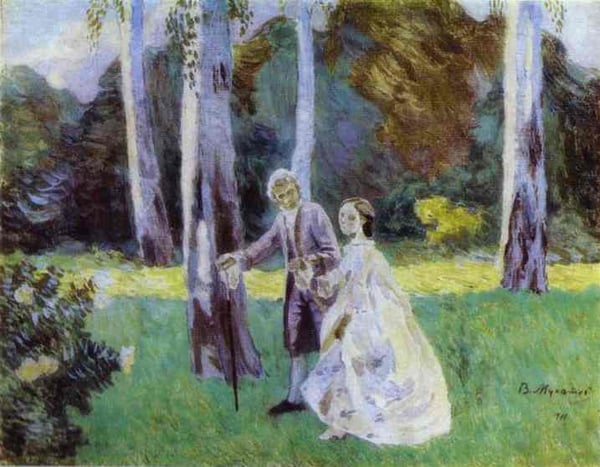
Expert analysis of Victor Borisov-Musatov’s A Walk
Style: Post-Impressionism · Genre: genre painting
Expert Analysis of "A Walk" by Victor Borisov-Musatov
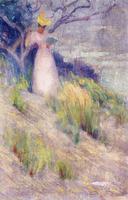
Victor Borisov-Musatov’s "A Walk" is a quintessential example of Russian Post-Impressionism infused with a deeply personal, symbolist sensibility. Executed during his mature period (circa 1903–1905), the work transcends the conventional bounds of genre painting—typically a depiction of everyday life—by transforming a simple promenade into a lyrical meditation on memory, loss, and the ephemeral beauty of a bygone aristocratic world.
Significance within Post-Impressionism and Russian Art
Borisov-Musatov takes the Post-Impressionist concern with subjective expression, decorative form, and emotional resonance to a distinctly Russian register. Unlike the vibrant, urbanized scenes of French Post-Impressionists (Seurat, Van Gogh, Gauguin), he retreats into a hushed, pastoral realm where figures drift like ghosts through an idealized estate park. The painting’s significance lies in its fusion of two key influences:
-
Synthetist Decoration – Borrowing from Gauguin's Cloisonnism and the Nabis, Borisov-Musatov flattens perspective, uses broad, unmodulated color planes (soft greens, powdery blues, muted ivories), and outlines forms with a delicate, tapestry-like edge. The composition is deliberately shallow, with the two female figures arranged almost like patterns on a frieze, their long dresses echoing the vertical lines of the birch trees.
-
Symbolist Atmosphere – The painting is not a record of a real walk but a symbol of a walk—an eternal, melancholic stasis. The figures do not engage with each other; their gazes are averted, lost in thought. The time of day (likely twilight) and the autumnal palette evoke a sense of passing, of lingering twilight. This aligns with Borisov-Musatov’s lifelong obsession with the usadba (Russian country estate) as a symbol of a lost golden age—a theme that would deeply influence the next generation of Russian Symbolists and the Blue Rose group.
Why It Matters
"A Walk" is significant because it marks a shift from narrative to mood. The artist strips away anecdote: we do not know who these women are, where they are going, or why. Instead, we feel the quiet pulse of a world on the verge of vanishing—both personally (the artist’s own fragile health) and historically (the impending social upheaval of early 20th-century Russia). The work’s soft, almost musical color harmonies and its deliberate fragility of form elevate it beyond mere genre painting into a poetic elegy. It stands as a bridge between the decorative idealism of Art Nouveau and the introspective spirituality of Russian modernism, making Borisov-Musatov a crucial, if understated, precursor to the avant-garde.
Museum / Gallery
Visually similar
20 works with related composition and palette
In the Forest
Konstantin Somov
Lady in the forest
Giovanni Fattori
Claude Monet Painting by the Edge of a Wood
John Singer Sargent
Landscape with Seated Figure
Julian Alden Weir
Under the trees
Pyotr Konchalovsky
Couple in a Garden
Paul Cezanne
In St Cloud Park
Pierre-Auguste Renoir
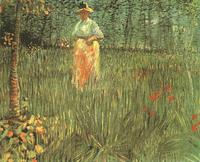
A woman walking in garden
Vincent van Gogh
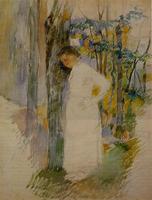
Peasant Woman Standing next to a Tree
Camille Pissarro
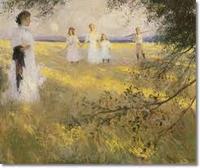
Evening Light
Frank W. Benson
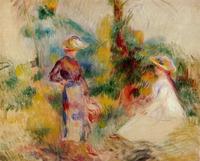
Two Women in a Garden
Pierre-Auguste Renoir
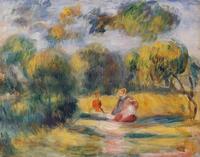
Figures in a Landscape
Pierre-Auguste Renoir
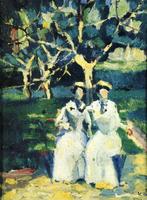
Two Women in a Garden
Kazimir Malevich
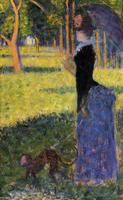
Woman with a Monkey
Georges Seurat
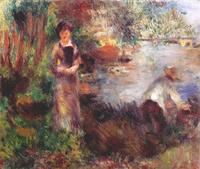
On the banks of the Seine at agenteuil
Pierre-Auguste Renoir
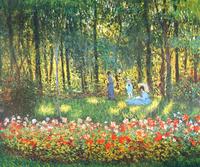
The Artist's Family in the Garden
Claude Monet
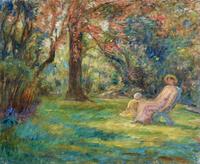
Famille dans le jardin
Marie Duhem
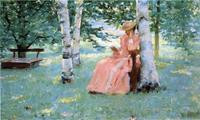
Reverie
Robert Lewis Reid
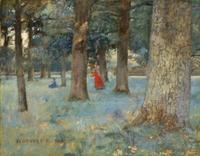
Ferenczy Károly, Változat a Madárdalhoz 1909
Karoly Ferenczy
Landscape with Figure in Pink
Robert Henri