Expert Analysis: "The Artist's Family in the Garden" by Claude Monet
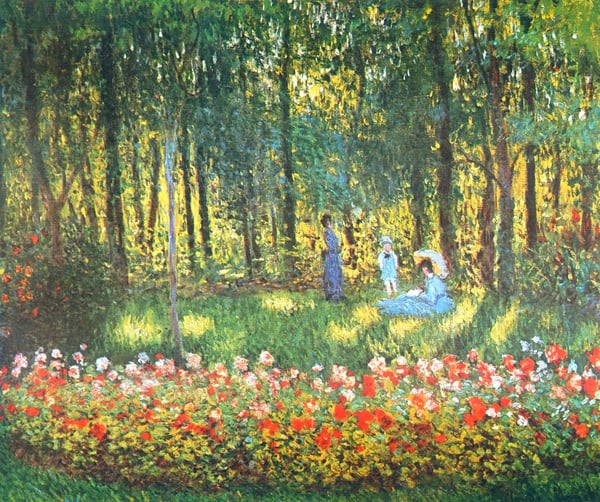
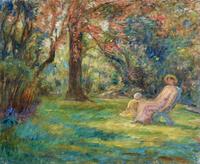
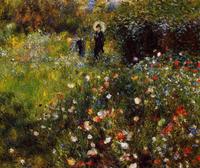
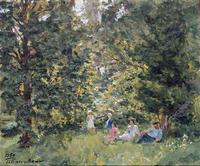
This work stands as a quintessential example of Impressionism’s revolutionary approach to genre painting. Monet captures an intimate, fleeting moment of domestic life—his own family at leisure in a sun-dappled garden. Rather than constructing a formal, studio-posed portrait, he employs loose, rapid brushwork and a luminous palette to evoke the transient effects of natural light and atmosphere. The figures are integrated into the landscape, their identities secondary to the overall sensory experience of warmth, shadow, and color.
The painting’s significance lies in its embodiment of key Impressionist principles: the rejection of historical or mythological subjects in favor of modern, everyday scenes; the pursuit of plein-air immediacy; and the dissolution of form into vibrant, broken strokes of pure pigment. Here, Monet transforms a private, ordinary moment into a study of visual perception, where the garden’s foliage, the white dresses, and the dappled sunlight become a unified field of chromatic sensation. This personal approach—painting his own family—also underscores the Impressionist belief that art should reflect the artist’s direct, personal encounter with the world, making the canvas a record of both light and memory.