1. Home
  2. Paul Gauguin
  3. A man with axe
A man with axe
Paul Gauguin
Paul Gauguin
1848 – 1903
A man with axe

A man with axe

Paul Gauguin·1891
Sign In

Dettagli

Anno1891
Periodo1st Tahiti period
PosizioneFrench Polynesia
Dimensioni70 × 92 cm

Analisi esperta di A man with axe di Paul Gauguin

Stile: Cloisonnism · Genere: genre painting

Generato dall'IA

Expert Analysis of A Man with Axe by Paul Gauguin

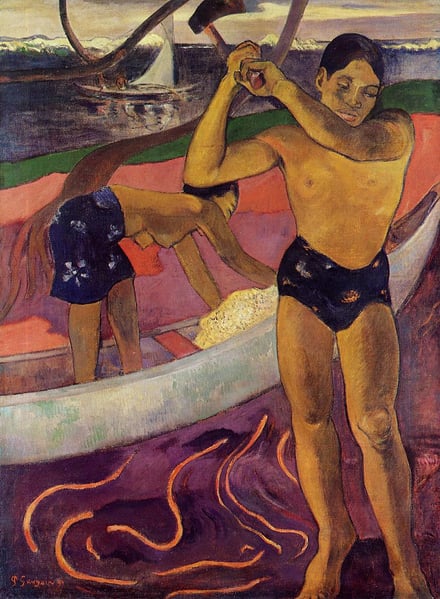
This work, created during Gauguin’s 1st Tahiti period, is a quintessential example of Cloisonnism applied to genre painting. The style—characterized by bold, dark outlines and flat, unmodulated areas of color—derives from medieval cloisonné enamel and stained glass, and Gauguin used it to distill the essence of Tahitian life into a symbolic, almost decorative image.

The subject of a man with an axe is deceptively simple. Rather than a realistic depiction of labor, Gauguin transforms the figure into a timeless emblem of subsistence and harmony with nature. The strong contour lines flatten the space, suppressing perspective and depth, while the broad color fields (earthy browns, greens, and the man’s deep skin tone) evoke the tropical environment without naturalistic shading. This approach aligns with Gauguin’s search for a “primitive” purity—a deliberate rejection of Western naturalism in favor of a more direct, emotional visual language.

Significance: A Man with Axe epitomizes Gauguin’s fusion of Cloisonnist technique with the ethnographic subjects of his first Tahitian sojourn. It marks a turning point where genre painting becomes a vehicle for conveying the artist’s idealized vision of an unspoiled, pre-industrial world. The work’s flatness and bold outlines anticipate the Symbolist and Synthetist movements, affirming Gauguin’s role as a pioneer of modernist primitivism.
Museum / Gallery

Private Collection

Genere

Genre painting

Stile

Cloisonnism

Tag

Arts-and-crafts boats-and-ships tahiti

Visivamente simili

20 opere con composizione e palette affini

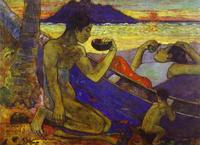
A Canoe (Tahitian Family),

A Canoe (Tahitian Family),

Paul Gauguin

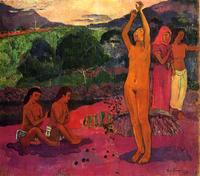
The Invocation

The Invocation

Paul Gauguin

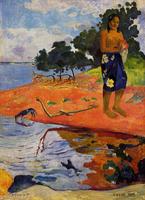
She goes down to the fresh water (Haere Pape)

She goes down to the fresh water (Haere Pape)

Paul Gauguin

Bathers

Bathers

Paul Gauguin

Perfect days

Perfect days

Paul Gauguin

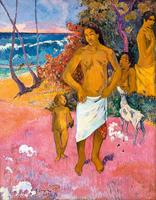
Tahitian women on the beach

Tahitian women on the beach

Paul Gauguin

Tahitian pastorale

Tahitian pastorale

Paul Gauguin

Bathers Of Llane

Bathers Of Llane

Salvador Dali

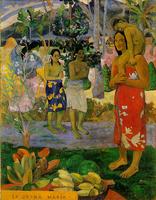
Ia Orana Maria (We Hail Thee Mary)

Ia Orana Maria (We Hail Thee Mary)

Paul Gauguin

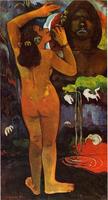
Hina, Moon Goddess and Te Fatu, Earth Spirit

Hina, Moon Goddess and Te Fatu, Earth Spirit

Paul Gauguin

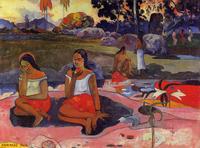
Sacred Spring

Sacred Spring

Paul Gauguin

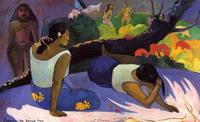
Reclining Tahitian Women

Reclining Tahitian Women

Paul Gauguin

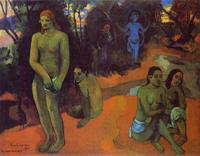
Delectable Waters

Delectable Waters

Paul Gauguin

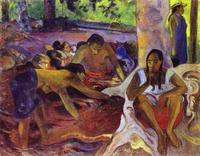
The fisherwomen of Tahiti

The fisherwomen of Tahiti

Paul Gauguin

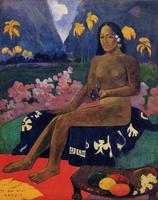
The Seed of the Areoi

The Seed of the Areoi

Paul Gauguin

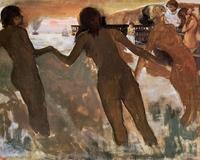
Peasant Girls Bathing in the Sea at Dusk

Peasant Girls Bathing in the Sea at Dusk

Edgar Degas

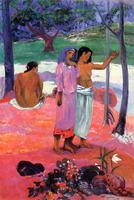
The Call

The Call

Paul Gauguin

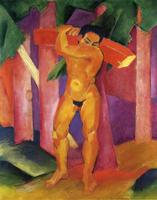
Woodcutter

Woodcutter

Franz Marc

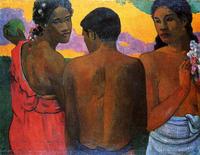
Three Tahitians

Three Tahitians

Paul Gauguin

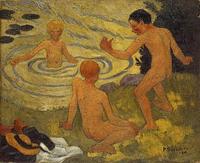
Boys on a River Bank

Boys on a River Bank

Paul Serusier

caleido

versione 1.0.368

Unisciti a DiscordomelasChi siamoCittàInformativa sulla privacyTermini di servizioCancellazione dei datiAiuto
© 2026 Caleido