Expert Analysis: Boy by the Water by Paul Gauguin
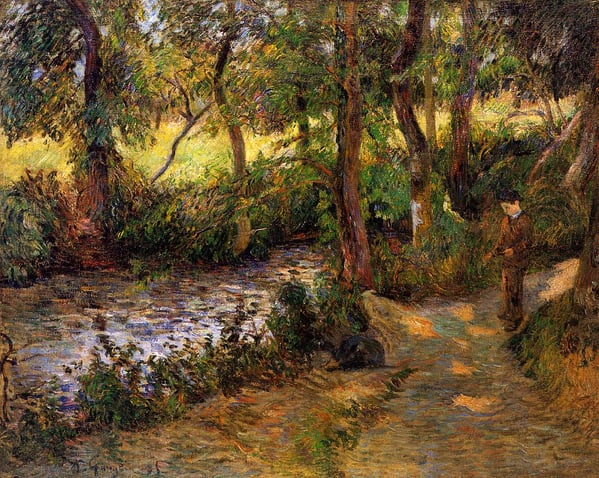
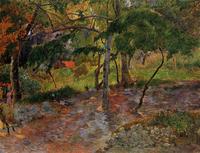
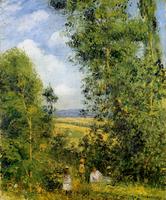
Though executed within Gauguin’s early Impressionist period, Boy by the Water already hints at the artist’s later break from pure optical observation. As a landscape with a solitary figure, the work exemplifies the period’s emphasis on capturing transient effects of light and atmosphere, yet Gauguin’s treatment reveals a nascent shift toward symbolic and emotional weight.
The painting is significant as a transitional piece: it retains the loose brushwork and vibrant, broken color of Impressionism, but the figure of the boy—placed in a contemplative, almost isolated pose against the water—suggests a narrative or psychological depth that foreshadows Gauguin’s later Synthetist and Cloisonnist styles. Where strict Impressionists sought to record a fleeting moment, Gauguin here begins to subdue naturalistic detail in favor of a more meditative, simplified composition, hinting at the symbolic landscapes that would define his mature work in Tahiti.
In this early landscape, Gauguin demonstrates his mastery of Impressionist technique—luminous reflections, dappled light—but the quiet, brooding tension of the boy by the water marks a departure from pure visual sensation. It is a crucial document of an artist already questioning the limits of Impressionism, pointing toward his future role as a founder of Post-Impressionist symbolism.