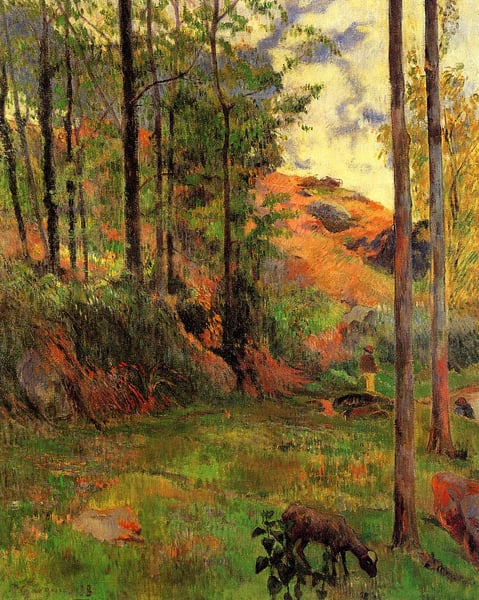
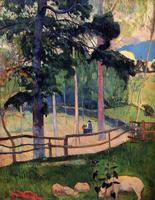
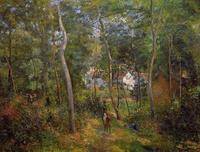
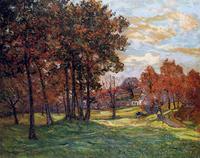
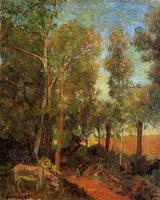
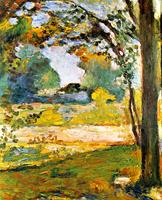
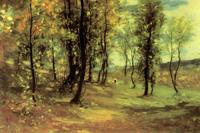
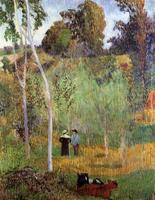
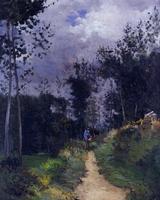
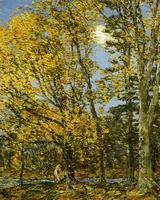
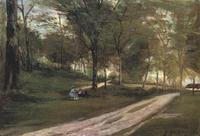
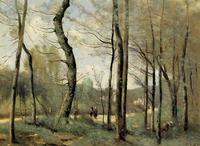
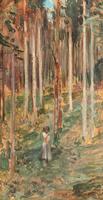
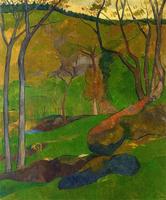
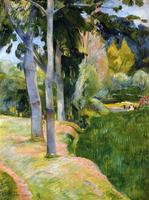
This landscape from Paul Gauguin’s Breton period exemplifies his radical break from Impressionist naturalism—a hallmark of Post-Impressionism. In Path down to the Aven, Gauguin transforms a simple rural scene into a symbolic vision of Brittany’s timeless, earthy spirituality. The composition is flattened, with broad, unmodulated areas of color and strong, dark outlines (cloisonnism), rejecting atmospheric perspective in favor of emotional directness. The winding path becomes a motif of pilgrimage or journey into a primal, pre-modern world. Significant within his style, the work shows Gauguin’s synthetist approach: synthesizing memory, emotion, and observed reality into a purified form. This painting anticipates his later Tahitian work by using color not descriptively but expressively, here with deep greens, muted ochres, and touches of pure blue. The Breton period was crucial for Gauguin’s development—it allowed him to simplify form and imbue landscape with a sense of the sacred, making Path down to the Aven a key example of Post-Impressionism’s move toward symbolism and abstraction.